Cope M J, Yang S, Shang C, Drubin D G
Department of Molecular and Cell Biology, University of California, Berkeley, California 94720-3202, USA.
J Cell Biol. 1999 Mar 22;144(6):1203-18. doi: 10.1083/jcb.144.6.1203.
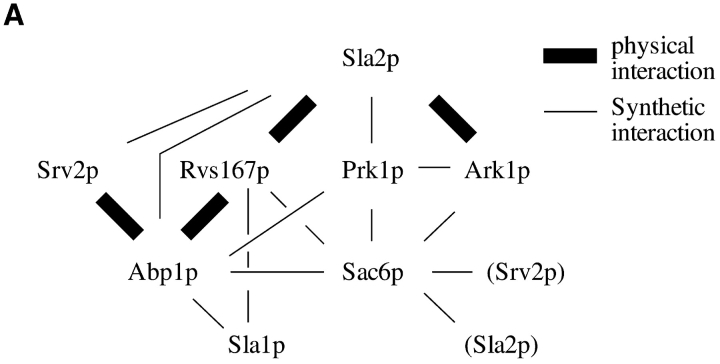
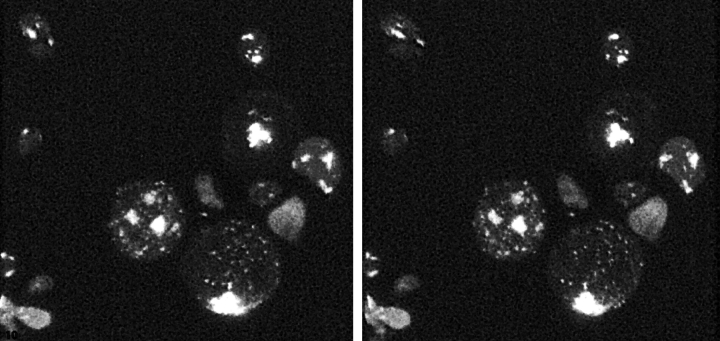
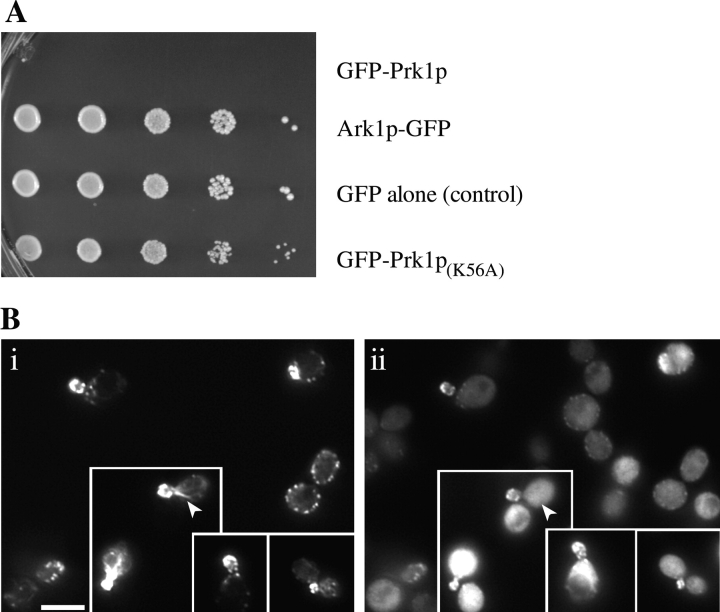
Ark1p (actin regulating kinase 1) was identified as a yeast protein that binds to Sla2p, an evolutionarily conserved cortical actin cytoskeleton protein. Ark1p and a second yeast protein, Prk1p, contain NH2-terminal kinase domains that are 70% identical. Together with six other putative kinases from a number of organisms, these proteins define a new protein kinase family that we have named the Ark family. Lack of both Ark1p and Prk1p resulted in the formation of large cytoplasmic actin clumps and severe defects in cell growth. These defects were rescued by wild-type, but not by kinase-dead versions of the proteins. Elevated levels of either Ark1p or Prk1p caused a number of actin and cell morphological defects that were not observed when the kinase-dead versions were overexpressed instead. Ark1p and Prk1p were shown to localize to actin cortical patches, making these two kinases the first signaling proteins demonstrated to be patch components. These results suggest that Ark1p and Prk1p may be downstream effectors of signaling pathways that control actin patch organization and function. Furthermore, results of double-mutant analyses suggest that Ark1p and Prk1p function in overlapping but distinct pathways that regulate the cortical actin cytoskeleton.
Ark1p(肌动蛋白调节激酶1)被鉴定为一种与Sla2p结合的酵母蛋白,Sla2p是一种进化上保守的皮质肌动蛋白细胞骨架蛋白。Ark1p和另一种酵母蛋白Prk1p含有70%相同的NH2末端激酶结构域。与来自许多生物体的其他六种假定激酶一起,这些蛋白定义了一个我们命名为Ark家族的新蛋白激酶家族。Ark1p和Prk1p的缺失导致形成大的细胞质肌动蛋白团块以及细胞生长的严重缺陷。这些缺陷可被野生型蛋白挽救,但不能被该蛋白的激酶失活版本挽救。Ark1p或Prk1p水平的升高会导致一些肌动蛋白和细胞形态缺陷,而当激酶失活版本过表达时则未观察到这些缺陷。Ark1p和Prk1p被证明定位于肌动蛋白皮质斑块,使这两种激酶成为首批被证明是斑块成分的信号蛋白。这些结果表明,Ark1p和Prk1p可能是控制肌动蛋白斑块组织和功能的信号通路的下游效应器。此外,双突变分析结果表明,Ark1p和Prk1p在调节皮质肌动蛋白细胞骨架的重叠但不同的途径中发挥作用。