Morita K, Sasaki H, Fujimoto K, Furuse M, Tsukita S
Department of Cell Biology, Faculty of Medicine, Kyoto University, Sakyo-ku, Kyoto 606, Japan.
J Cell Biol. 1999 May 3;145(3):579-88. doi: 10.1083/jcb.145.3.579.
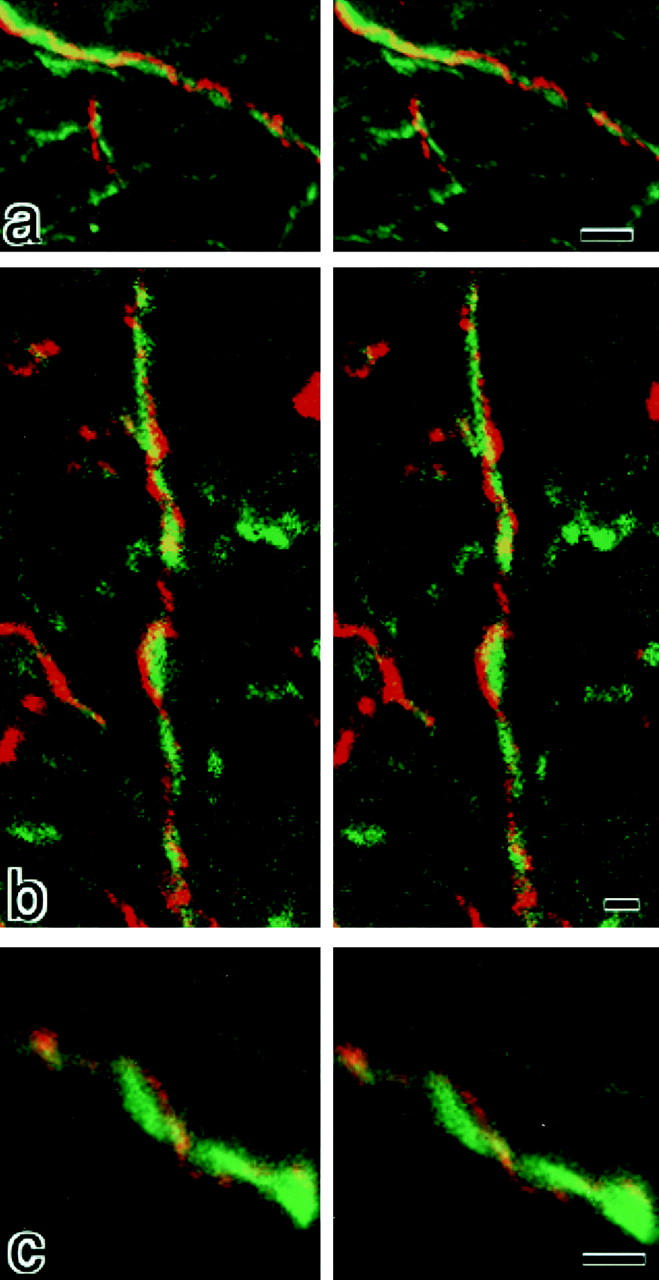
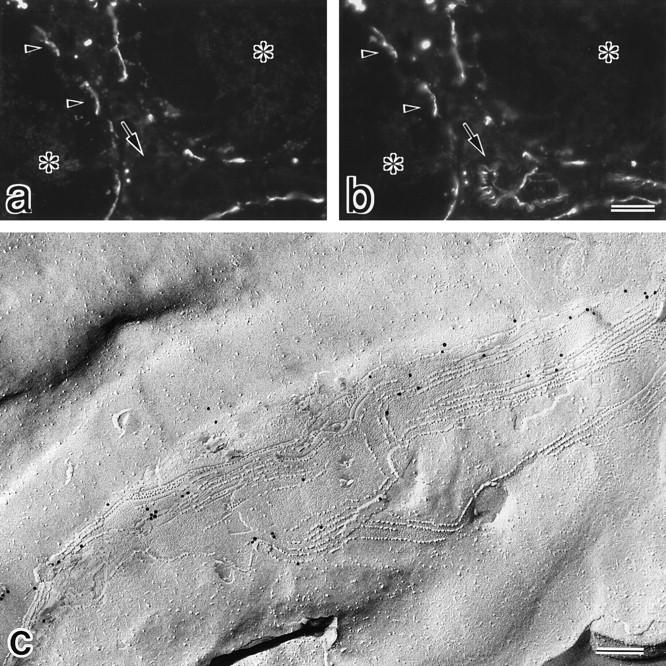
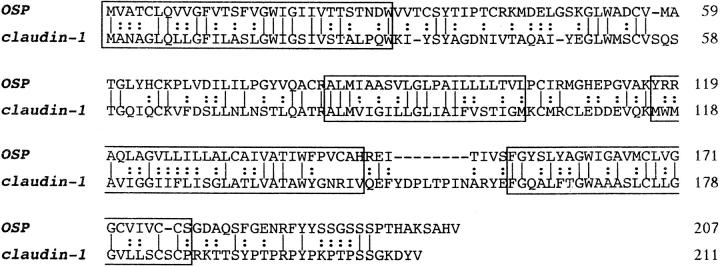
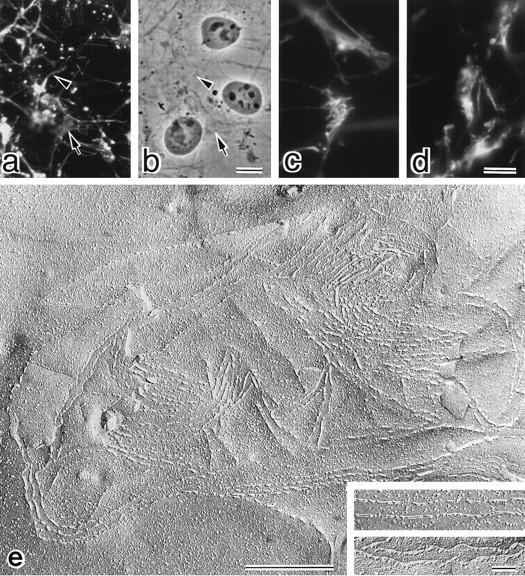
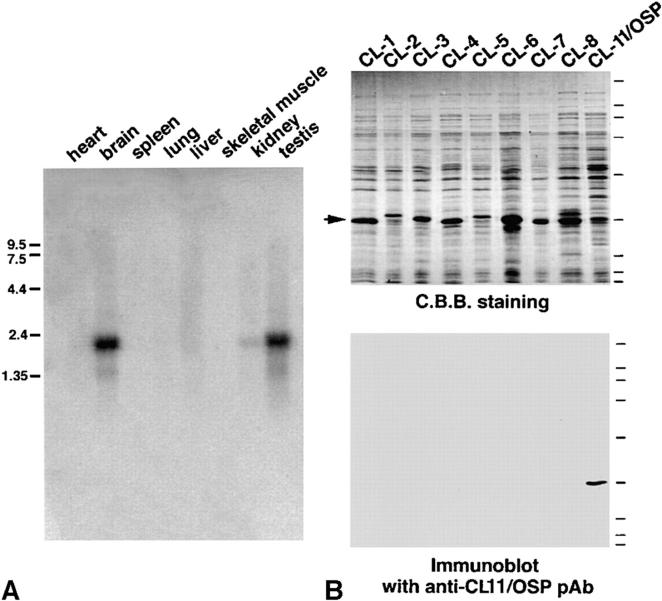
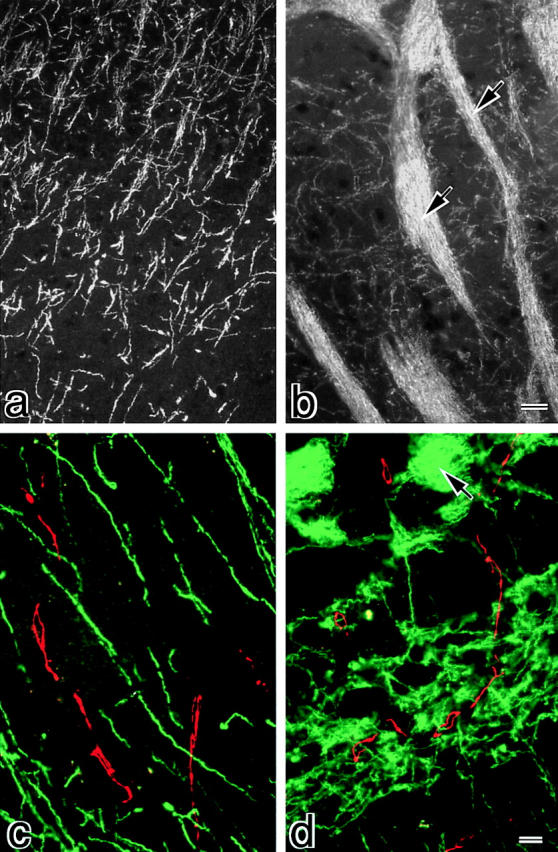
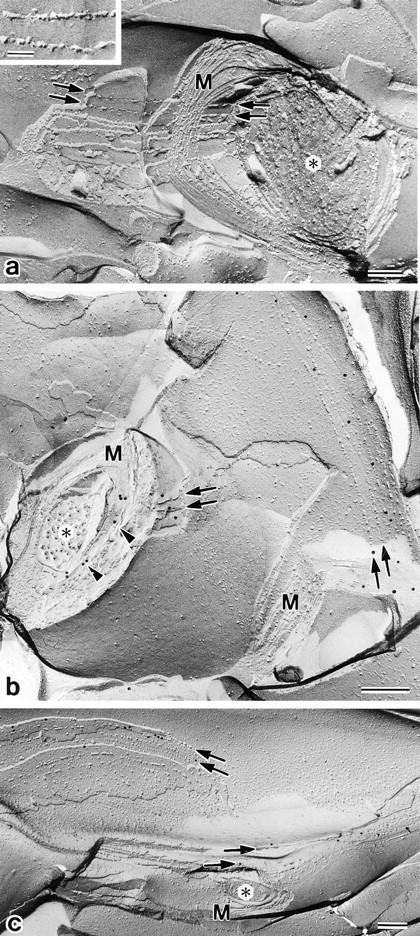
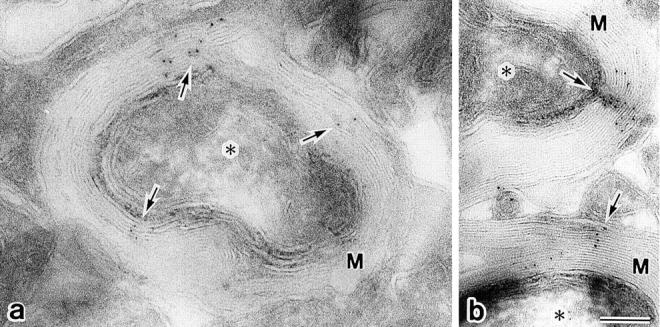
Members of the newly identified claudin gene family constitute tight junction (TJ) strands, which play a pivotal role in compartmentalization in multicellular organisms. We identified oligodendrocyte-specific protein (OSP) as claudin-11, a new claudin family member, due to its sequence similarity to claudins as well as its ability to form TJ strands in transfected fibroblasts. Claudin-11/OSP mRNA was expressed in the brain and testis. Immunofluorescence microscopy with anti-claudin-11/OSP polyclonal antibody (pAb) and anti-neurofilament mAb revealed that in the brain claudin-11/OSP-positive linear structures run in a gentle spiral around neurofilament-positive axons. At the electron microscopic level, these linear structures were identified as the so-called interlamellar strands in myelin sheaths of oligodendrocytes. In testis, well-developed TJ strands of Sertoli cells were specifically labeled with anti-claudin-11/OSP pAb both at immunofluorescence and electron microscopic levels. These findings indicated that the interlamellar strands of oligodendrocyte myelin sheaths can be regarded as a variant of TJ strands found in many other epithelial cells, and that these strands share a specific claudin species, claudin-11/OSP, with those in Sertoli cells to create and maintain the repeated compartments around axons by oligodendrocytes.
新发现的紧密连接蛋白基因家族成员构成紧密连接(TJ)链,其在多细胞生物的区室化中起关键作用。我们将少突胶质细胞特异性蛋白(OSP)鉴定为紧密连接蛋白-11,它是紧密连接蛋白家族的一个新成员,这是由于其与紧密连接蛋白的序列相似性以及在转染的成纤维细胞中形成TJ链的能力。紧密连接蛋白-11/OSP mRNA在脑和睾丸中表达。用抗紧密连接蛋白-11/OSP多克隆抗体(pAb)和抗神经丝单克隆抗体进行免疫荧光显微镜检查显示,在脑中,紧密连接蛋白-11/OSP阳性线性结构围绕神经丝阳性轴突呈平缓螺旋状延伸。在电子显微镜水平,这些线性结构被鉴定为少突胶质细胞髓鞘中的所谓层间链。在睾丸中,支持细胞发育良好的TJ链在免疫荧光和电子显微镜水平均被抗紧密连接蛋白-11/OSP pAb特异性标记。这些发现表明,少突胶质细胞髓鞘的层间链可被视为在许多其他上皮细胞中发现的TJ链的一种变体,并且这些链与支持细胞中的链共享一种特定的紧密连接蛋白,即紧密连接蛋白-11/OSP,以通过少突胶质细胞在轴突周围形成并维持重复的区室。