Mitic L L, Schneeberger E E, Fanning A S, Anderson J M
Department of Cell Biology, Yale University School of Medicine, New Haven, Connecticut 06520, USA.
J Cell Biol. 1999 Aug 9;146(3):683-93. doi: 10.1083/jcb.146.3.683.
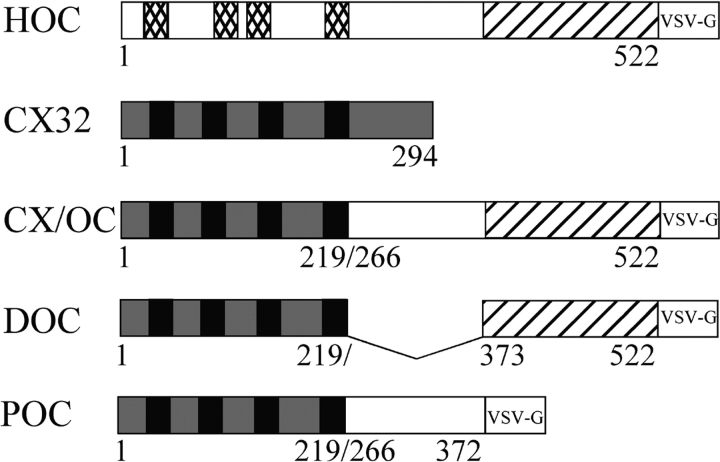
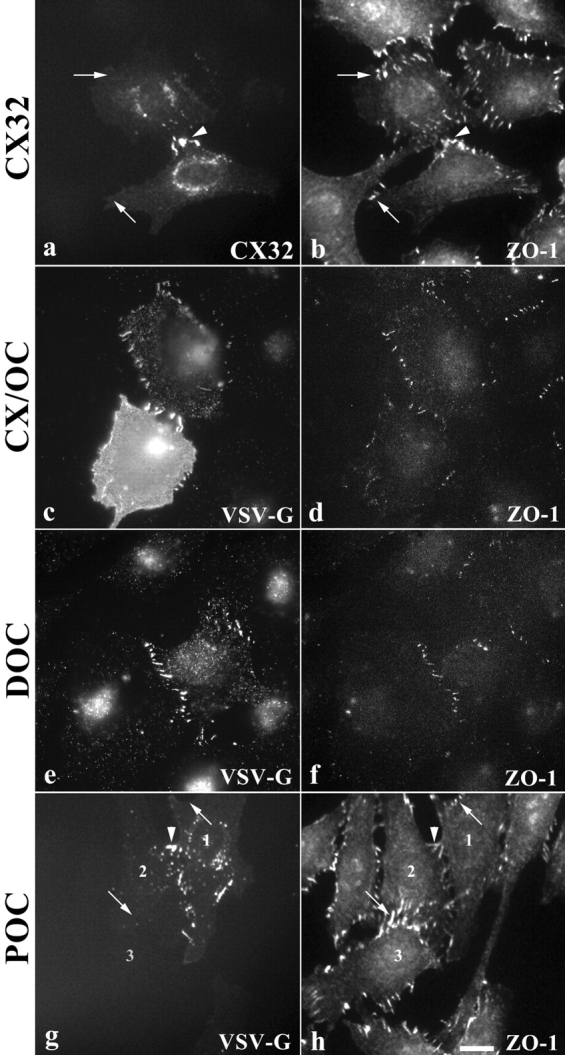
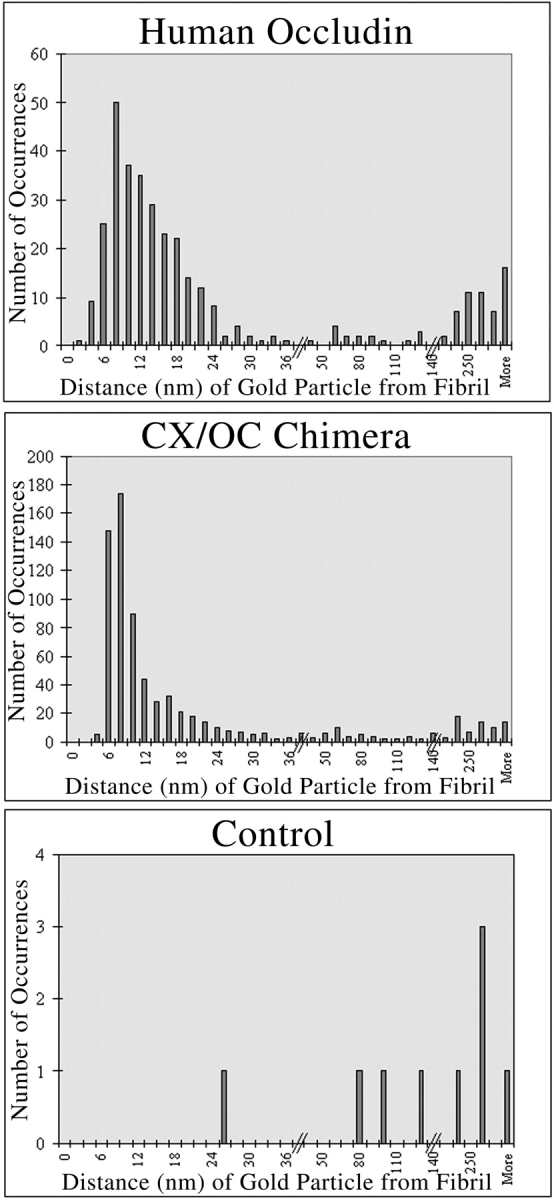
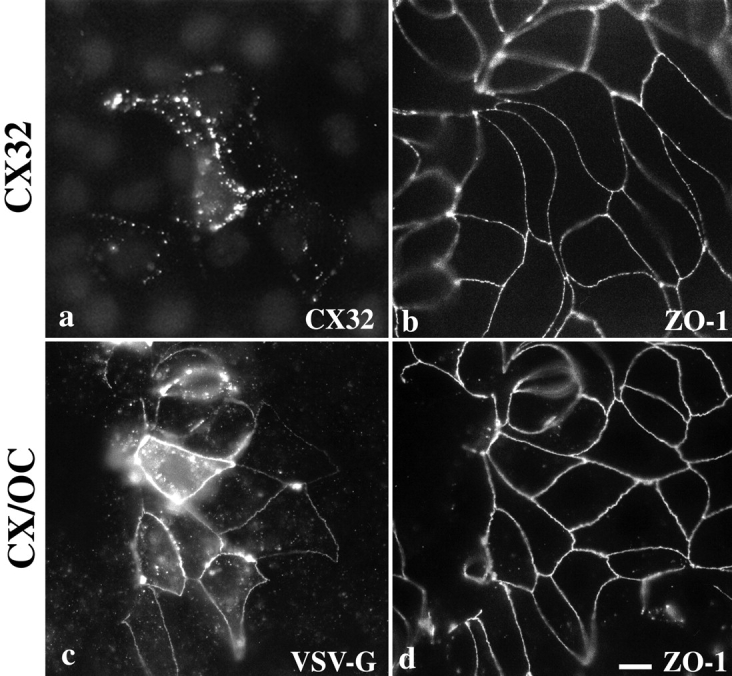
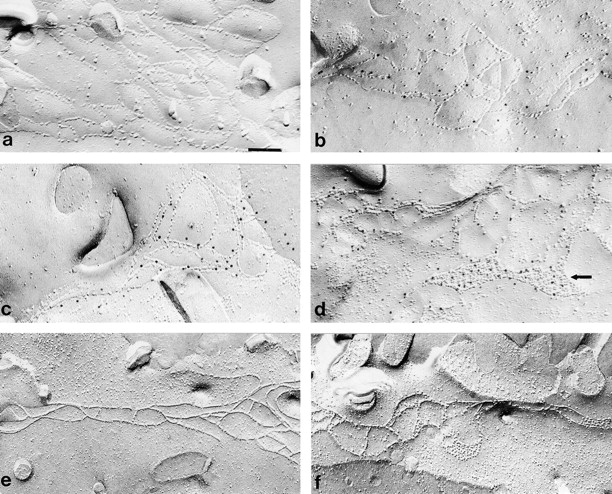
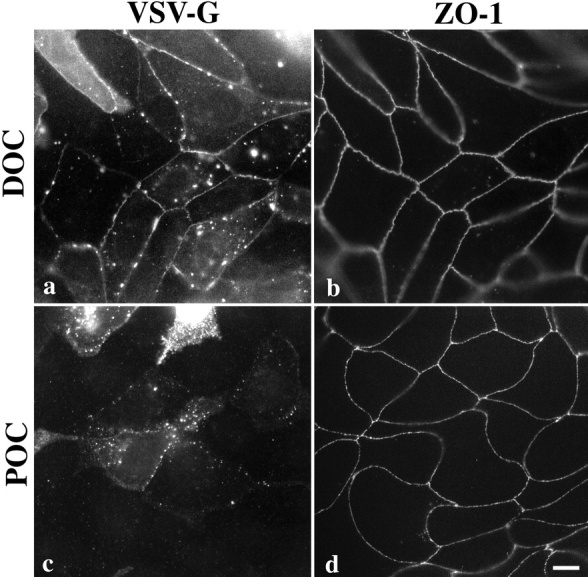
Occludin is a transmembrane protein of the tight junction that functions in creating both an intercellular permeability barrier and an intramembrane diffusion barrier. Creation of the barrier requires the precise localization of occludin, and a distinct family of transmembrane proteins called claudins, into continuous linear fibrils visible by freeze-fracture microscopy. Conflicting evidence exists regarding the relative importance of the transmembrane and extracellular versus the cytoplasmic domains in localizing occludin in fibrils. To specifically address whether occludin's COOH-terminal cytoplasmic domain is sufficient to target it into tight junction fibrils, we created chimeras with the transmembrane portions of connexin 32. Despite the gap junction targeting information present in their transmembrane and extracellular domains, these connexin-occludin chimeras localized within fibrils when expressed in MDCK cells, as assessed by immunofluorescence and immunogold freeze-fracture imaging. Localization of chimeras at tight junctions depends on the COOH-terminal ZO-binding domain and not on the membrane proximal domain of occludin. Furthermore, neither endogenous occludin nor claudin is required for targeting to ZO-1-containing cell-cell contacts, since in normal rat kidney fibroblasts targeting of chimeras again required only the ZO-binding domain. These results suggest an important role for cytoplasmic proteins, presumably ZO-1, ZO-2, and ZO-3, in localizing occludin in tight junction fibrils. Such a scaffolding and cytoskeletal coupling function for ZO MAGUKs is analogous to that of other members of the MAGUK family.
闭合蛋白是紧密连接的一种跨膜蛋白,在形成细胞间通透性屏障和膜内扩散屏障方面发挥作用。屏障的形成需要闭合蛋白以及一类名为claudins的独特跨膜蛋白家族精确地定位到通过冷冻断裂显微镜可见的连续线性纤维中。关于跨膜和细胞外结构域与细胞质结构域在将闭合蛋白定位到纤维中的相对重要性,存在相互矛盾的证据。为了具体研究闭合蛋白的COOH末端细胞质结构域是否足以将其靶向紧密连接纤维,我们构建了与连接蛋白32跨膜部分的嵌合体。尽管这些连接蛋白 - 闭合蛋白嵌合体的跨膜和细胞外结构域中存在间隙连接靶向信息,但通过免疫荧光和免疫金冷冻断裂成像评估,当在MDCK细胞中表达时,它们定位在纤维内。嵌合体在紧密连接处的定位取决于COOH末端的ZO结合结构域,而不是闭合蛋白的膜近端结构域。此外,靶向含ZO - 1的细胞 - 细胞接触并不需要内源性闭合蛋白或claudin,因为在正常大鼠肾成纤维细胞中,嵌合体的靶向再次仅需要ZO结合结构域。这些结果表明细胞质蛋白(可能是ZO - 1、ZO - 2和ZO - 3)在将闭合蛋白定位到紧密连接纤维中起着重要作用。ZO MAGUKs的这种支架和细胞骨架偶联功能类似于MAGUK家族的其他成员。