Grobmyer S R, Armstrong R C, Nicholson S C, Gabay C, Arend W P, Potter S H, Melchior M, Fritz L C, Nathan C F
Department of Surgery, Weill Medical College of Cornell University, New York, New York 10021, USA.
Mol Med. 1999 Sep;5(9):585-94.
Septic shock is a leading cause of mortality in intensive care units. No new interventions in the last 20 years have made a substantial impact on the outcome of patients with septic shock. Identification of inhibitable pathways that mediate death in shock is an important goal.
Two novel caspase inhibitors, (2-indolyl)-carbonyl-Ala-Asp-fluoromethylketone (IDN 1529) and (1-methyl-3-methyl-2-indolyl)-carbonyl-Val-Asp-fluoromethylketone (IDN 1965), were studied in a murine model of endotoxic shock.
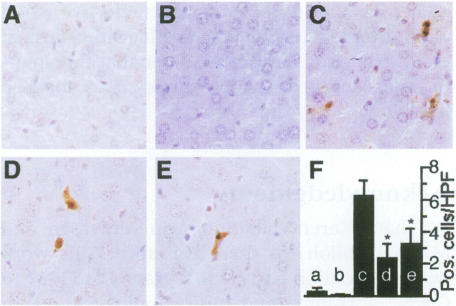
IDN 1529 prolonged survival when given before or up to 3 hr after high-dose LPS (p < 0.01) and increased by 2.2-fold the number of animals surviving longterm after a lower dose of LPS (p < 0.01). Despite its similar chemical structure, IDN 1965 lacked these protective effects. Both compounds inhibited caspases 1, 2, 3, 6, 8, and 9, and both afforded comparable reduction in Fas- and LPS-induced caspase 3-like activity and apoptosis. Paradoxically, administration of IDN 1529 but not IDN 1965 led to an increase in the LPS-induced elevation of serum cytokines related directly (IL-1beta, IL-18) or indirectly (IL-1alpha, IL-1Ra) to the action of caspase 1.
A process that appears to be distinct from both apoptosis and the release of inflammatory cytokines is a late-acting requirement for lethality in endotoxic shock. Inhibition of this process can rescue mice even when therapy is initiated after LPS has made the mice severely ill.
脓毒性休克是重症监护病房患者死亡的主要原因。过去20年中,没有新的干预措施对脓毒性休克患者的预后产生重大影响。识别介导休克死亡的可抑制途径是一个重要目标。
在小鼠内毒素休克模型中研究了两种新型半胱天冬酶抑制剂,即(2-吲哚基)-羰基-丙氨酸-天冬氨酸-氟甲基酮(IDN 1529)和(1-甲基-3-甲基-2-吲哚基)-羰基-缬氨酸-天冬氨酸-氟甲基酮(IDN 1965)。
在高剂量脂多糖(LPS)给药前或给药后3小时内给予IDN 1529可延长存活时间(p < 0.01),并使低剂量LPS后长期存活的动物数量增加2.2倍(p < 0.01)。尽管IDN 1965具有相似的化学结构,但它缺乏这些保护作用。两种化合物均抑制半胱天冬酶1、2、3、6、8和9,并且在Fas和LPS诱导的半胱天冬酶3样活性及凋亡方面均有类似程度的降低。矛盾的是,给予IDN 1529而非IDN 1965会导致LPS诱导的血清细胞因子升高,这些细胞因子直接(IL-1β、IL-18)或间接(IL-1α、IL-1Ra)与半胱天冬酶1的作用相关。
一个似乎与凋亡和炎性细胞因子释放均不同的过程是内毒素休克致死的晚期作用要求。即使在LPS使小鼠病情严重后开始治疗,抑制该过程也可挽救小鼠。