Bowne W B, Srinivasan R, Wolchok J D, Hawkins W G, Blachere N E, Dyall R, Lewis J J, Houghton A N
Memorial Sloan-Kettering Cancer Center, New York, New York 10021, USA.
J Exp Med. 1999 Dec 6;190(11):1717-22. doi: 10.1084/jem.190.11.1717.
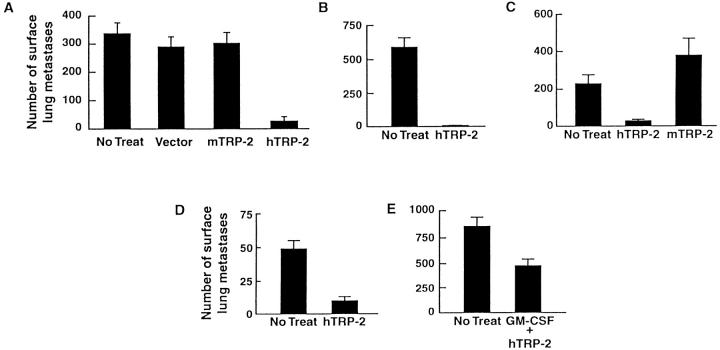
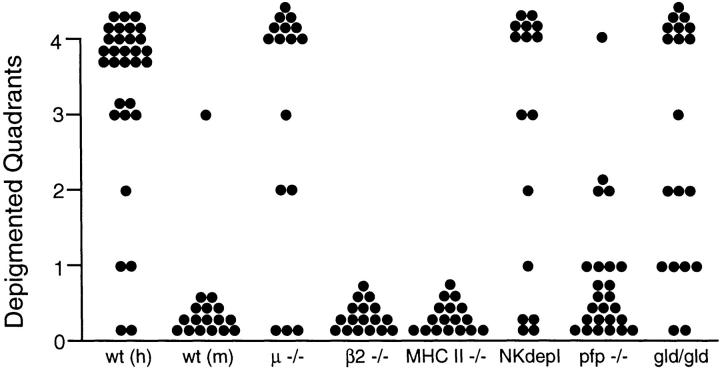
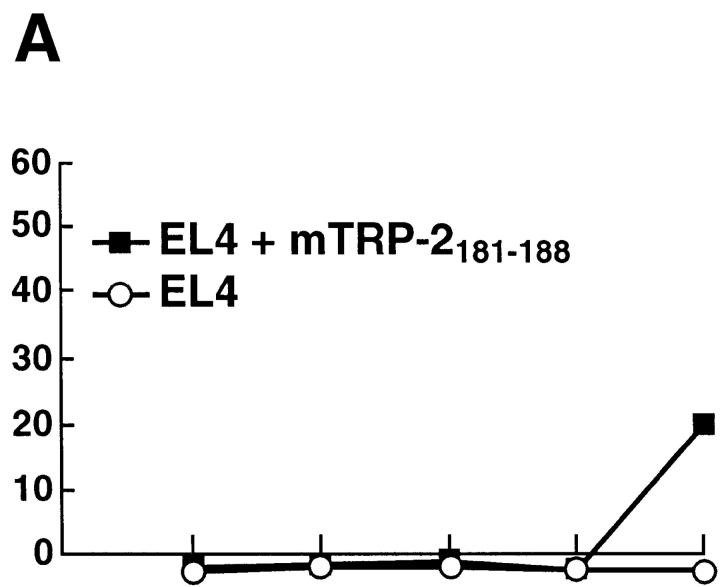
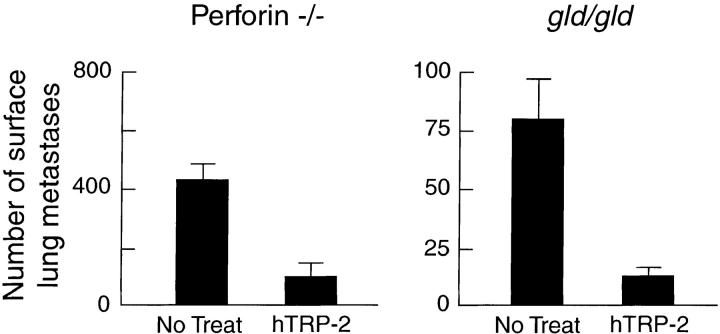
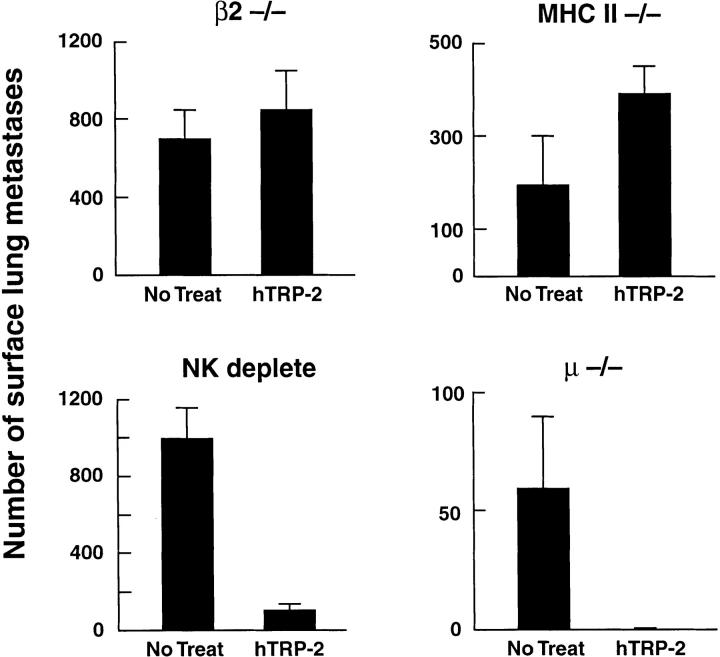
Self-antigens, in the form of differentiation antigens, are commonly recognized by the immune system on melanoma and other cancers. We have shown previously that active immunization of mice against the melanocyte differentiation antigen, a tyrosinase-related protein (TRP) gp75(TRP-1) (the brown locus protein) expressed by melanomas, could induce tumor immunity and autoimmunity manifested as depigmentation. In this system, tumor immunity and autoimmunity were mediated by autoantibodies. Here, we characterize immunity against another tyrosinase family glycoprotein TRP-2 (the slaty locus protein), using the same mouse model and method of immunization. As observed previously for gp75(TRP-1), immunity was induced by DNA immunization against a xenogeneic form of TRP-2, but not against the syngeneic gene, and depended on CD4(+) cells. Immunization against TRP-2 induced autoantibodies and autoreactive cytotoxic T cells. In contrast to immunization against gp75(TRP-1), both tumor immunity and autoimmunity required CD8(+) T cells, but not antibodies. Only autoimmunity required perforin, whereas tumor immunity proceeded in the absence of perforin. Thus, immunity induced against two closely related autoantigens that are highly conserved throughout vertebrate evolution involved qualitatively different mechanisms, i.e., antibody versus CD8(+) T cell. However, both pathways led to tumor immunity and identical phenotypic manifestations of autoimmunity.
以分化抗原形式存在的自身抗原通常会被黑色素瘤和其他癌症的免疫系统识别。我们之前已经表明,主动免疫小鼠使其针对黑色素细胞分化抗原,即黑色素瘤表达的一种酪氨酸酶相关蛋白(TRP)gp75(TRP - 1)(棕色位点蛋白),可诱导肿瘤免疫和表现为色素脱失的自身免疫。在这个系统中,肿瘤免疫和自身免疫是由自身抗体介导的。在此,我们使用相同的小鼠模型和免疫方法,对针对另一种酪氨酸酶家族糖蛋白TRP - 2(石板色位点蛋白)的免疫进行了表征。如之前对gp75(TRP - 1)所观察到的,通过针对异种形式的TRP - 2进行DNA免疫可诱导免疫,但针对同基因基因则不能,且这种免疫依赖于CD4(+)细胞。针对TRP - 2的免疫诱导了自身抗体和自身反应性细胞毒性T细胞。与针对gp75(TRP - 1)的免疫不同,肿瘤免疫和自身免疫都需要CD8(+) T细胞,但不需要抗体。只有自身免疫需要穿孔素,而肿瘤免疫在没有穿孔素的情况下也能进行。因此,针对在整个脊椎动物进化过程中高度保守的两种密切相关自身抗原所诱导的免疫涉及质的不同机制,即抗体介导与CD8(+) T细胞介导。然而,这两条途径都导致了肿瘤免疫和相同表型的自身免疫表现。