Wen L, Wong F S, Tang J, Chen N Y, Altieri M, David C, Flavell R, Sherwin R
Section of Endocrinology, Department of Internal Medicine, the. Yale University Shool of Medicine, New Haven, CT, USA.
J Exp Med. 2000 Jan 3;191(1):97-104. doi: 10.1084/jem.191.1.97.
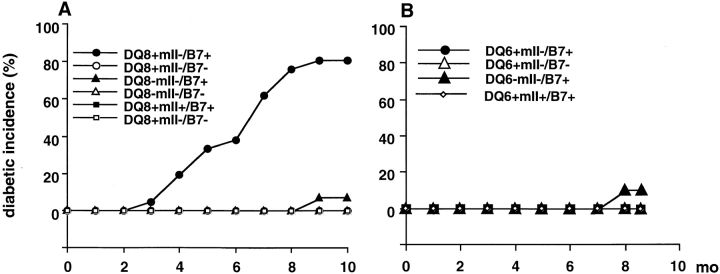
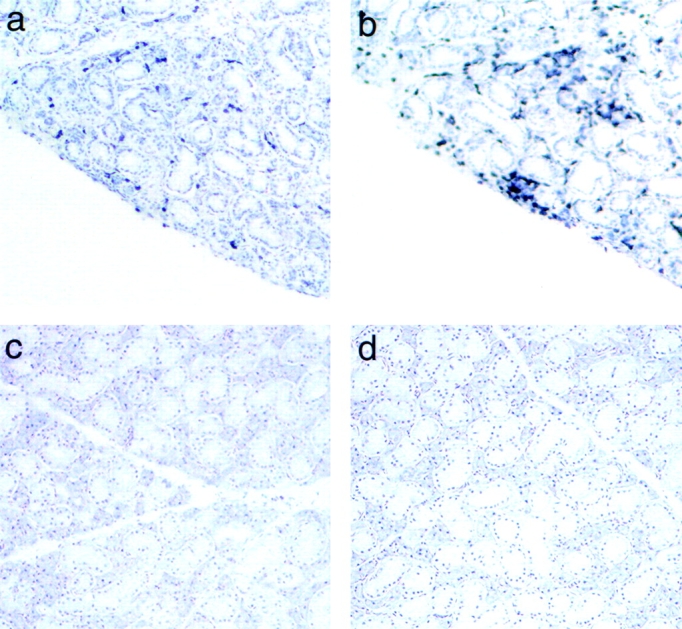
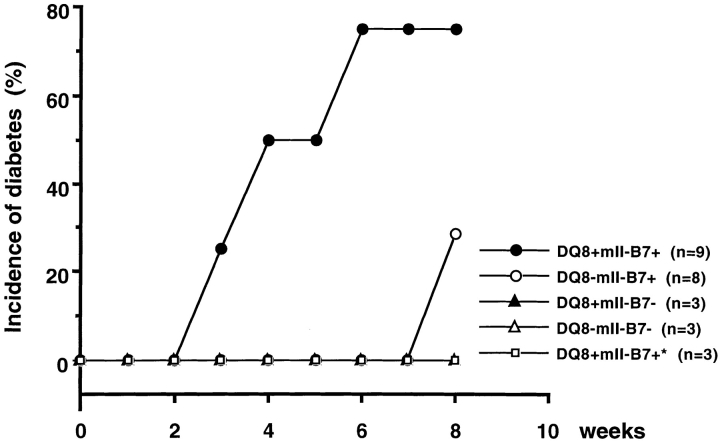
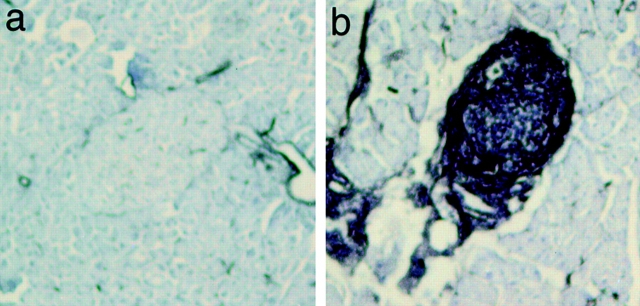
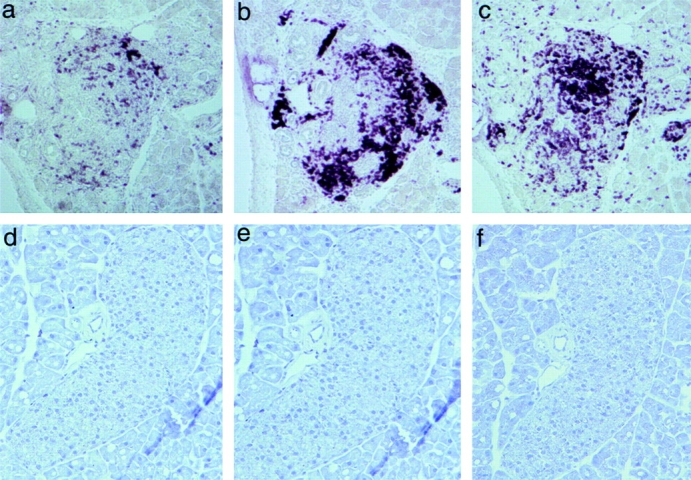
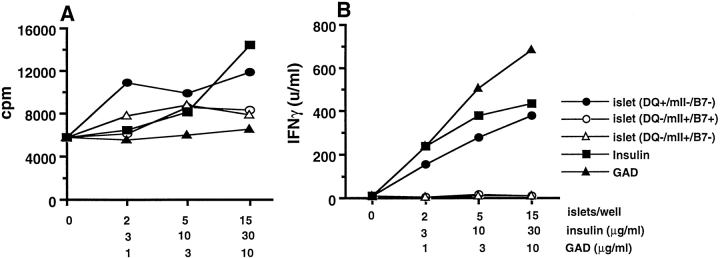
Although DQA10301/DQB10302 is the human histocompatibility leukocyte antigen (HLA) class II gene most commonly associated with human type 1 diabetes, direct in vivo experimental evidence for its diabetogenic role is lacking. Therefore, we generated C57BL/6 transgenic mice that bear this molecule and do not express mouse major histocompatibility complex (MHC) class II molecules (DQ8(+)/mII(-)). They did not develop insulitis or spontaneous diabetes. However, when DQ8(+)/mII(-) mice were bred with C57BL/6 mice expressing costimulatory molecule B7-1 on beta cells (which normally do not develop diabetes), 81% of the DQ8(+)/mII(-)/B7-1(+) mice developed spontaneous diabetes. The diabetes was accompanied by severe insulitis composed of both T cells (CD4(+) and CD8(+)) and B cells. T cells from the diabetic mice secreted large amounts of interferon gamma, but not interleukin 4, in response to DQ8(+) islets and the putative islet autoantigens, insulin and glutamic acid decarboxylase (GAD). Diabetes could also be adoptively transferred to irradiated nondiabetic DQ8(+)/mII(-)/B7-1(+) mice. In striking contrast, none of the transgenic mice in which the diabetes protective allele (DQA10103/DQB10601, DQ6 for short) was substituted for mouse MHC class II molecules but remained for the expression of B7-1 on pancreatic beta cells (DQ6(+)/mII(-)/B7-1(+)) developed diabetes. Only 7% of DQ(-)/mII(-)/B7-1(+) mice developed diabetes at an older age, and none of the DQ(-)/mII(+)/B7-1(+) mice or DQ8(+)/mII(+)/B7-1(+) mice developed diabetes. In conclusion, substitution of HLA-DQA10301/DQB10302, but not HLA-DQA10103/DQB10601, for murine MHC class II provokes autoimmune diabetes in non-diabetes-prone rat insulin promoter (RIP).B7-1 C57BL/6 mice. Our data provide direct in vivo evidence for the diabetogenic effect of this human MHC class II molecule and a unique "humanized" animal model of spontaneous diabetes.
尽管DQA10301/DQB10302是与人类1型糖尿病最常相关的人类组织相容性白细胞抗原(HLA)II类基因,但缺乏其致糖尿病作用的直接体内实验证据。因此,我们培育了携带该分子且不表达小鼠主要组织相容性复合体(MHC)II类分子的C57BL/6转基因小鼠(DQ8(+)/mII(-))。它们未发生胰岛炎或自发性糖尿病。然而,当DQ8(+)/mII(-)小鼠与在β细胞上表达共刺激分子B7-1的C57BL/6小鼠(正常情况下不会患糖尿病)杂交时,81%的DQ8(+)/mII(-)/B7-1(+)小鼠发生了自发性糖尿病。糖尿病伴有由T细胞(CD4(+)和CD8(+))和B细胞组成的严重胰岛炎。糖尿病小鼠的T细胞在接触DQ8(+)胰岛以及假定的胰岛自身抗原胰岛素和谷氨酸脱羧酶(GAD)时,会分泌大量的干扰素γ,但不分泌白细胞介素4。糖尿病也可以通过过继转移到经照射的非糖尿病DQ8(+)/mII(-)/B7-1(+)小鼠身上。与之形成鲜明对比的是,用糖尿病保护等位基因(DQA10103/DQB10601,简称DQ6)替代小鼠MHC II类分子但在胰腺β细胞上仍保留B7-1表达的转基因小鼠(DQ6(+)/mII(-)/B7-1(+))均未发生糖尿病。只有7%的DQ(-)/mII(-)/B7-1(+)小鼠在老年时发生糖尿病,而DQ(-)/mII(+)/B7-1(+)小鼠或DQ8(+)/mII(+)/B7-1(+)小鼠均未发生糖尿病。总之,用HLA-DQA10301/DQB10302而非HLA-DQA10103/DQB10601替代小鼠MHC II类分子会在非糖尿病倾向的大鼠胰岛素启动子(RIP).B7-1 C57BL/6小鼠中引发自身免疫性糖尿病。我们的数据为这种人类MHC II类分子的致糖尿病作用提供了直接的体内证据以及一种独特的自发性糖尿病“人源化”动物模型。