Ko Y G, Kang Y S, Kim E K, Park S G, Kim S
National Creative Research Initiatives Center for ARS Network, Sung Kyun Kwan University, Jangangu, Suwon, Kyunggido 440-746, Korea.
J Cell Biol. 2000 May 1;149(3):567-74. doi: 10.1083/jcb.149.3.567.
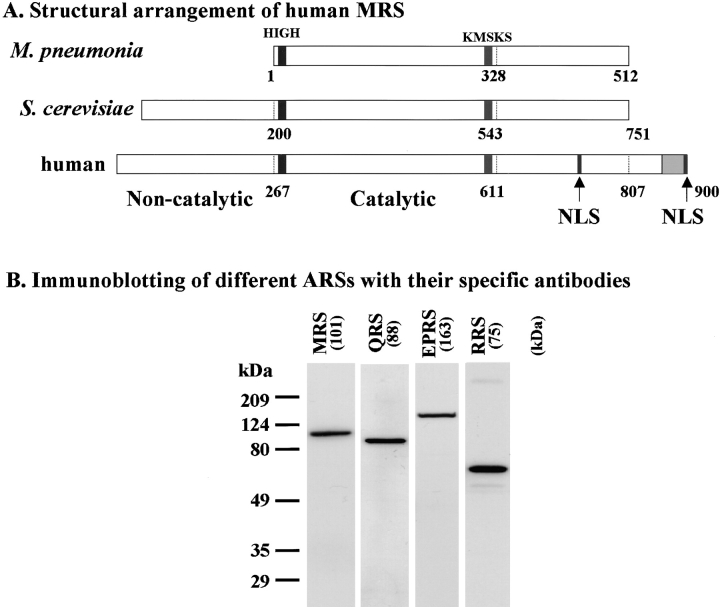
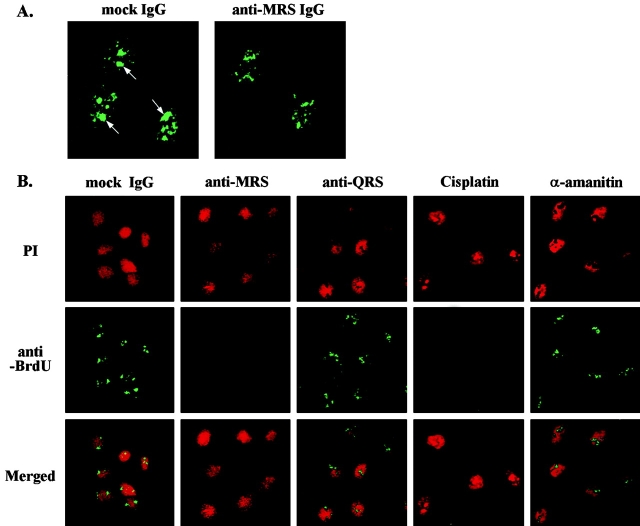
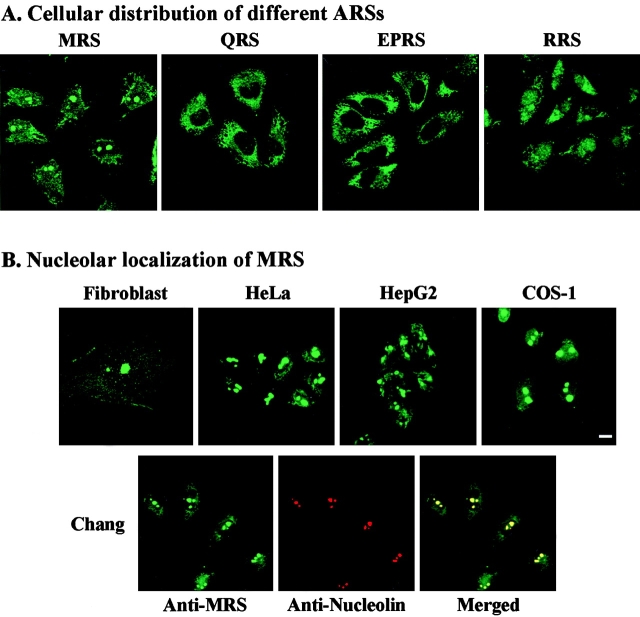
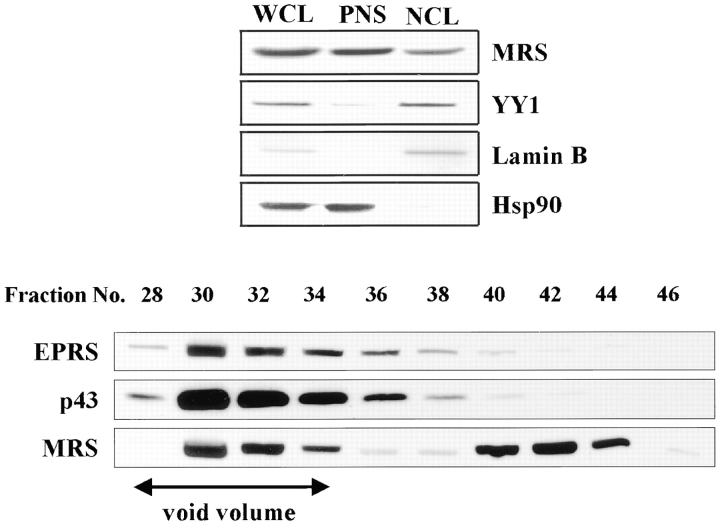
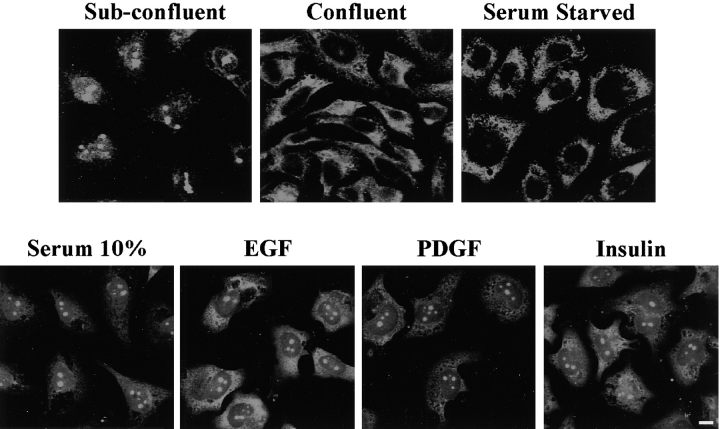
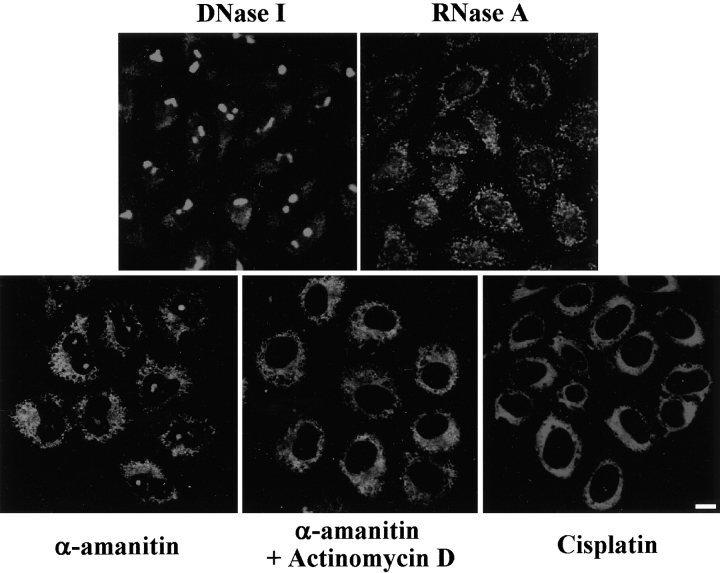
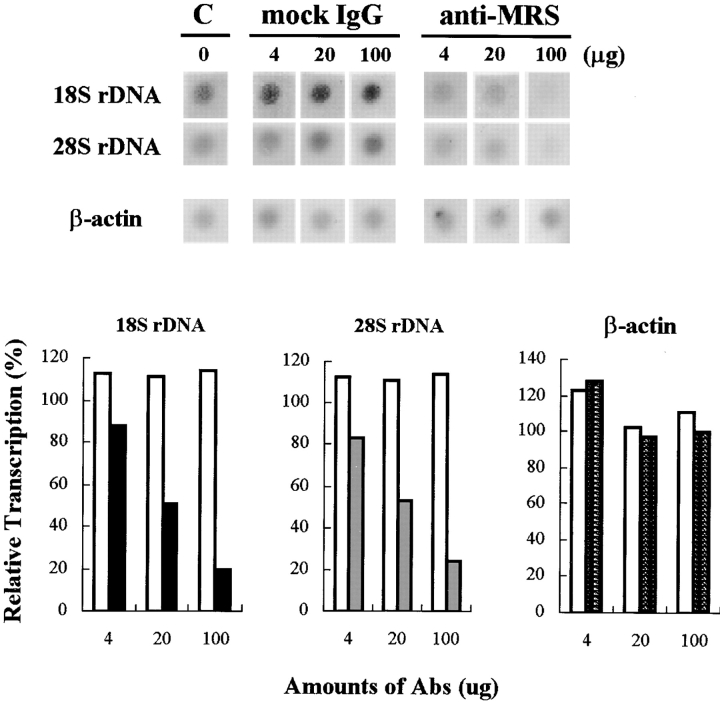
Human aminoacyl-tRNA synthetases (ARSs) are normally located in cytoplasm and are involved in protein synthesis. In the present work, we found that human methionyl-tRNA synthetase (MRS) was translocated to nucleolus in proliferative cells, but disappeared in quiescent cells. The nucleolar localization of MRS was triggered by various growth factors such as insulin, PDGF, and EGF. The presence of MRS in nucleoli depended on the integrity of RNA and the activity of RNA polymerase I in the nucleolus. The ribosomal RNA synthesis was specifically decreased by the treatment of anti-MRS antibody as determined by nuclear run-on assay and immunostaining with anti-Br antibody after incorporating Br-UTP into nascent RNA. Thus, human MRS plays a role in the biogenesis of rRNA in nucleoli, while it is catalytically involved in protein synthesis in cytoplasm.
人类氨酰-tRNA合成酶(ARSs)通常位于细胞质中,参与蛋白质合成。在本研究中,我们发现人类甲硫氨酰-tRNA合成酶(MRS)在增殖细胞中易位至核仁,但在静止细胞中消失。MRS的核仁定位由多种生长因子如胰岛素、血小板衍生生长因子(PDGF)和表皮生长因子(EGF)触发。核仁中MRS的存在取决于RNA的完整性和核仁中RNA聚合酶I的活性。通过核延伸分析以及在新生RNA中掺入溴尿苷三磷酸(Br-UTP)后用抗Br抗体进行免疫染色测定,抗MRS抗体处理可特异性降低核糖体RNA的合成。因此,人类MRS在核仁中rRNA的生物合成中发挥作用,同时在细胞质中催化参与蛋白质合成。