Volpicelli J, Balaraman G, Hahn J, Wallace H, Bux D
Treatment Research Center, University of Pennsylvania, Philadelphia, USA.
Alcohol Res Health. 1999;23(4):256-62.
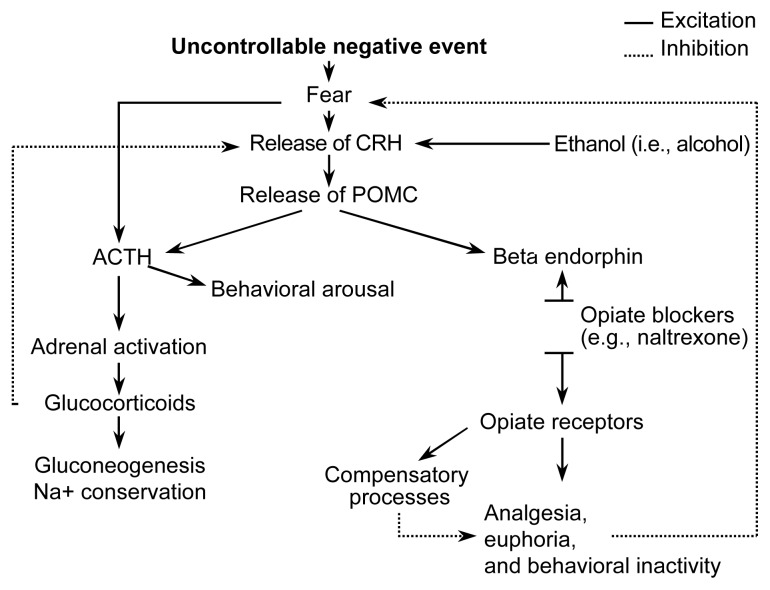
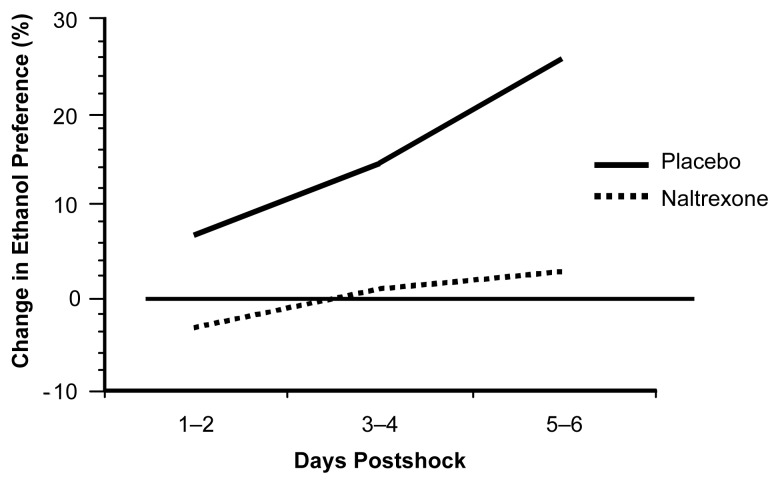
After a traumatic event, people often report using alcohol to relieve their symptoms of anxiety, irritability, and depression. Alcohol may relieve these symptoms because drinking compensates for deficiencies in endorphin activity following a traumatic experience. Within minutes of exposure to a traumatic event there is an increase in the level of endorphins in the brain. During the time of the trauma, endorphin levels remain elevated and help numb the emotional and physical pain of the trauma. However, after the trauma is over, endorphin levels gradually decrease and this may lead to a period of endorphin withdrawal that can last from hours to days. This period of endorphin withdrawal may produce emotional distress and contribute to other symptoms of posttraumatic stress disorder (PTSD). Because alcohol use increases endorphin activity, drinking following trauma may be used to compensate this endorphin withdrawal and thus avoid the associated emotional distress. This model has important implications for the treatment of PTSD and alcoholism.
经历创伤事件后,人们常称会借助酒精来缓解焦虑、易怒和抑郁症状。酒精或许能缓解这些症状,因为饮酒可弥补创伤经历后内啡肽活性的不足。接触创伤事件后的几分钟内,大脑中的内啡肽水平就会升高。在创伤发生期间,内啡肽水平持续升高,有助于减轻创伤带来的情感和身体痛苦。然而,创伤结束后,内啡肽水平会逐渐下降,这可能导致一段持续数小时至数天的内啡肽戒断期。这段内啡肽戒断期可能会产生情绪困扰,并导致创伤后应激障碍(PTSD)的其他症状。由于饮酒会增加内啡肽活性,创伤后饮酒可能被用来补偿这种内啡肽戒断,从而避免相关的情绪困扰。该模型对创伤后应激障碍和酒精中毒的治疗具有重要意义。