Giet R, Glover D M
Cancer Research Campaign, Cell Cycle Genetics Group, Department of Genetics, University of Cambridge, Cambridge CB2 3EH, United Kingdom.
J Cell Biol. 2001 Feb 19;152(4):669-82. doi: 10.1083/jcb.152.4.669.
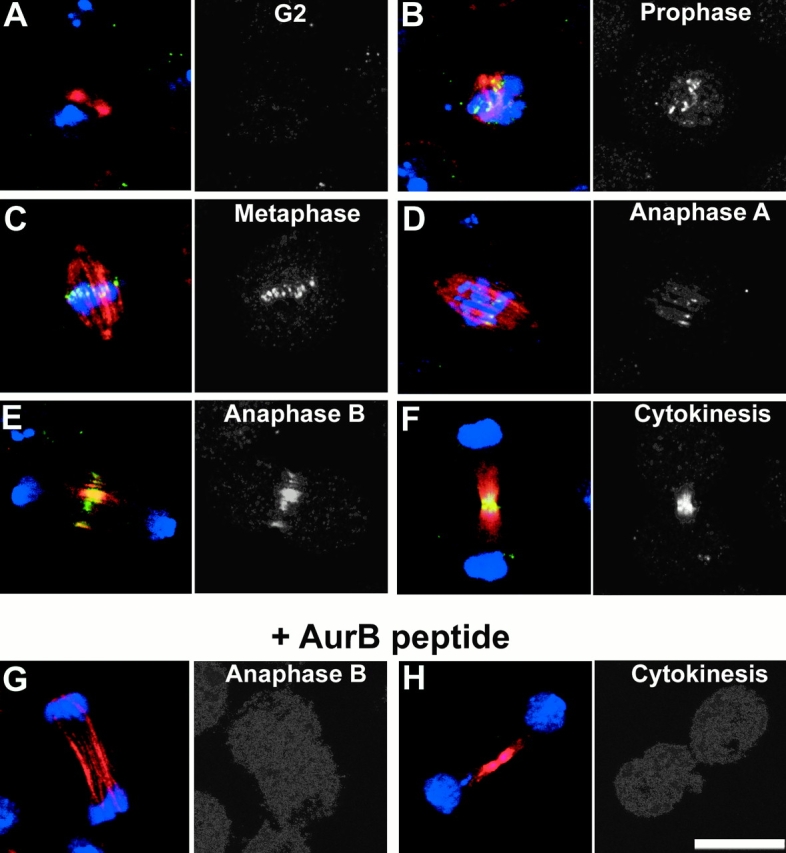
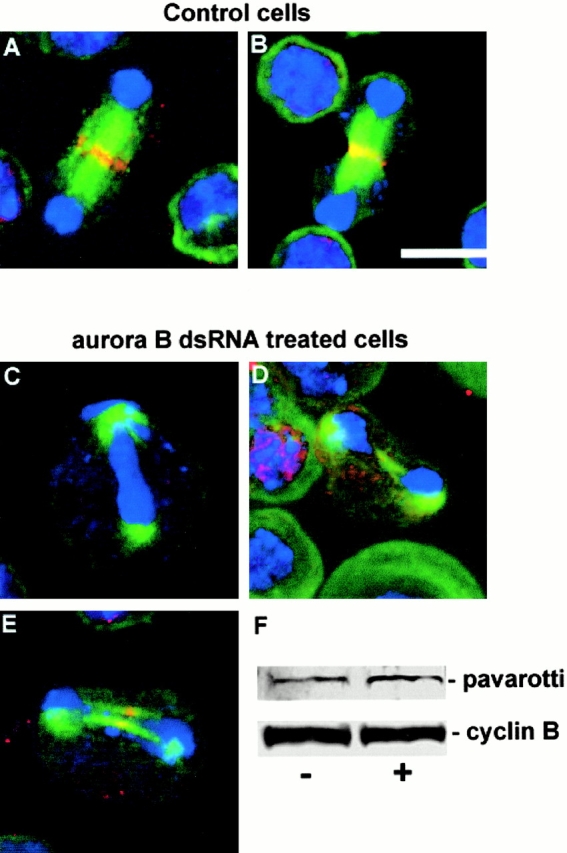
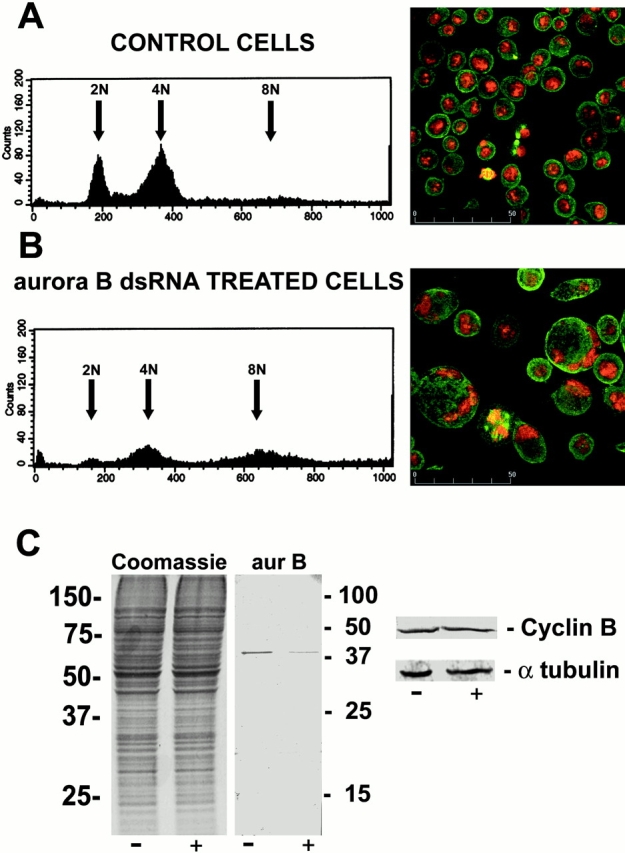
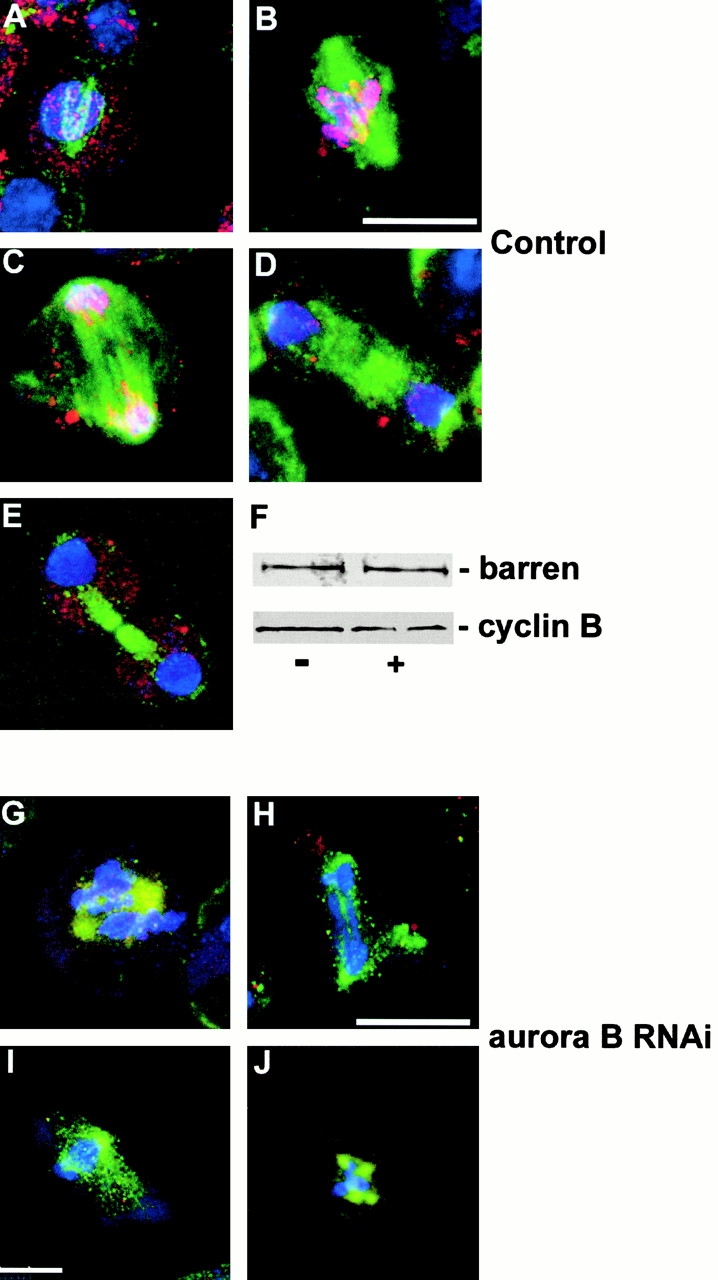
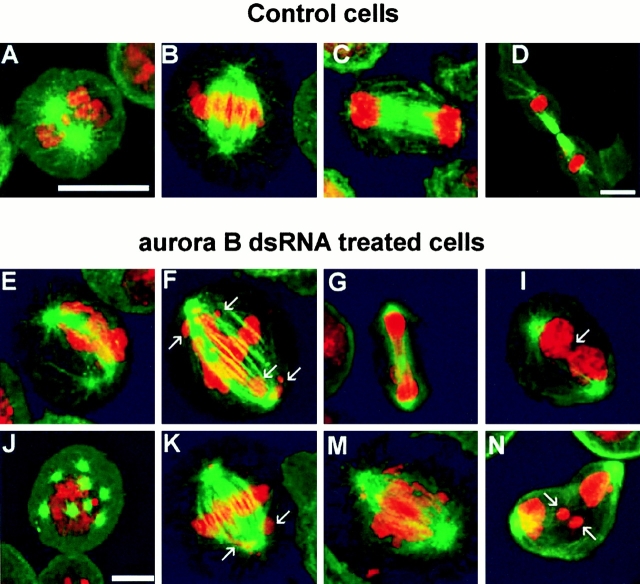
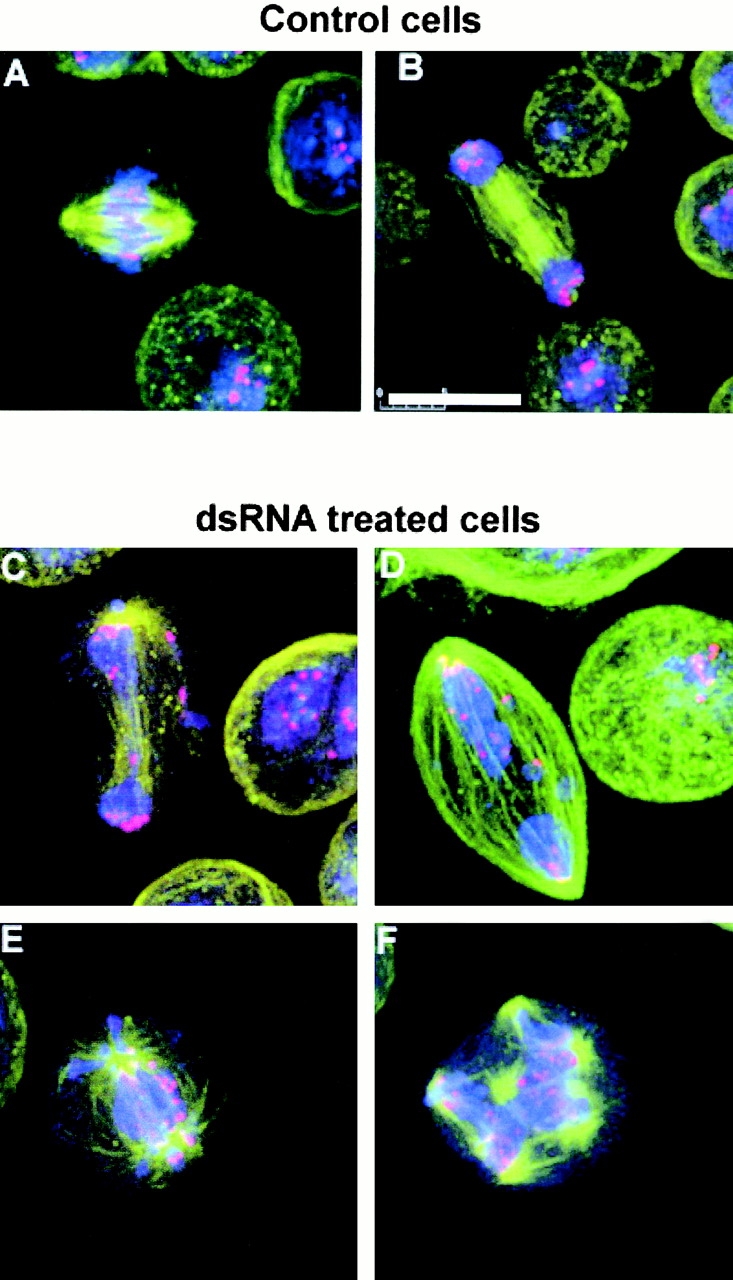
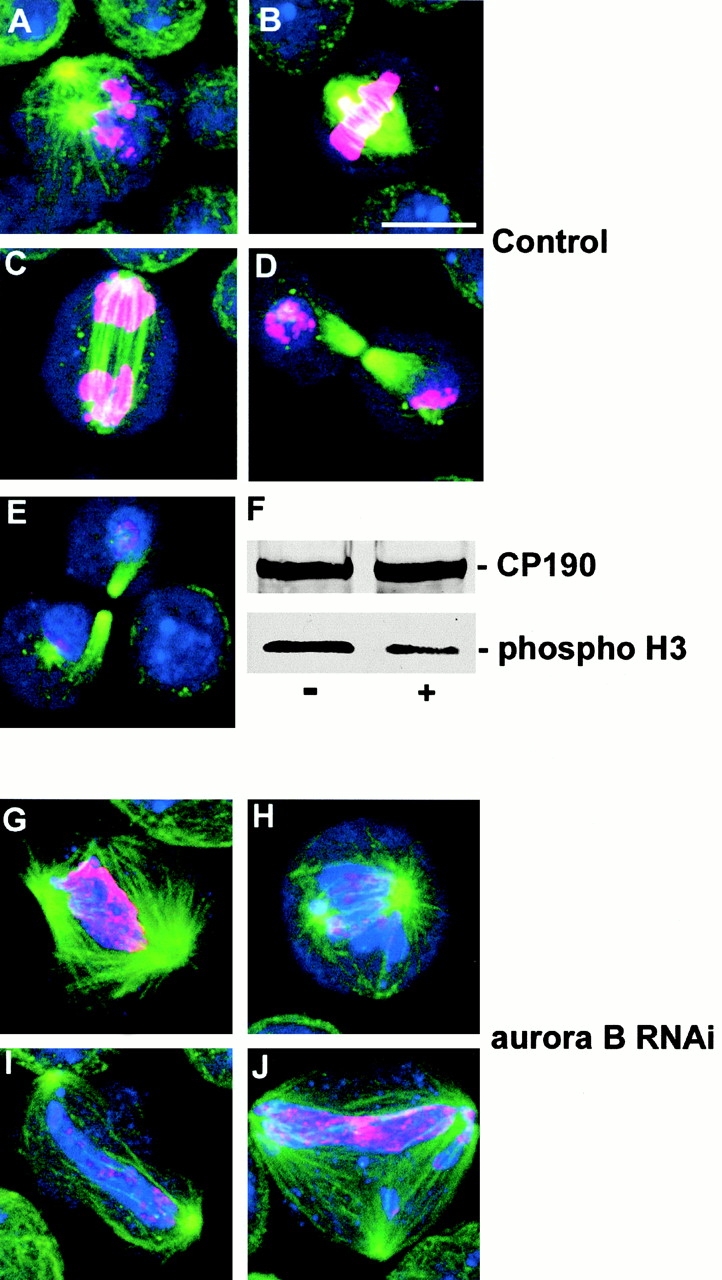
Aurora/Ipl1-related kinases are a conserved family of enzymes that have multiple functions during mitotic progression. Although it has been possible to use conventional genetic analysis to dissect the function of aurora, the founding family member in Drosophila (Glover, D.M., M.H. Leibowitz, D.A. McLean, and H. Parry. 1995. Cell. 81:95-105), the lack of mutations in a second aurora-like kinase gene, aurora B, precluded this approach. We now show that depleting Aurora B kinase using double-stranded RNA interference in cultured Drosophila cells results in polyploidy. aurora B encodes a passenger protein that associates first with condensing chromatin, concentrates at centromeres, and then relocates onto the central spindle at anaphase. Cells depleted of the Aurora B kinase show only partial chromosome condensation at mitosis. This is associated with a reduction in levels of the serine 10 phosphorylated form of histone H3 and a failure to recruit the Barren condensin protein onto chromosomes. These defects are associated with abnormal segregation resulting from lagging chromatids and extensive chromatin bridging at anaphase, similar to the phenotype of barren mutants (Bhat, M.A., A.V. Philp, D.M. Glover, and H.J. Bellen. 1996. Cell. 87:1103-1114.). The majority of treated cells also fail to undertake cytokinesis and show a reduced density of microtubules in the central region of the spindle. This is accompanied by a failure to correctly localize the Pavarotti kinesin-like protein, essential for this process. We discuss these conserved functions of Aurora B kinase in chromosome transmission and cytokinesis.
极光/Ipl1相关激酶是一类保守的酶家族,在有丝分裂进程中具有多种功能。尽管可以利用传统遗传学分析来剖析果蝇中极光激酶(该家族的创始成员)的功能(Glover, D.M., M.H. Leibowitz, D.A. McLean, and H. Parry. 1995. Cell. 81:95 - 105),但由于第二个类极光激酶基因极光B缺乏突变,使得这种方法无法用于该基因。我们现在表明,在培养的果蝇细胞中使用双链RNA干扰来消耗极光B激酶会导致多倍体的产生。极光B编码一种乘客蛋白,该蛋白首先与凝聚的染色质结合,集中在着丝粒处,然后在后期重新定位到中央纺锤体上。缺乏极光B激酶的细胞在有丝分裂时仅表现出部分染色体凝聚。这与组蛋白H3丝氨酸10磷酸化形式水平的降低以及无法将Barren凝聚素蛋白募集到染色体上有关。这些缺陷与后期滞后染色单体和广泛的染色质桥接导致的异常分离有关,类似于barren突变体的表型(Bhat, M.A., A.V. Philp, D.M. Glover, and H.J. Bellen. 1996. Cell. 87:1103 - 1114.)。大多数处理过的细胞也无法进行胞质分裂,并且在纺锤体中央区域微管密度降低。这伴随着对该过程至关重要的Pavarotti驱动蛋白样蛋白未能正确定位。我们讨论了极光B激酶在染色体传递和胞质分裂中的这些保守功能。