Pettigrew D B, Shockley K P, Crutcher K A
Dept. of Neurobiology and Anatomy University of Texas-Houston Health Science Center, USA.
BMC Neurosci. 2001;2:8. doi: 10.1186/1471-2202-2-8. Epub 2001 May 31.
Axons within the mature mammalian central nervous system fail to regenerate following injury, usually resulting in long-lasting motor and sensory deficits. Studies involving transplantation of adult neurons into white matter implicate glial scar-associated factors in regeneration failure. However, these studies cannot distinguish between the effects of these factors and disruption of the spatial organization of cells and molecular factors (disrupted geometry). Since white matter can support or inhibit neurite growth depending on the geometry of the fiber tract, the present study sought to determine whether disrupted geometry is sufficient to inhibit neurite growth.
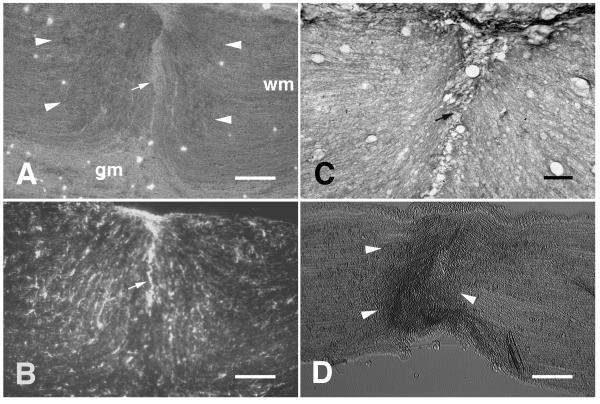
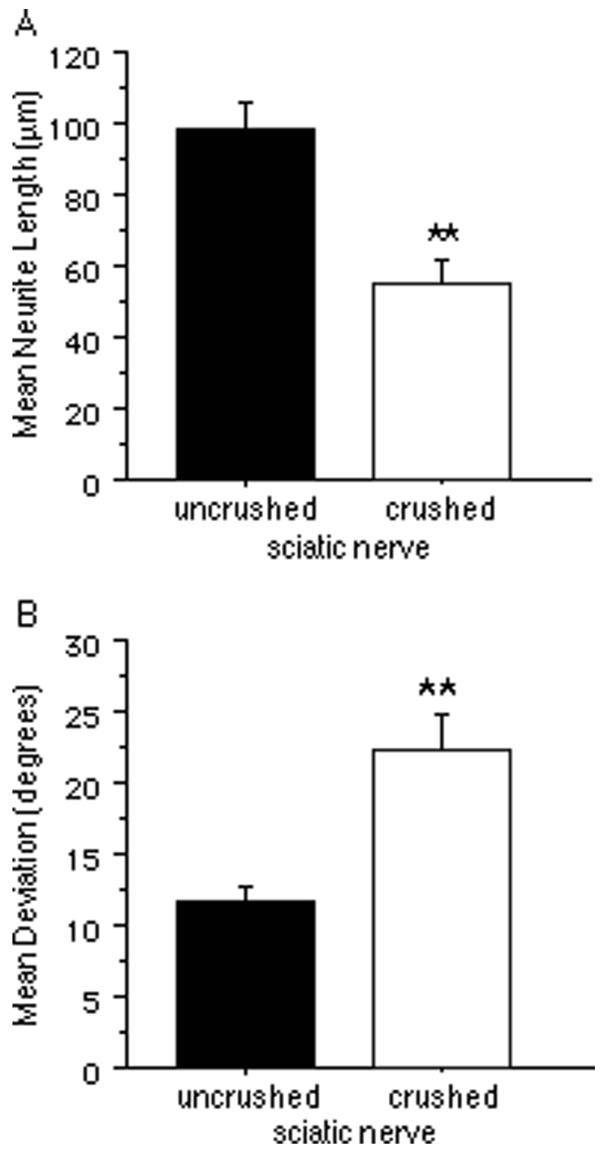
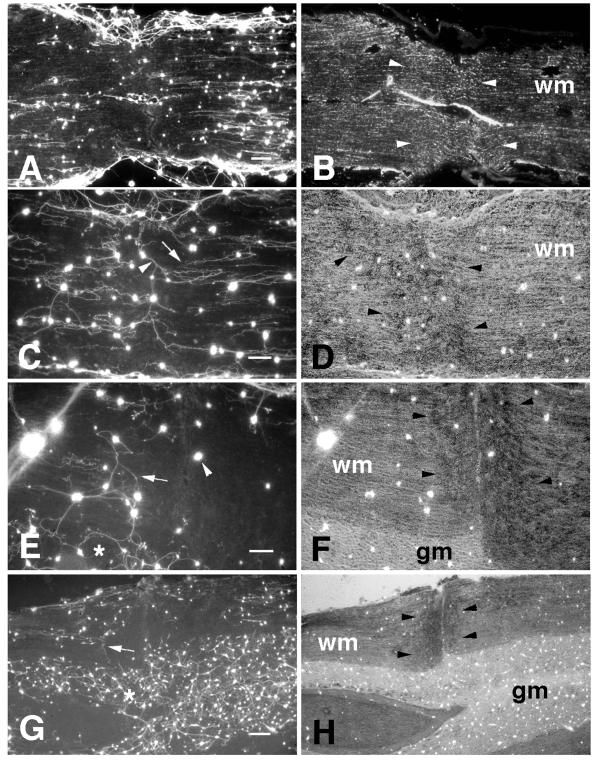
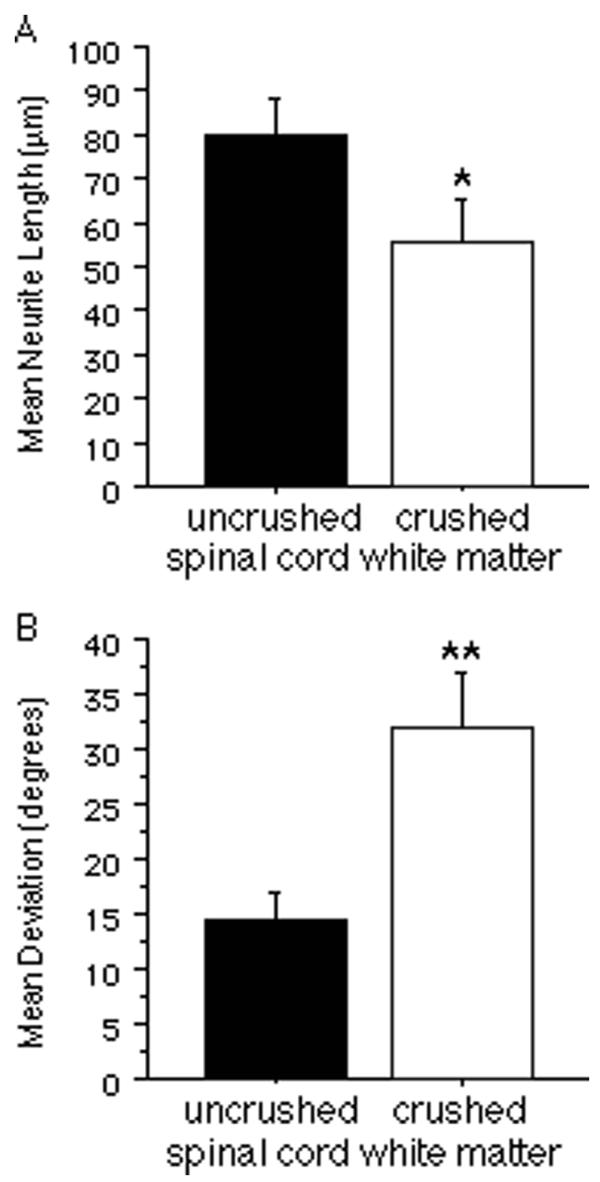
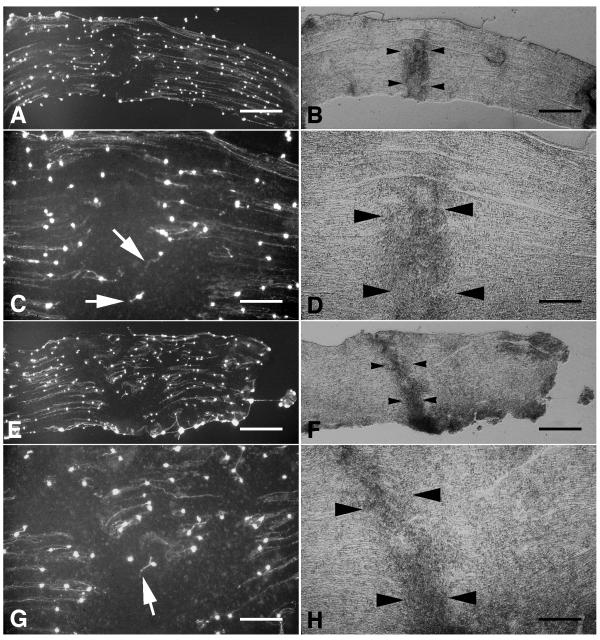
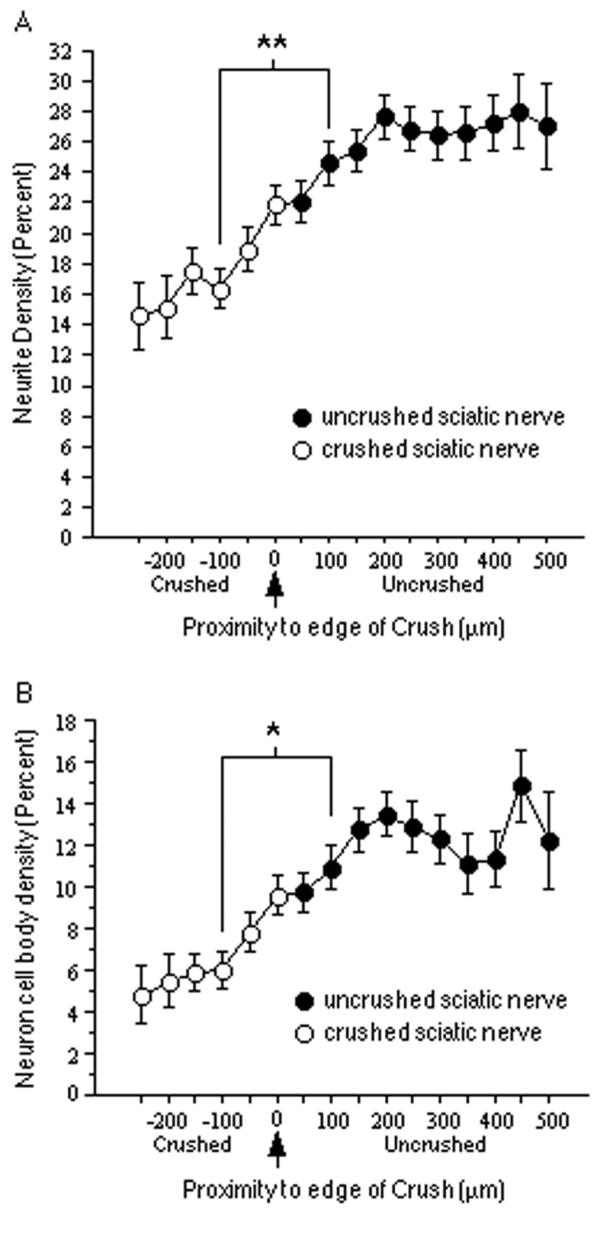
Embryonic chick sympathetic neurons were cultured on unfixed longitudinal cryostat sections of mature rat spinal cord or sciatic nerve that had been crushed with forceps ex vivo then immediately frozen to prevent glial scarring. Neurite growth on uncrushed portions of spinal cord white matter or sciatic nerve was extensive and highly parallel with the longitudinal axis of the fiber tract but did not extend onto crushed portions. Moreover, neurite growth from neurons attached directly to crushed white matter or nerve tissue was shorter and less parallel compared with neurite growth on uncrushed tissue. In contrast, neurite growth appeared to be unaffected by crushed spinal cord gray matter.
These observations suggest that glial scar-associated factors are not necessary to block axonal growth at sites of injury. Disruption of fiber tract geometry, perhaps involving myelin-associated neurite-growth inhibitors, may be sufficient to pose a barrier to regenerating axons in spinal cord white matter and peripheral nerves.
成熟哺乳动物中枢神经系统内的轴突在损伤后无法再生,通常会导致长期的运动和感觉功能障碍。将成年神经元移植到白质中的研究表明,胶质瘢痕相关因子与再生失败有关。然而,这些研究无法区分这些因子的作用与细胞和分子因子空间组织破坏(几何结构破坏)的影响。由于白质根据纤维束的几何结构可支持或抑制神经突生长,本研究旨在确定几何结构破坏是否足以抑制神经突生长。
将胚胎鸡交感神经元培养在成熟大鼠脊髓或坐骨神经的未固定纵向低温切片上,这些切片在体外已用镊子挤压然后立即冷冻以防止胶质瘢痕形成。脊髓白质或坐骨神经未挤压部分上的神经突生长广泛且与纤维束的纵轴高度平行,但不会延伸到挤压部分。此外,与未挤压组织上的神经突生长相比,直接附着在挤压白质或神经组织上的神经元的神经突生长更短且平行度更低。相比之下,神经突生长似乎不受挤压脊髓灰质的影响。
这些观察结果表明,胶质瘢痕相关因子并非在损伤部位阻断轴突生长所必需。纤维束几何结构的破坏,可能涉及髓磷脂相关的神经突生长抑制剂,可能足以对脊髓白质和周围神经中再生的轴突构成障碍。