Batra G S, Molyneux J, Scott N A
Department of Colorectal Surgery, Hope Hospital, Stott Lane, Salford M6 8HD, UK.
Ann R Coll Surg Engl. 2001 May;83(3):174-6.
Surgical high dependency unit (SHDU) care is becoming an integral feature of colorectal surgical practice. Routine ECG monitoring is a feature of surgical care in this setting. The aim of this study was to determine the incidence and outcome of cardiac arrhythmias detected in an SHDU population of colorectal patients.
226 patients over a 12 month period were admitted to a 6-bedded SHDU under the care of 3 colorectal surgeons. A total of 29 patients (13%) had significant arrhythmias on ECG monitoring (median age 74 years, range 35-88 years). Pre-existing ischaemic heart disease was present in 9 patients--colorectal cancer and inflammatory bowel disease accounted for the underlying problem in the majority of these patients.
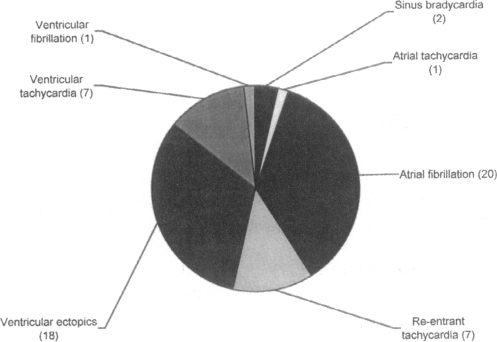
Equal numbers of supraventricular and ventricular arrhythmias were detected--atrial fibrillation being the most commonly detected abnormality. Therapeutic intervention (electrolyte correction and anti-arrhythmic agents) was required in 23 patients. One patient required DC shock for ventricular fibrillation. Seven patients were transferred to the heart care unit or intensive care unit to manage their cardiac problems. Two patients died as a result of their cardiac problem, 27 were discharged home alive--3 on long-term anti-arrhythmic therapy.
The postoperative environment of colorectal patients has been radically altered by the introduction of the SHDU. If colorectal surgeons are to remain central to the postoperative care of their patients, all surgical staff will require training in the recognition and protocol prevention and management of cardiac arrhythmias. Certification of colorectal surgeons in advanced life support is more relevant to colorectal surgery than certification in trauma care.
外科高依赖病房(SHDU)护理正成为结直肠外科手术实践的一个重要特征。常规心电图监测是这种情况下外科护理的一项特征。本研究的目的是确定在SHDU的结直肠患者群体中检测到的心律失常的发生率和结局。
在12个月期间,226名患者在3位结直肠外科医生的护理下入住了一间有6张床位的SHDU。共有29名患者(13%)在心电图监测时出现明显心律失常(中位年龄74岁,范围35 - 88岁)。9名患者存在既往缺血性心脏病——结直肠癌和炎症性肠病是这些患者中大多数潜在问题的病因。
检测到的室上性和室性心律失常数量相等——房颤是最常检测到的异常情况。23名患者需要进行治疗干预(电解质纠正和抗心律失常药物)。1名患者因室颤需要直流电除颤。7名患者被转至心脏监护病房或重症监护病房以处理他们的心脏问题。2名患者因心脏问题死亡,27名患者存活出院——3名患者接受长期抗心律失常治疗。
SHDU的引入彻底改变了结直肠患者的术后环境。如果结直肠外科医生要在其患者的术后护理中保持核心地位,所有外科工作人员都需要接受心律失常识别以及预防和管理方案方面的培训。结直肠外科医生的高级生命支持认证对于结直肠手术比创伤护理认证更为相关。