Department of General, Visceral, and Paediatric Surgery, University Medical Centre Göttingen, Robert-Koch-Str. 40, 37075, Göttingen, Germany.
Clinic III for Internal Medicine, Heart Centre of University Hospital of Cologne, Cologne, Germany.
Sci Rep. 2023 Jan 23;13(1):1284. doi: 10.1038/s41598-023-27508-4.
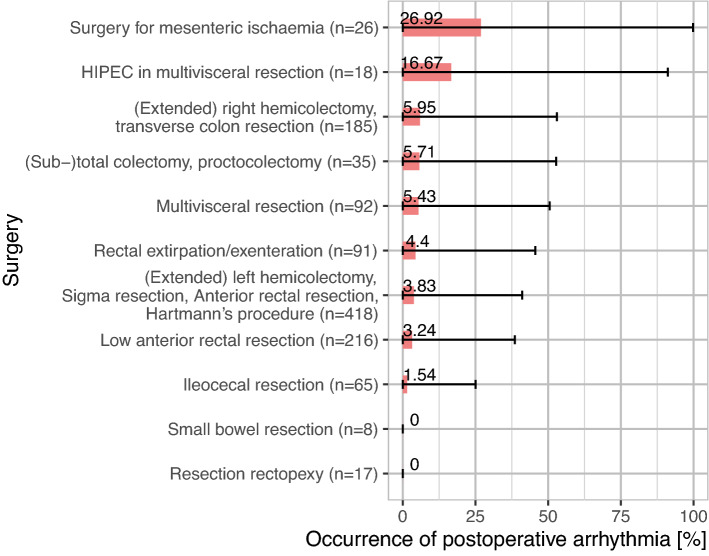
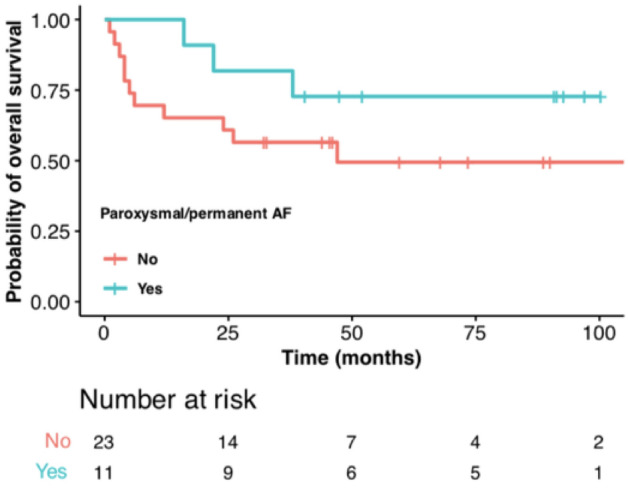
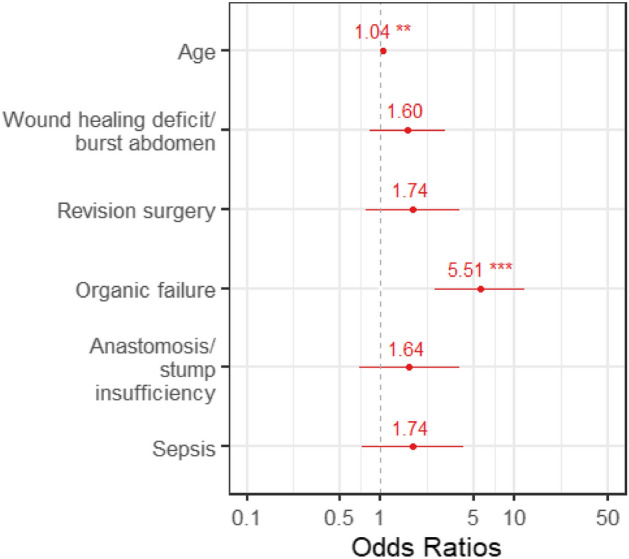
Postoperative arrhythmias (PAs) are common events and have been widely investigated in cardiothoracic surgery. Within visceral surgery, a recent study revealed a significant occurrence of PA in esophageal resections. In contrast, PA in lower gastrointestinal surgery is rarely investigated and has been rudimentary described in the medical literature. The present work is a retrospective cohort study of 1171 patients who underwent surgery of lower gastrointestinal tract between 2012 and 2018. All included patients were treated and monitored in the intensive care unit (ICU) or intermediate care unit (IMC) after surgery. Follow-up, performed between January and May 2021, was obtained for the patients with PA investigating the possible persistence of PA and complications such as permanent arrhythmia or thromboembolic events after discharge. In total, n = 1171 patients (559 female, 612 male) without any history of prior arrhythmia were analyzed. Overall, PA occurred in n = 56 (4.8%) patients after surgery of the lower GI. The highest incidence of PA was seen in patients undergoing bowel surgery after mesenteric ischaemia (26.92%), followed by cytoreductive surgery (CRS) combined with hyperthermic intraperitoneal chemotherapy (HIPEC; 16.67%). PA was significantly associated with higher age (72 years (IQR 63-78 years) vs. 64 years (IQR 55-73.5 years), p < 0.001) and longer length of stay in the ICU (median 15 days (IQR 5-25 days) vs. median 2 days (IQR 1-5 days), p < 0.001). PA was independently associated with organ failure (OR = 4.62, 95% CI 2.11-10.11, p < 0.001) and higher in-house mortality (OR = 3.37, 95% CI 1.23-9.28, p < 0.001). In median, PA occurred 66.5 h after surgery. In follow-up, 31% of all the patients with PA showed development of permanent arrhythmia. The incidence of PA after lower GI surgery is comparatively low. Its occurrence, however, seems to have severe implications since it is significantly associated with higher rates of organ failure and in-house mortality. Also, compared to the general population, the development of permanent arrhythmia is significantly higher in patients who developed new-onset PA.
术后心律失常(PA)是常见事件,已在心胸外科广泛研究。在内脏手术中,最近的一项研究表明食管切除术后 PA 发生率显著。相比之下,下消化道手术中的 PA 很少被研究,并且在医学文献中也只是简要描述。本研究是对 2012 年至 2018 年间接受下消化道手术的 1171 例患者进行的回顾性队列研究。所有纳入的患者在手术后均在重症监护病房(ICU)或中间护理病房(IMC)进行治疗和监测。2021 年 1 月至 5 月对 PA 患者进行了随访,以调查 PA 是否持续存在以及出院后是否出现永久性心律失常或血栓栓塞等并发症。总共分析了 1171 例(559 例女性,612 例男性)无既往心律失常史的患者。总体而言,56 例(4.8%)下胃肠道手术后患者发生了 PA。PA 发生率最高的是肠系膜缺血后行肠切除术的患者(26.92%),其次是细胞减灭术(CRS)联合腹腔热灌注化疗(HIPEC;16.67%)。PA 与较高的年龄(72 岁(IQR 63-78 岁)比 64 岁(IQR 55-73.5 岁),p<0.001)和 ICU 住院时间较长(中位数 15 天(IQR 5-25 天)比中位数 2 天(IQR 1-5 天),p<0.001)显著相关。PA 与器官衰竭独立相关(OR=4.62,95%CI 2.11-10.11,p<0.001)和院内死亡率较高(OR=3.37,95%CI 1.23-9.28,p<0.001)。PA 中位发生在术后 66.5 小时。随访时,所有 PA 患者中有 31%出现永久性心律失常。下消化道手术后 PA 的发生率相对较低。然而,由于其与更高的器官衰竭和院内死亡率显著相关,因此似乎具有严重影响。此外,与一般人群相比,新发 PA 患者发生永久性心律失常的发生率明显更高。