Ohta Yuko, McKinney E Churchill, Criscitiello Michael F, Flajnik Martin F
Department of Microbiology and Immunology, University of Maryland School of Medicine, Baltimore, MD 21201, USA.
J Immunol. 2002 Jan 15;168(2):771-81. doi: 10.4049/jimmunol.168.2.771.
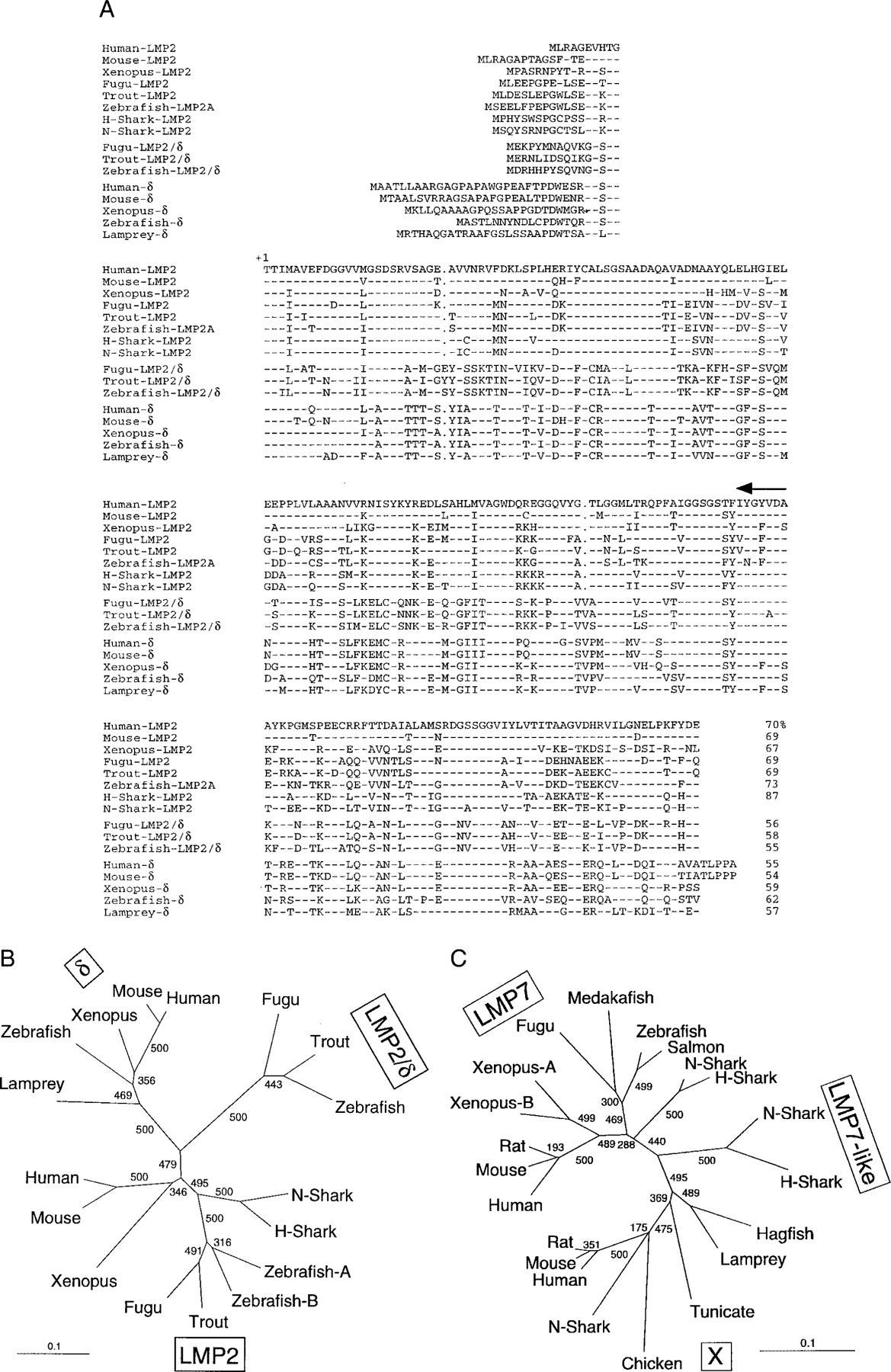
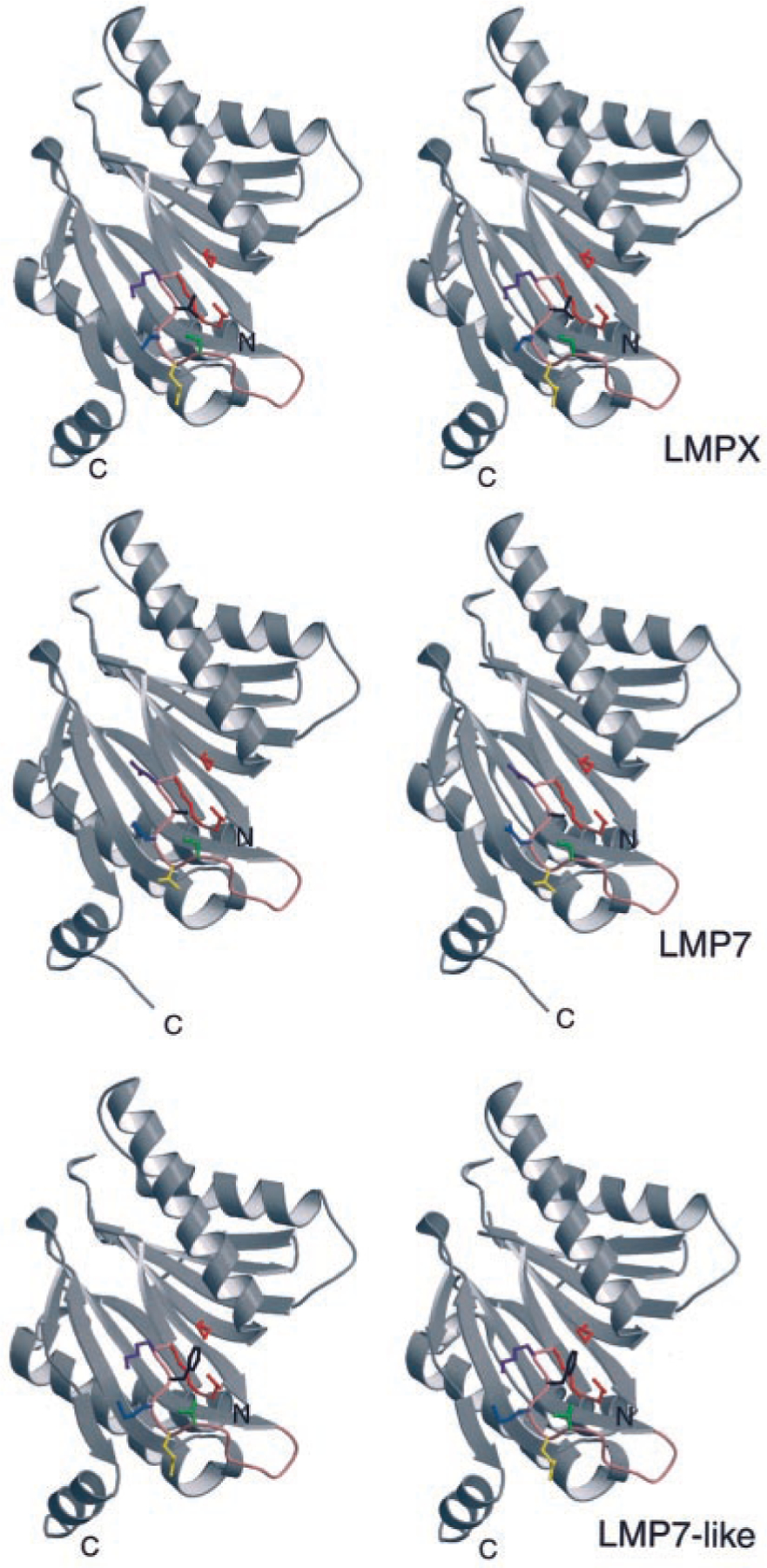
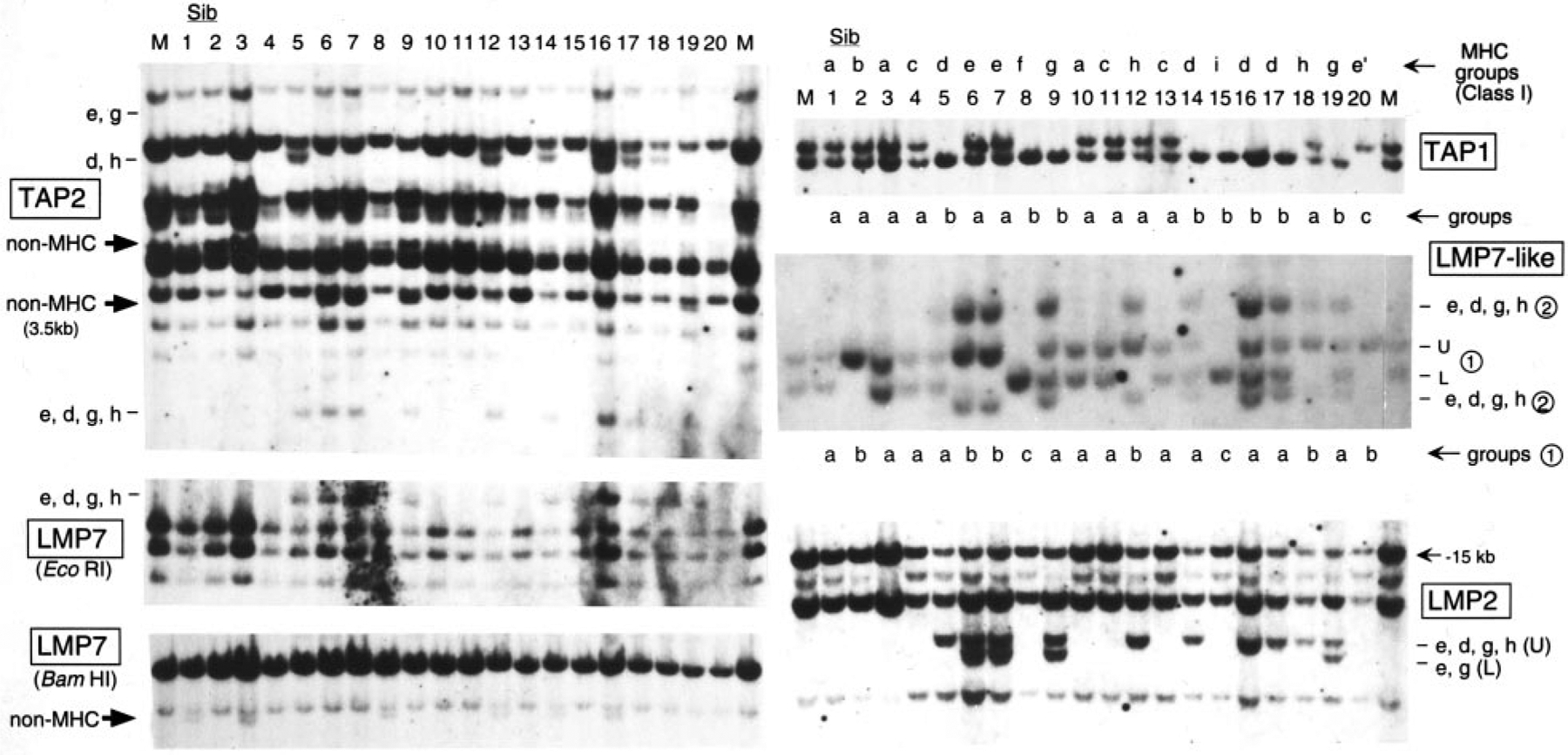
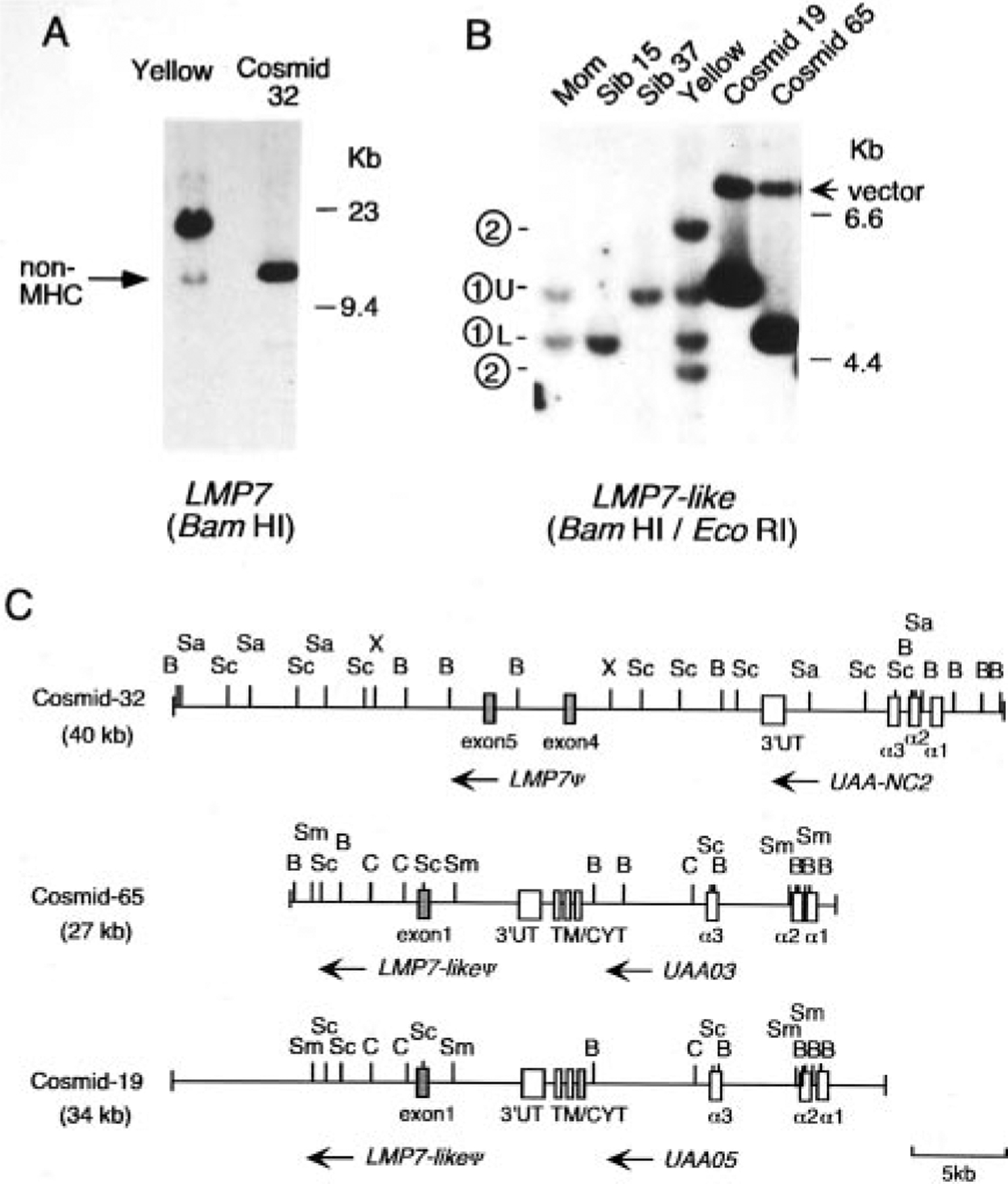
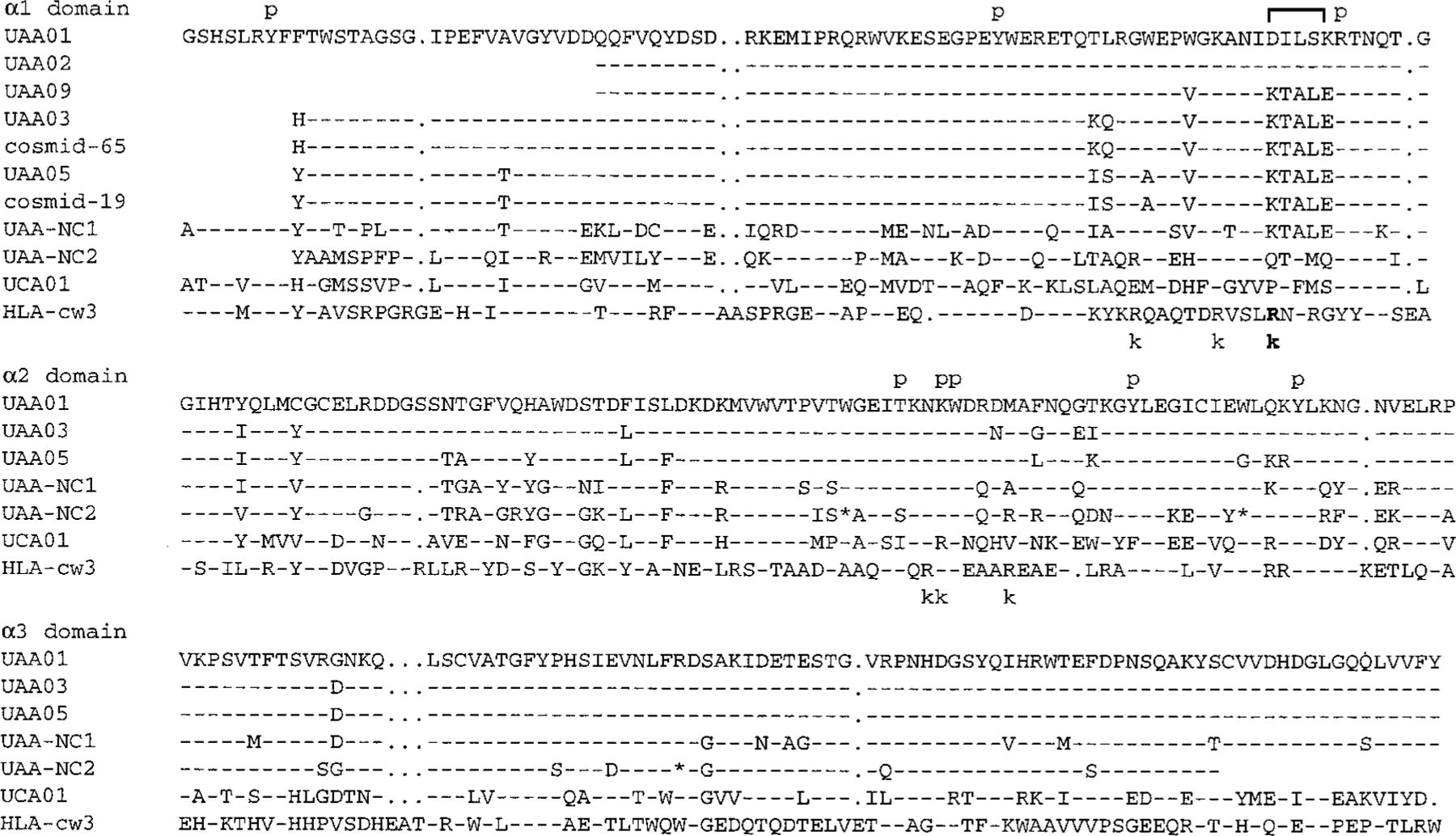
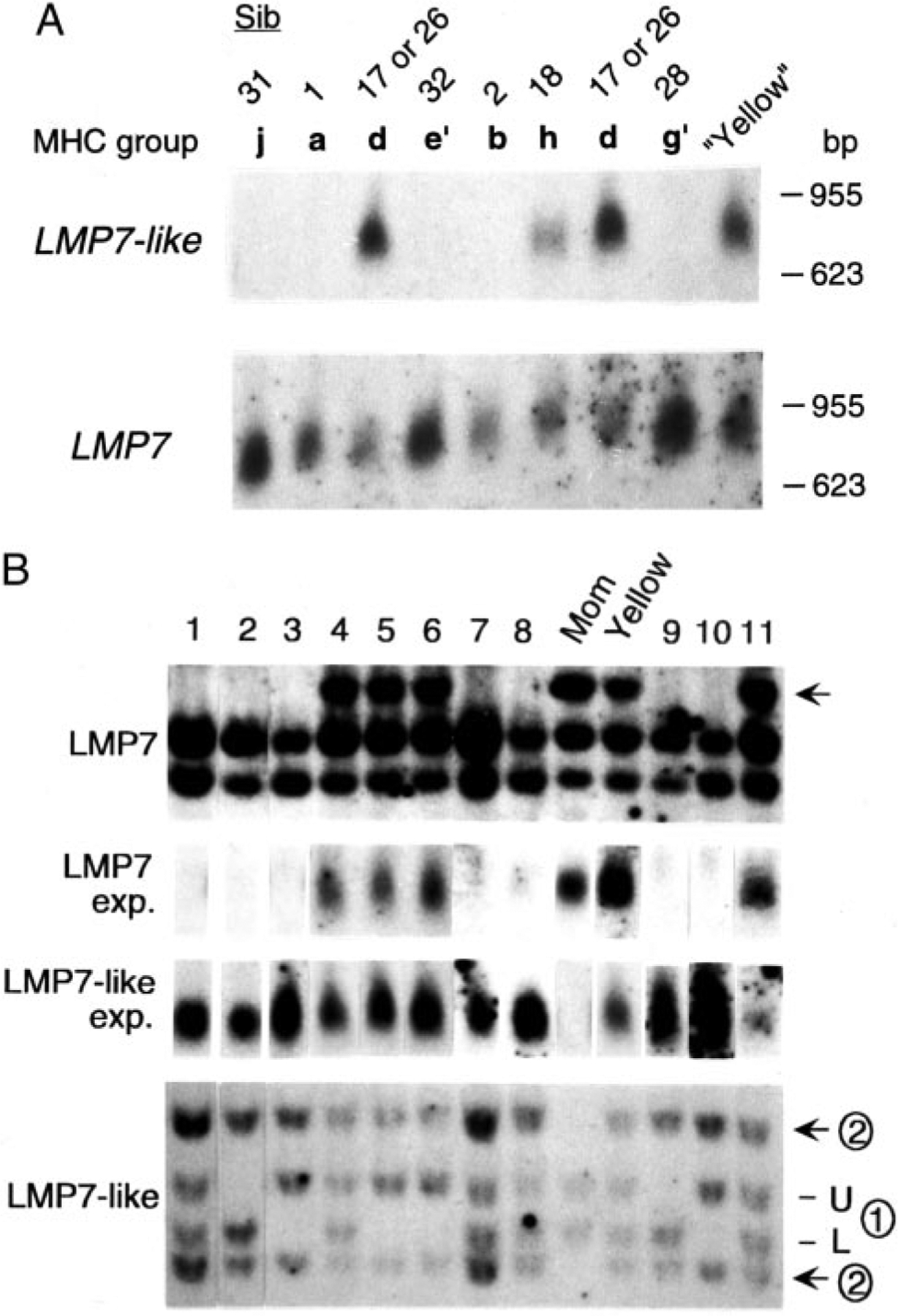
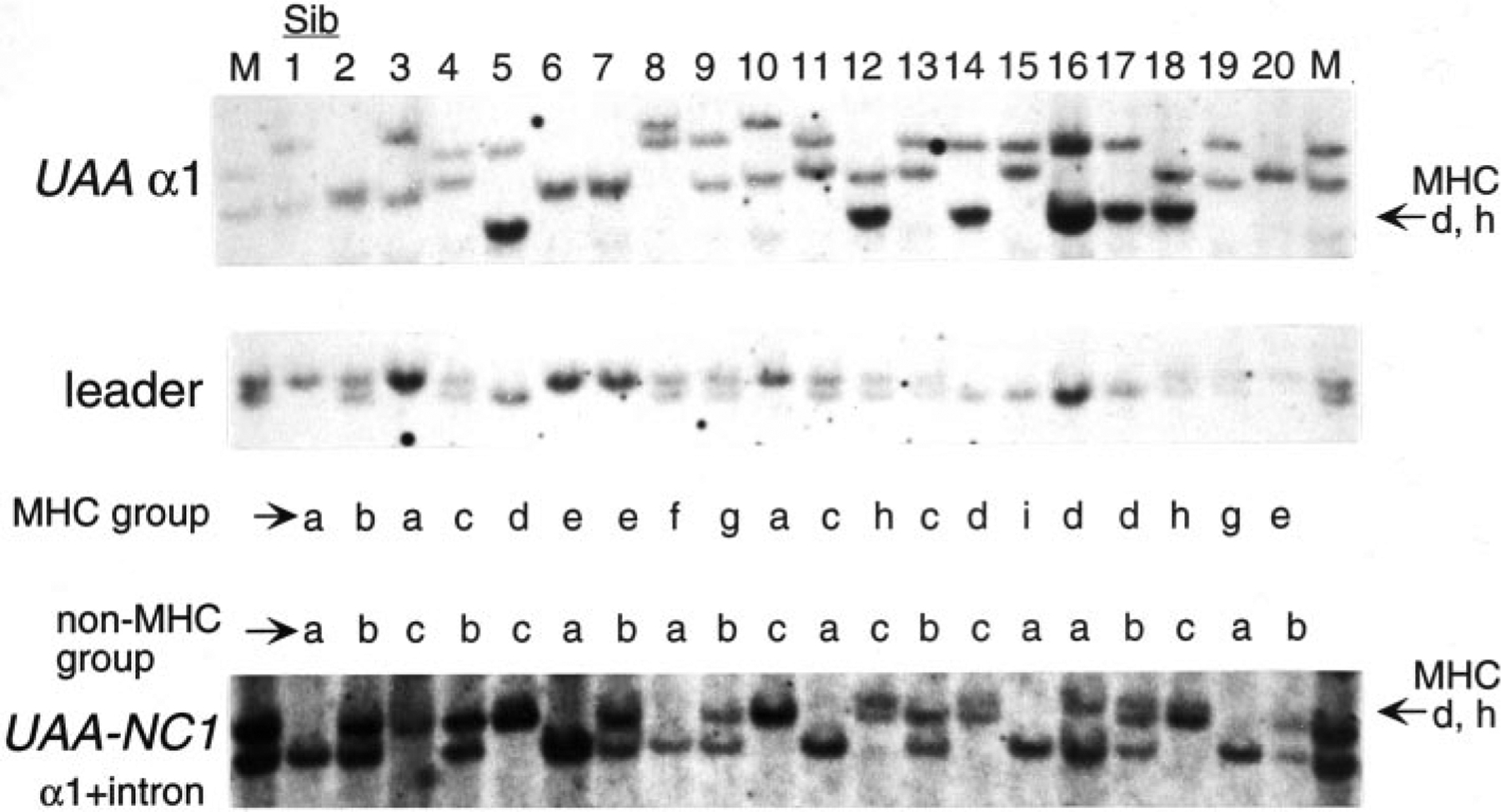
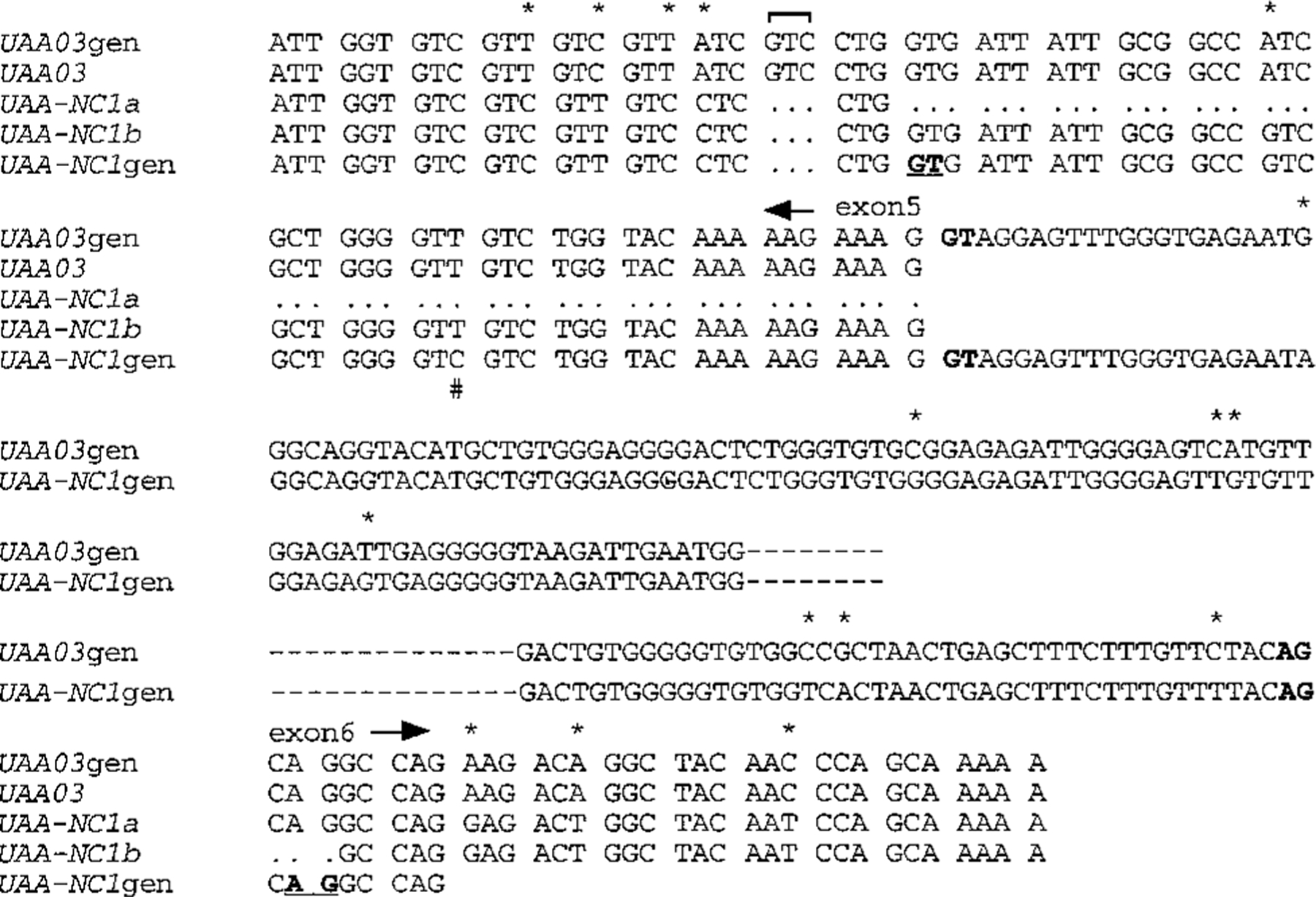
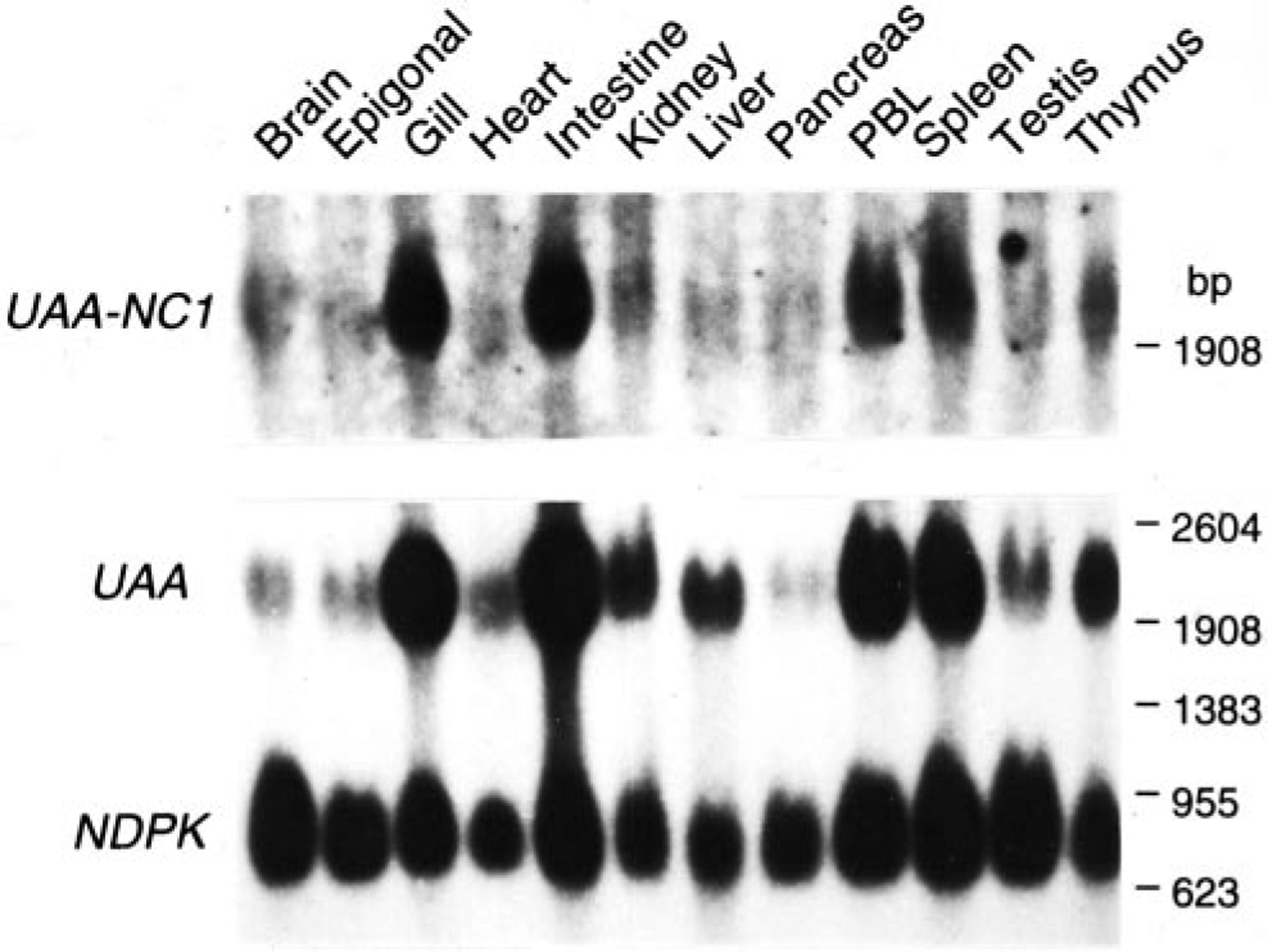
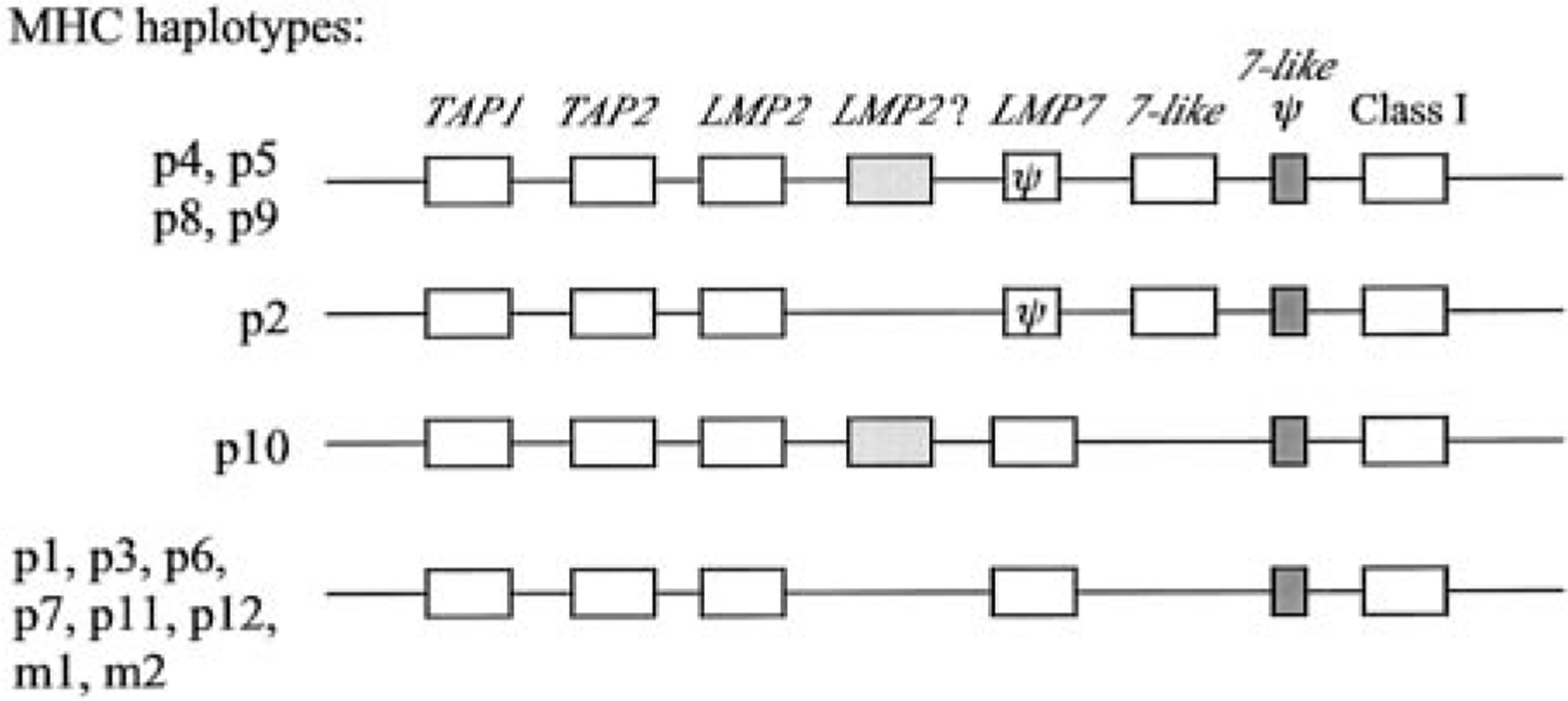
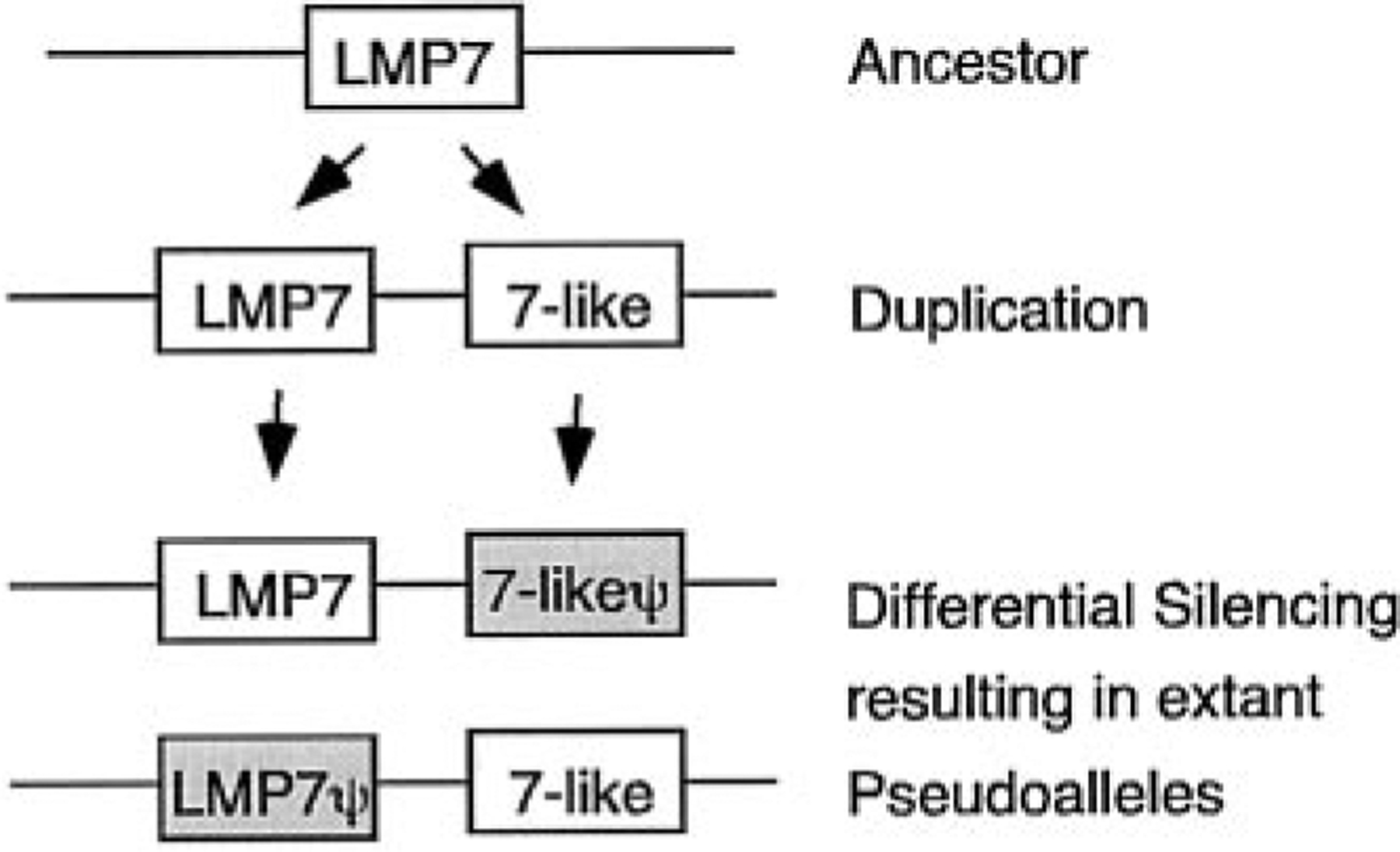
Cartilaginous fish (e.g., sharks) are derived from the oldest vertebrate ancestor having an adaptive immune system, and thus are key models for examining MHC evolution. Previously, family studies in two shark species showed that classical class I (UAA) and class II genes are genetically linked. In this study, we show that proteasome genes LMP2 and LMP7, shark-specific LMP7-like, and the TAP1/2 genes are linked to class I/II. Functional LMP7 and LMP7-like genes, as well as multiple LMP2 genes or gene fragments, are found only in some sharks, suggesting that different sets of peptides might be generated depending upon inherited MHC haplotypes. Cosmid clones bearing the MHC-linked classical class I genes were isolated and shown to contain proteasome gene fragments. A non-MHC-linked LMP7 gene also was identified on another cosmid, but only two exons of this gene were detected, closely linked to a class I pseudogene (UAA-NC2); this region probably resulted from a recent duplication and translocation from the functional MHC. Tight linkage of proteasome and class I genes, in comparison with gene organizations of other vertebrates, suggests a primordial MHC organization. Another nonclassical class I gene (UAA-NC1) was detected that is linked neither to MHC nor to UAA-NC2; its high level of sequence similarity to UAA suggests that UAA-NC1 also was recently derived from UAA and translocated from MHC. These data further support the principle of a primordial class I region with few class I genes. Finally, multiple paternities in one family were demonstrated, with potential segregation distortions.
软骨鱼(如鲨鱼)起源于具有适应性免疫系统的最古老脊椎动物祖先,因此是研究MHC进化的关键模型。此前,对两种鲨鱼的家族研究表明,经典的I类(UAA)和II类基因在遗传上是连锁的。在本研究中,我们发现蛋白酶体基因LMP2和LMP7、鲨鱼特有的LMP7样基因以及TAP1/2基因与I/II类基因连锁。功能性的LMP7和LMP7样基因,以及多个LMP2基因或基因片段,仅在某些鲨鱼中发现,这表明根据遗传的MHC单倍型可能会产生不同的肽组。分离出携带与MHC连锁的经典I类基因的黏粒克隆,并显示其包含蛋白酶体基因片段。在另一个黏粒上也鉴定出一个与MHC不连锁的LMP7基因,但仅检测到该基因的两个外显子,与一个I类假基因(UAA-NC2)紧密连锁;该区域可能是最近从功能性MHC复制和易位产生的。与其他脊椎动物的基因组织相比,蛋白酶体和I类基因的紧密连锁表明了一种原始的MHC组织。检测到另一个非经典I类基因(UAA-NC1),它既不与MHC连锁也不与UAA-NC2连锁;其与UAA的高度序列相似性表明UAA-NC1也是最近从UAA衍生而来并从MHC易位的。这些数据进一步支持了具有少量I类基因的原始I类区域的原则。最后,在一个家族中证明了多个父系,存在潜在的分离畸变。