Stamer K, Vogel R, Thies E, Mandelkow E, Mandelkow E-M
Max-Planck-Unit for Structural Molecular Biology, 22607 Hamburg, Germany.
J Cell Biol. 2002 Mar 18;156(6):1051-63. doi: 10.1083/jcb.200108057.
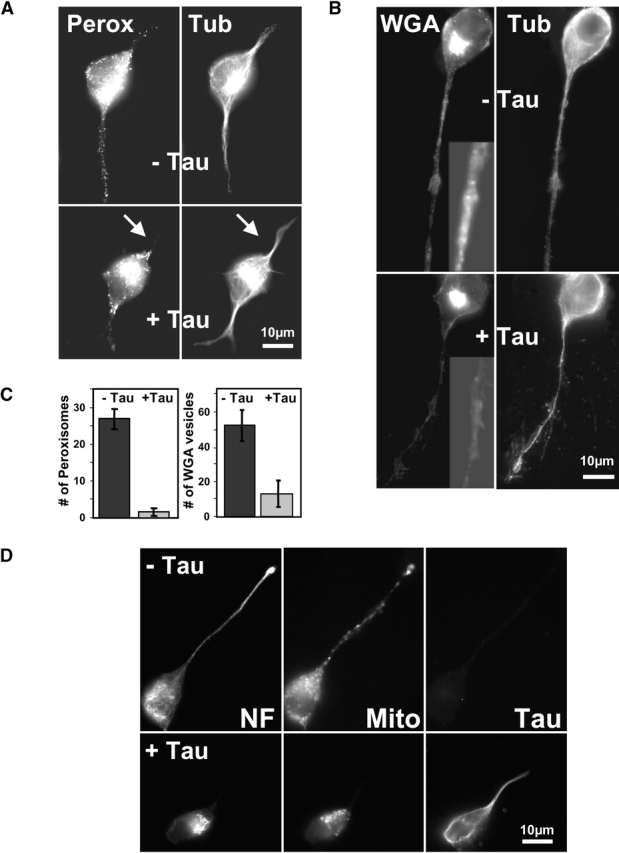
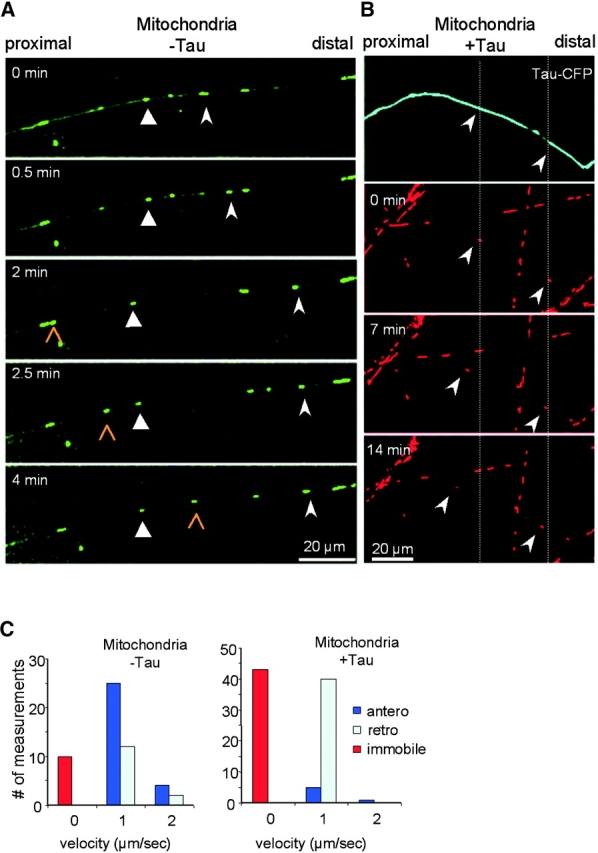
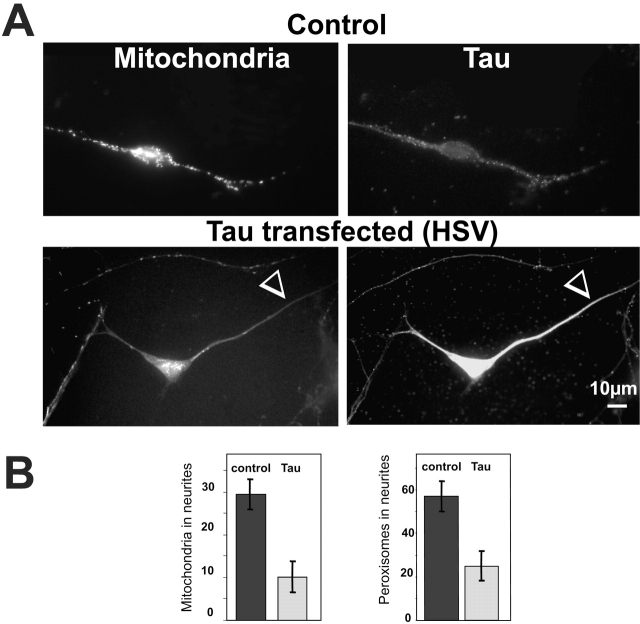
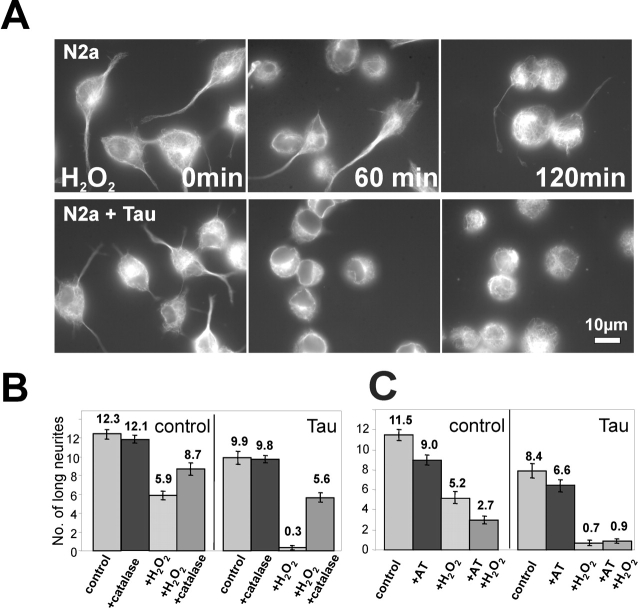
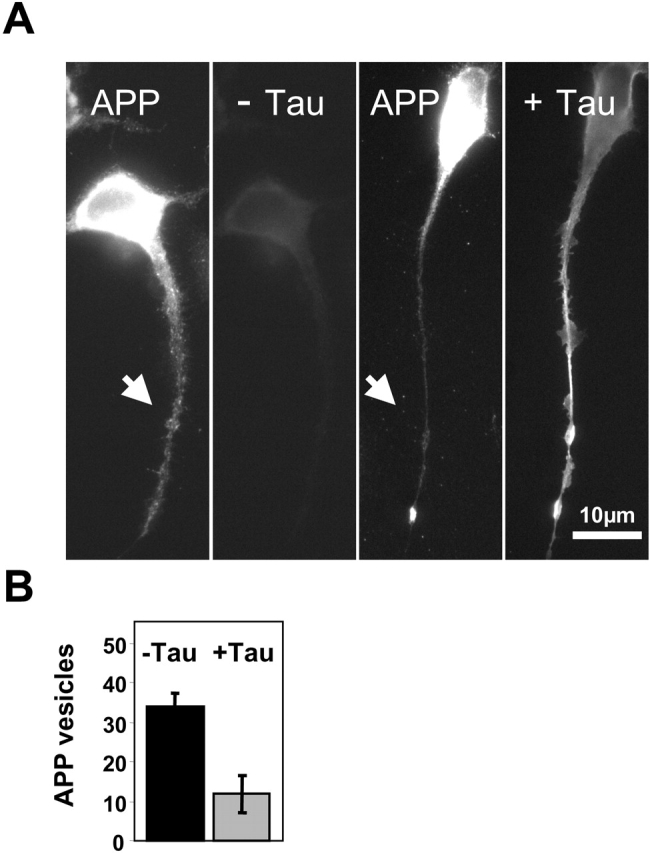
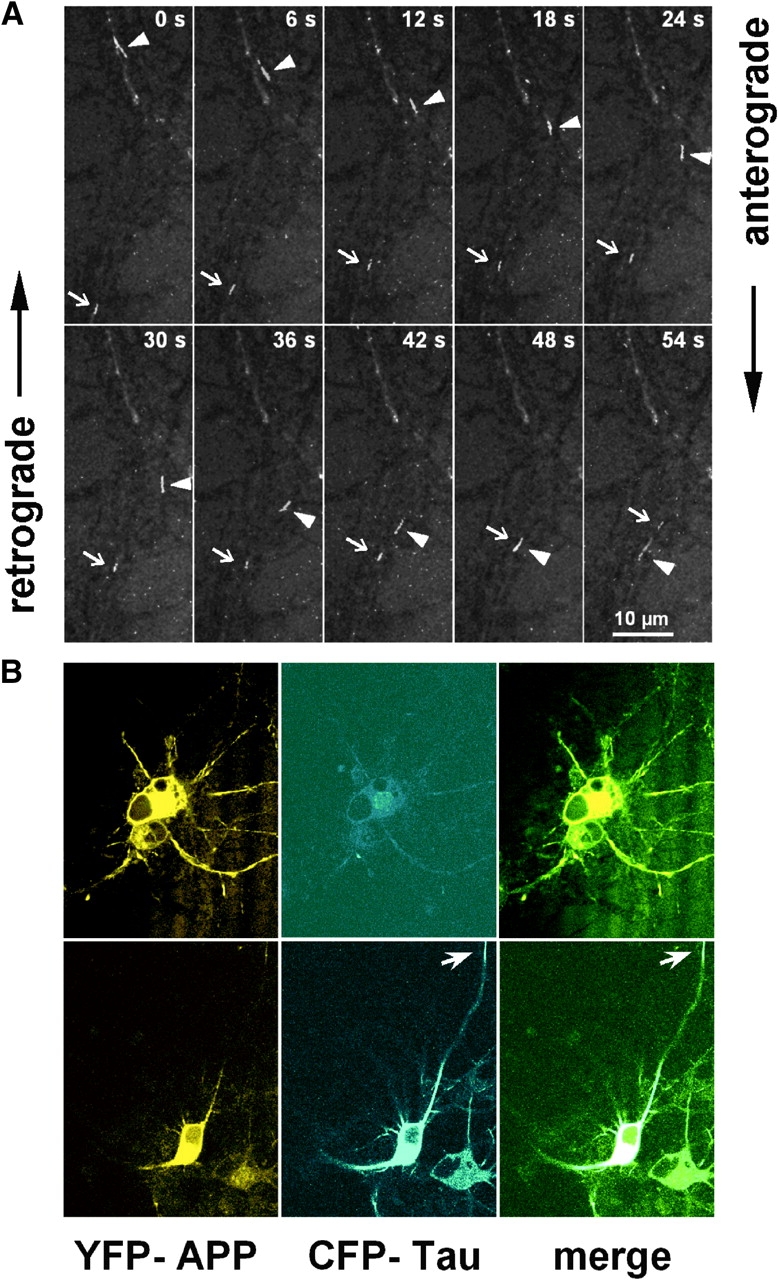
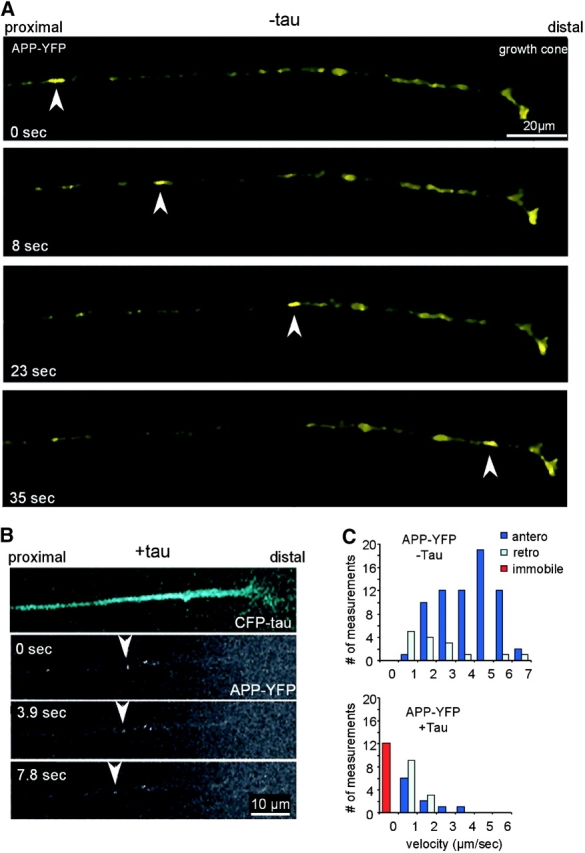
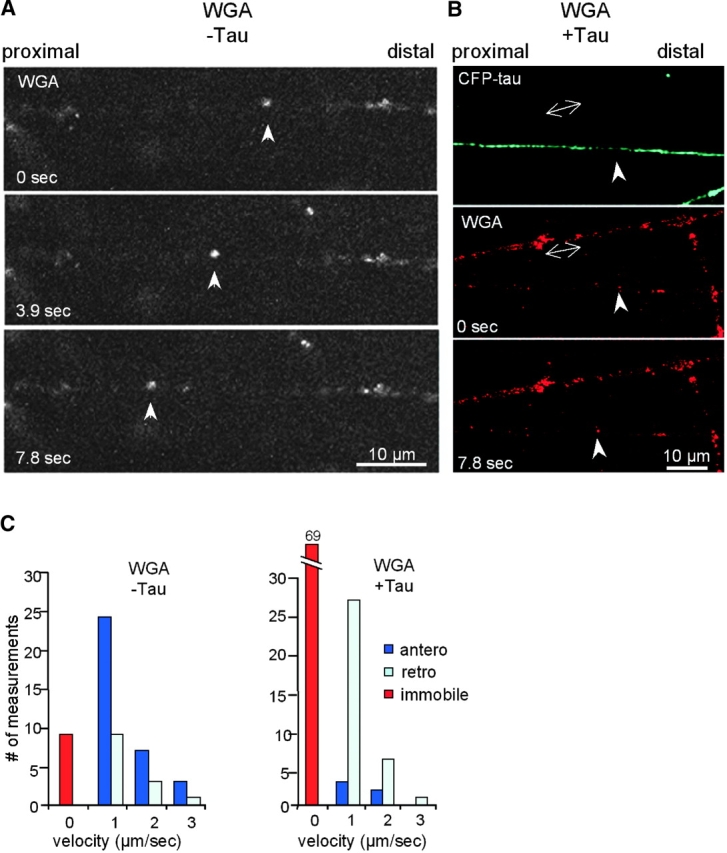
We studied the effect of microtubule-associated tau protein on trafficking of vesicles and organelles in primary cortical neurons, retinal ganglion cells, and neuroblastoma cells. Tau inhibits kinesin-dependent transport of peroxisomes, neurofilaments, and Golgi-derived vesicles into neurites. Loss of peroxisomes makes cells vulnerable to oxidative stress and leads to degeneration. In particular, tau inhibits transport of amyloid precursor protein (APP) into axons and dendrites, causing its accumulation in the cell body. APP tagged with yellow fluorescent protein and transfected by adenovirus associates with vesicles moving rapidly forward in the axon (approximately 80%) and slowly back (approximately 20%). Both movements are strongly inhibited by cotransfection with fluorescently tagged tau (cyan fluorescent protein-tau) as seen by two-color confocal microscopy. The data suggests a linkage between tau and APP trafficking, which may be significant in Alzheimer's disease.
我们研究了微管相关的tau蛋白对原代皮质神经元、视网膜神经节细胞和成神经细胞瘤细胞中囊泡与细胞器运输的影响。Tau抑制驱动蛋白依赖的过氧化物酶体、神经丝和高尔基体衍生囊泡向神经突的运输。过氧化物酶体的缺失使细胞易受氧化应激影响并导致退化。特别地,tau抑制淀粉样前体蛋白(APP)向轴突和树突的运输,导致其在细胞体中积累。用黄色荧光蛋白标记并通过腺病毒转染的APP与在轴突中快速向前移动(约80%)和缓慢向后移动(约20%)的囊泡相关联。通过双色共聚焦显微镜观察发现,与荧光标记的tau(青色荧光蛋白-tau)共转染会强烈抑制这两种移动。数据表明tau与APP运输之间存在联系,这在阿尔茨海默病中可能具有重要意义。