Turner R T, Sibonga J D
Department of Orthopedics, Mayo Clinic, Rochester, Minnesota, USA.
Alcohol Res Health. 2001;25(4):276-81.
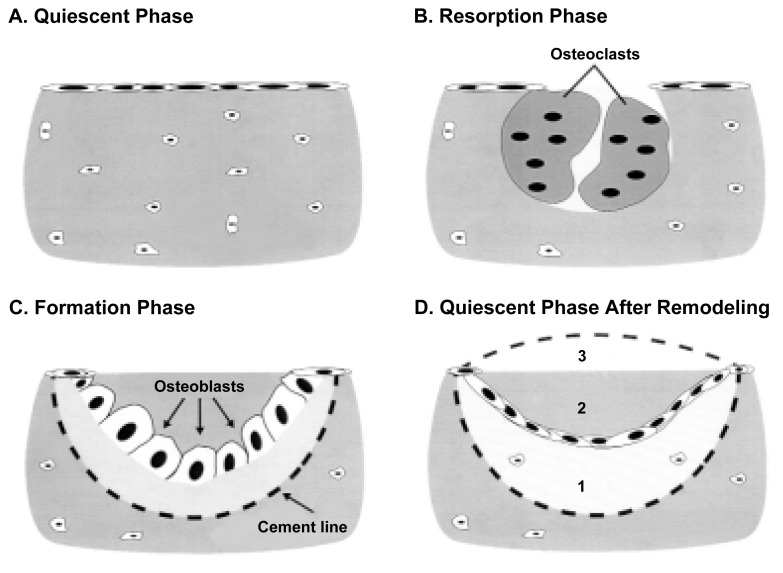
In marked contrast with men who drink, women who drink alcohol are found, as a group, to have higher bone mass compared with women who abstain. Furthermore, the apparent beneficial effects of alcohol use are more apparent in postmenopausal women than women of reproductive age, suggesting that there might be an interaction between alcohol and estrogen. Estrogen deficiency accompanying menopause leads to bone loss, which in turn predisposes women to osteoporosis later in life. Estrogen deficiency accelerates bone remodeling, which is the process by which small areas of bone are destroyed and rebuilt, and leads to an imbalance whereby bone resorption--the part of remodeling consisting of breaking down and assimilating--exceeds bone formation. Alcohol might reduce bone loss in postmenopausal women by increasing the circulating levels of estrogen. Alternatively, alcohol might slow bone loss by acting on bone cells to reduce bone remodeling. Alcohol use has a negative effect on the immature skeleton but current understanding suggests that small quantities of alcohol may have beneficial effects on bone in older women.
与饮酒的男性形成鲜明对比的是,饮酒的女性群体与不饮酒的女性相比,骨量更高。此外,饮酒的明显有益作用在绝经后女性中比在育龄女性中更为明显,这表明酒精与雌激素之间可能存在相互作用。绝经伴随的雌激素缺乏会导致骨质流失,进而使女性在晚年易患骨质疏松症。雌激素缺乏会加速骨重塑,即小面积骨被破坏和重建的过程,并导致一种失衡,即骨吸收(重塑过程中包括分解和吸收的部分)超过骨形成。酒精可能通过增加循环中的雌激素水平来减少绝经后女性的骨质流失。或者,酒精可能通过作用于骨细胞来减缓骨质流失,从而减少骨重塑。饮酒对未成熟骨骼有负面影响,但目前的认识表明,少量饮酒可能对老年女性的骨骼有有益作用。