Proudfoot Amanda E I
Serono Pharmaceutical Research Institute, 14 chemin des Aulx, 1228 Plan les Ouates, Geneva, Switzerland.
Nat Rev Immunol. 2002 Feb;2(2):106-15. doi: 10.1038/nri722.
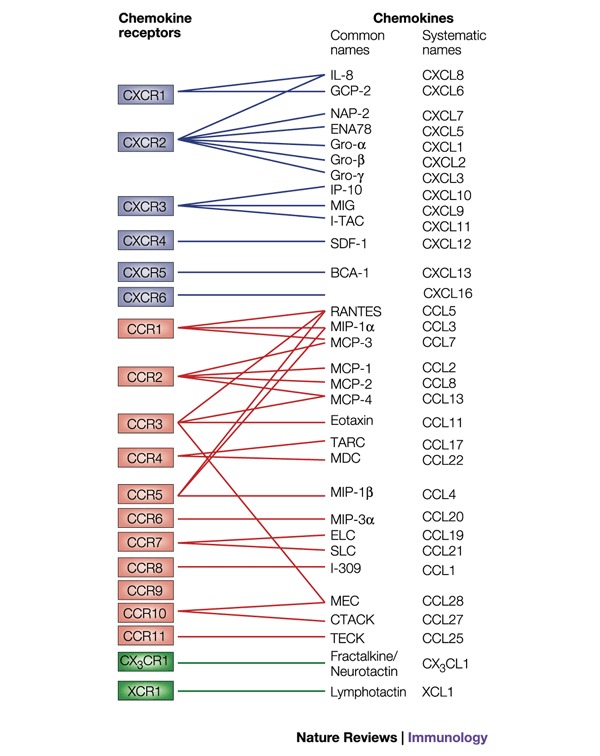
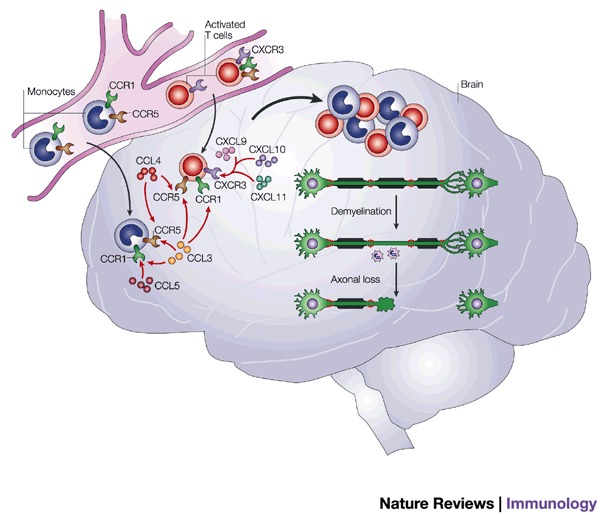
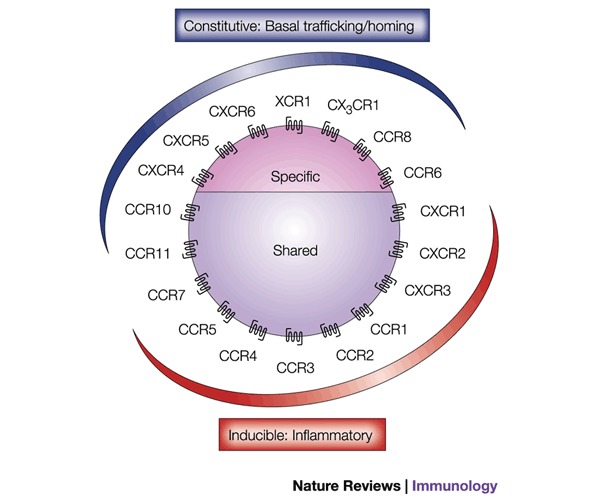
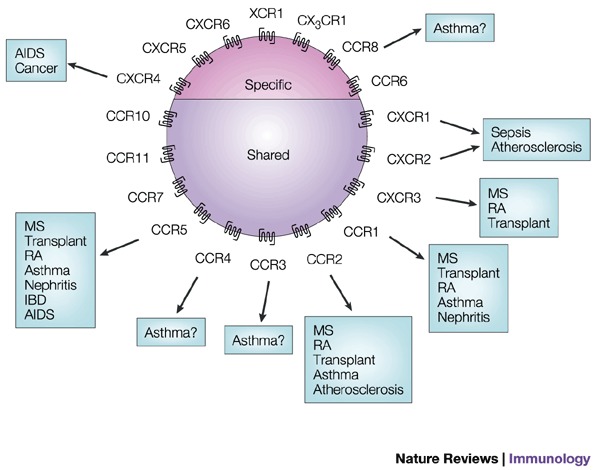
Chemokines and their receptors are involved in the pathogenesis of diseases ranging from asthma to AIDS. Chemokine receptors are G-protein-coupled serpentine receptors that present attractive tractable targets for the pharmaceutical industry. It is only ten years since the first chemokine receptor was discovered, and the rapidly expanding number of antagonists holds promise for new medicines to combat diseases that are currently incurable. Here, I focus on the rationale for developing antagonists of chemokine receptors for inflammatory disorders and AIDS, and the accumulating evidence that favours this strategy despite the apparent redundancy in the chemokine system.
趋化因子及其受体参与了从哮喘到艾滋病等多种疾病的发病过程。趋化因子受体是G蛋白偶联的蛇形受体,是制药行业颇具吸引力的可处理靶点。自首个趋化因子受体被发现至今仅十年,拮抗剂数量的迅速增加为研发对抗目前无法治愈疾病的新药带来了希望。在此,我重点探讨开发趋化因子受体拮抗剂用于治疗炎症性疾病和艾滋病的基本原理,以及尽管趋化因子系统存在明显冗余,但支持这一策略的证据却不断增加。