Gomes Catarina M, Simão Daniel, Gonçalves Carolina Cardoso, Silva Gabriela, Painho Beatriz, Alves Paula Marques, Brito Catarina
iBET, Instituto de Biologia Experimental e Biológica, Oeiras, Portugal.
Instituto de Tecnologia Química e Biológica António Xavier, Universidade Nova de Lisboa, Oeiras, Portugal.
iScience. 2025 Aug 5;28(9):113246. doi: 10.1016/j.isci.2025.113246. eCollection 2025 Sep 19.
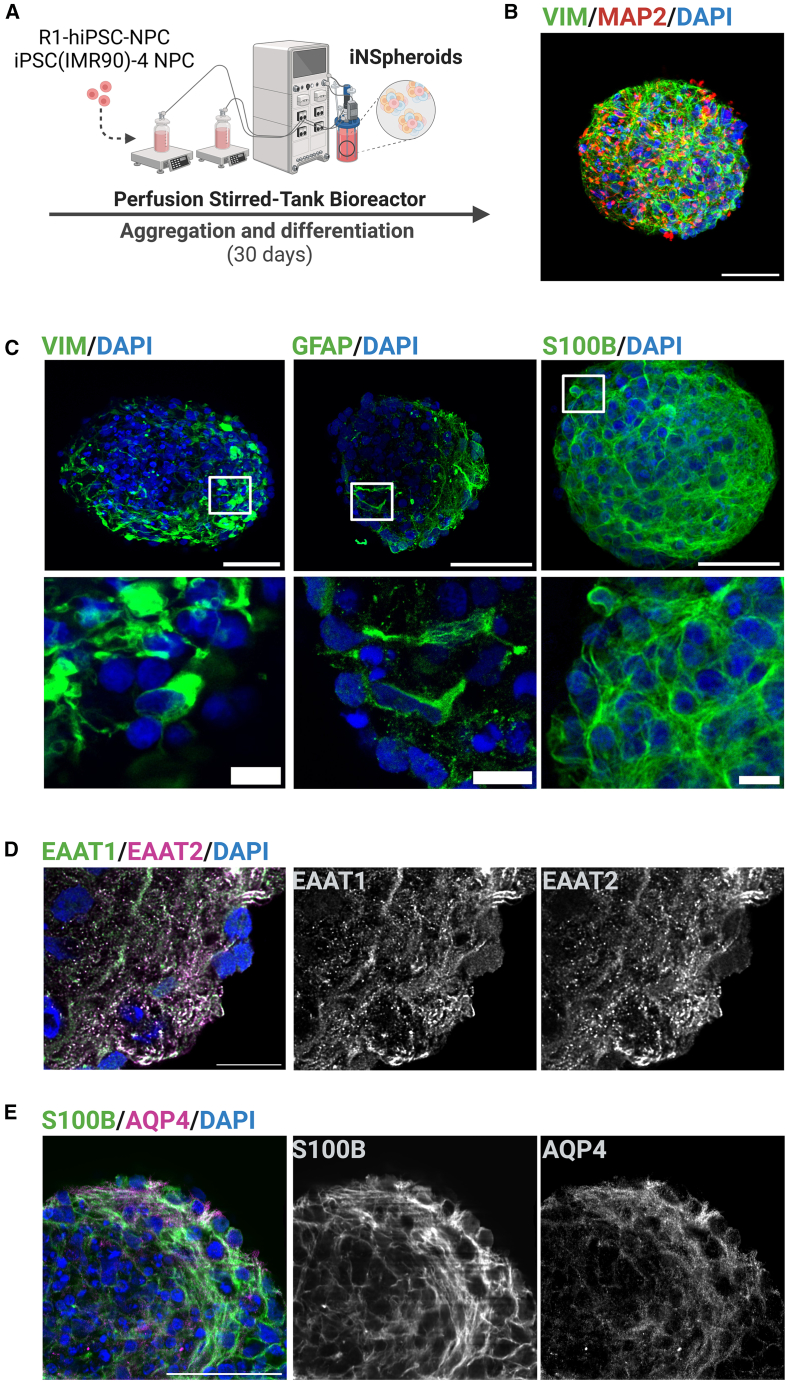
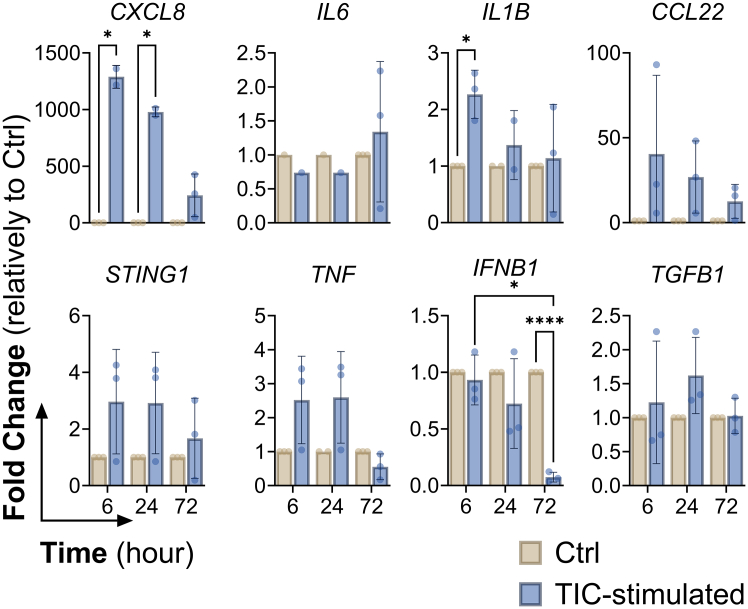
Growing evidence suggests that reactive astrocytes can acquire different functional subtypes, playing critical roles in neurological disorders. Human induced pluripotent stem cell (hiPSC)-derived three-dimensional (3D) CNS models have been proposed to study reactive astrocytes. Still, lack of reproducibility and immature/activated astrocyte phenotypes typical of these models limit their utility to address neuroinflammation. Here, we establish a robust hiPSC-derived 3D neuroinflammation model, exploring neurospheroid (iNSpheroid) differentiation in perfusion stirred-tank bioreactors to obtain neurons and glia co-cultures. iNSpheroids were challenged with TNF-α, IL-α, and C1q (TIC) cocktail. Transcriptome analysis revealed the upregulation of inflammatory modulators (e.g., and ) associated with TNF and NF-kB signaling. Secretome analysis showed increased secretion of inflammation-related cytokines (e.g., CCL2 and CXCL8) in TIC-stimulated iNSpheroids. Astrocytes displayed an impaired capacity for glutamate-glutamine recycling compared to the unstimulated control, indicating functional impairment. Together, these results demonstrate that astrocytes within iNSpheroids are functional and recapitulate canonical astrogliosis events, hallmarks of neuroinflammation.
越来越多的证据表明,反应性星形胶质细胞可获得不同的功能亚型,在神经疾病中发挥关键作用。人类诱导多能干细胞(hiPSC)衍生的三维(3D)中枢神经系统模型已被用于研究反应性星形胶质细胞。然而,这些模型缺乏可重复性以及典型的未成熟/活化星形胶质细胞表型,限制了它们在解决神经炎症方面的效用。在此,我们建立了一个强大的hiPSC衍生的3D神经炎症模型,探索在灌注搅拌罐生物反应器中神经球(iNSpheroid)的分化,以获得神经元和神经胶质细胞共培养物。用TNF-α、IL-α和C1q(TIC)混合物刺激iNSpheroids。转录组分析揭示了与TNF和NF-κB信号传导相关的炎症调节因子(如 和 )的上调。分泌组分析显示,在TIC刺激的iNSpheroids中,炎症相关细胞因子(如CCL2和CXCL8)的分泌增加。与未刺激的对照相比,星形胶质细胞的谷氨酸-谷氨酰胺循环能力受损,表明功能受损。总之,这些结果表明,iNSpheroids中的星形胶质细胞具有功能,并概括了典型的星形胶质细胞增生事件,即神经炎症的标志。