Watson S A, Morris T M, McWilliams D F, Harris J, Evans S, Smith A, Clarke P A
Academic Unit of Cancer Studies, University of Nottingham, Nottingham, NG7 2UH, UK.
Br J Cancer. 2002 Aug 27;87(5):567-73. doi: 10.1038/sj.bjc.6600509.
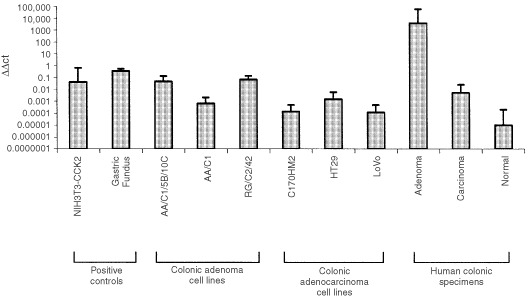
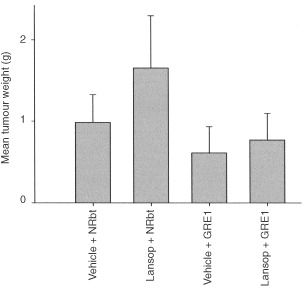
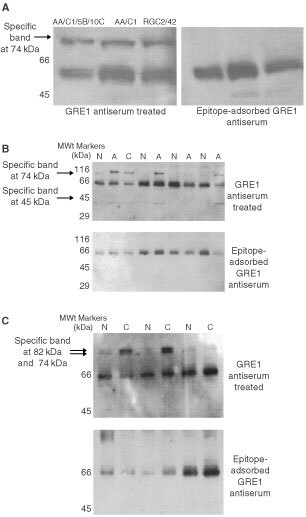
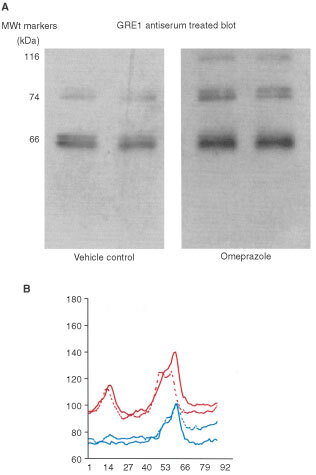
The role of hyper-gastrinaemia in the incidence of colonic cancer remains to be clarified. The aim of this study was to determine whether cholecystokinin-2 (CCK-2) receptor expression predicts the sensitivity of human colonic adenomas to the proliferative effects of serum hyper-gastrinaemia. Gene expression of the classical (74 kDa) CCK-2 receptor in human colonic adenoma specimens and cell lines, was quantified by real-time PCR. Western blotting, using a CCK-2 receptor antiserum, confirmed protein expression. A transformed human colonic adenoma was grown in SCID mice, with hyper-gastrinaemia induced by proton pump inhibitors. CCK-2 receptor blockade was achieved by using neutralising antiserum. Both human colonic adenoma cell lines and biopsies expressed CCK-2 receptor mRNA at levels comparable with CCK-2 receptor transfected fibroblasts and oxyntic mucosa. Western blotting confirmed immunoreactive CCK-2 receptor bands localised to 45, 74 and 82.5 kDa. Omeprazole and lansoprazole-induced hyper-gastrinaemia (resulting in serum gastrin levels of 34.0 and 153.0 pM, respectively) significantly increased the weight of the human adenoma grafts (43% (P=0.016) and 70% (P=0.014), respectively). The effect of hypergastrinaemia on tumour growth was reversed by use of antiserum directed against the CCK-2 receptor. Hyper-gastrinaemia may promote proliferation of human colonic adenomas that express CCK-2 receptor isoforms.
高胃泌素血症在结肠癌发病中的作用仍有待阐明。本研究的目的是确定胆囊收缩素-2(CCK-2)受体表达是否可预测人类结肠腺瘤对血清高胃泌素血症增殖效应的敏感性。通过实时PCR对人结肠腺瘤标本和细胞系中经典(74 kDa)CCK-2受体的基因表达进行定量。使用CCK-2受体抗血清进行蛋白质印迹法,证实了蛋白质表达。将转化的人结肠腺瘤接种于SCID小鼠,通过质子泵抑制剂诱导高胃泌素血症。使用中和抗血清实现CCK-2受体阻断。人结肠腺癌细胞系和活检组织中CCK-2受体mRNA的表达水平与CCK-2受体转染的成纤维细胞和胃黏膜相当。蛋白质印迹法证实免疫反应性CCK-2受体条带位于45、74和82.5 kDa处。奥美拉唑和兰索拉唑诱导的高胃泌素血症(分别导致血清胃泌素水平为34.0和153.0 pM)显著增加了人腺瘤移植物的重量(分别增加43%(P=0.016)和70%(P=0.014))。使用针对CCK-2受体的抗血清可逆转高胃泌素血症对肿瘤生长的影响。高胃泌素血症可能促进表达CCK-2受体亚型的人结肠腺瘤的增殖。