Kampa Marilena, Nistikaki Anastasia, Tsaousis Vassilios, Maliaraki Niki, Notas George, Castanas Elias
Laboratories of Experimental Endocrinology, University of Crete, School of Medicine, Heraklion, GR-71110, Greece.
BMC Clin Pathol. 2002 Aug 28;2(1):3. doi: 10.1186/1472-6890-2-3.
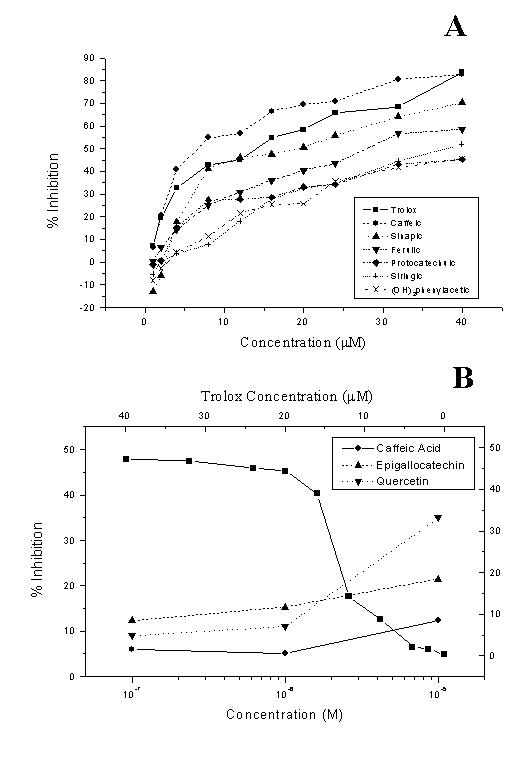
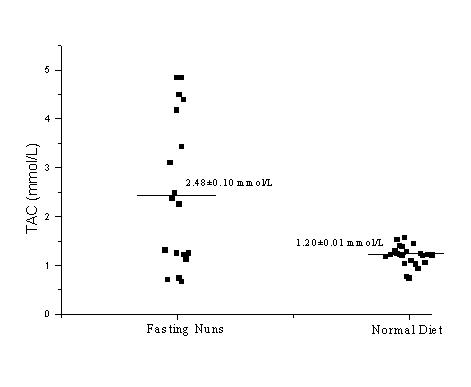
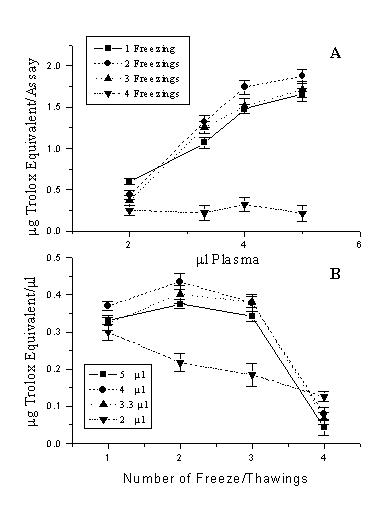
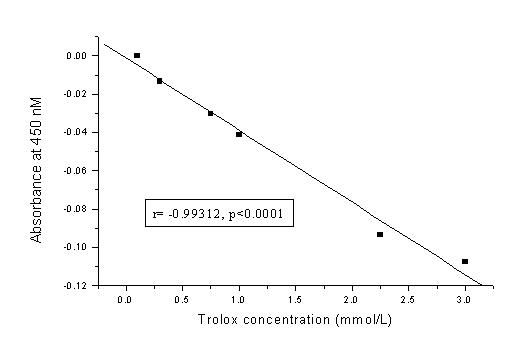
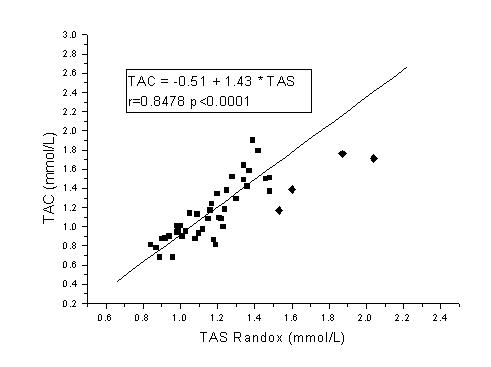
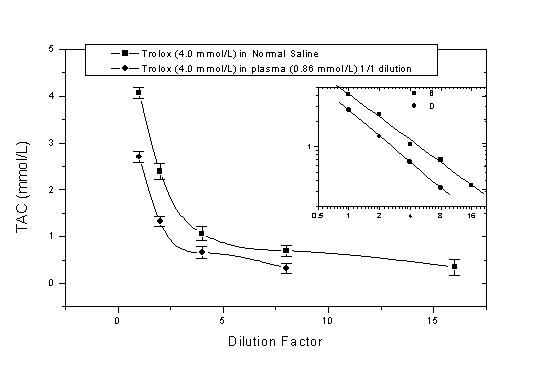
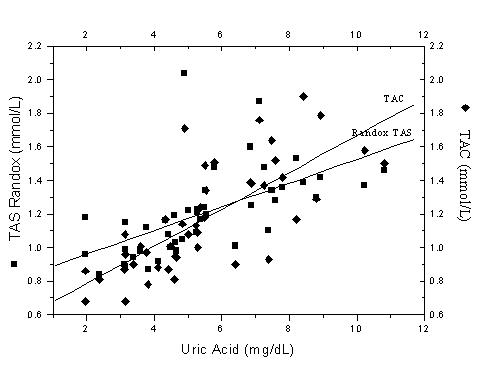
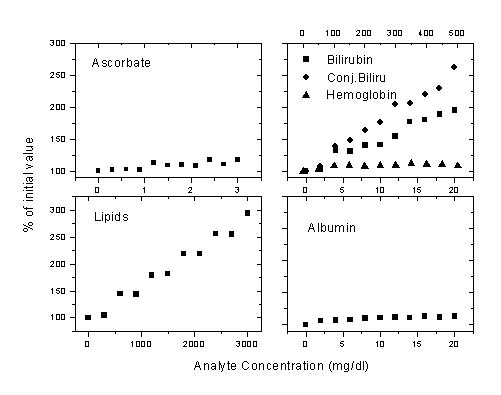
Antioxidant molecules, which scavenge free radical species to prevent or delay oxidative damage of important macromolecules, membrane lipids and lipoproteins, are prevalent in plasma and other biological fluids. Among them, bilirubin, uric acid and protein thiols are the major endogenous antioxidants, while vitamins C and E, as well as a number of food-derived (poly)aromatic substances, belonging to stilbens, flavonoids and phenolic acids, are the main classes of nutritional antioxidants. Assays for total antioxidant capacity in plasma differ in their type of oxidation source, target and measurement used to detect the oxidized product. METHODS: In the present work we present an automated assay for the estimation of blood total antioxidant capacity (TAC assay), based on the crocin bleaching (oxidation) method. This method was adapted on a modern autoanalyzer, was linear over a wide range of values (0-3 mmol/L), and performed using an end point measurement. RESULTS: The TAC method presented a linear correlation with another automated commercial Total Antioxidant Status (TAS) test. Detection of the interference of different metabolites revealed a significant participation of TAC from uric acid, bilirubin, albumin, a minor interference from ascorbic acid, and no interference from hemoglobin. TAC was not modified by two freeze/thawing cycles, and was stable in samples stored at room temperature for 4 hours. K-EDTA and heparin were the best anticoagulants, while citrate decreased TAC by 20%. Reference values derived from samples of normal blood donors was 1.175 PlusMinus; 0.007 mmol/L (mean PlusMinus; SEM), while a diet rich in antioxidants more than doubled this value. CONCLUSIONS: The proposed TAC assay, is fully automated, stable and reliable, and could be of value in the estimation of the AC of plasma. It is further proposed to calculate the antioxidant capacity of plasma after a subtraction of all interference deriving from endogenous and/or exogenous metabolites. The antioxidant capacity of plasma thus calculated can be used as a useful indicator of the antioxidant value of foods and beverages in the daily diet.
抗氧化分子可清除自由基,防止或延缓重要大分子、膜脂质和脂蛋白的氧化损伤,在血浆和其他生物体液中普遍存在。其中,胆红素、尿酸和蛋白质硫醇是主要的内源性抗氧化剂,而维生素C和E以及一些食物来源的(多)芳香物质,属于芪类、黄酮类和酚酸类,是主要的营养抗氧化剂类别。血浆中总抗氧化能力的测定在氧化源类型、检测氧化产物所用的靶标和测量方法上存在差异。
在本研究中,我们基于藏红花素漂白(氧化)法,提出了一种用于估算血液总抗氧化能力的自动化检测方法(TAC检测)。该方法适用于现代自动分析仪,在较宽的值范围(0 - 3 mmol/L)内呈线性,采用终点测量法进行。
TAC方法与另一种商业化的自动化总抗氧化状态(TAS)检测呈线性相关。对不同代谢物干扰的检测表明,尿酸、胆红素、白蛋白对TAC有显著贡献,抗坏血酸有轻微干扰,血红蛋白无干扰。TAC不受两个冻融循环的影响,在室温下储存4小时的样品中稳定。K - EDTA和肝素是最佳抗凝剂,而柠檬酸盐使TAC降低20%。正常献血者样本的参考值为1.175 ± 0.007 mmol/L(平均值 ± 标准误),而富含抗氧化剂的饮食使该值增加了一倍多。
所提出的TAC检测方法完全自动化、稳定且可靠,在估算血浆AC方面可能具有价值。进一步建议在减去所有来自内源性和/或外源性代谢物的干扰后计算血浆的抗氧化能力。如此计算出的血浆抗氧化能力可作为日常饮食中食物和饮料抗氧化价值的有用指标。