Lamphear Barry J, Streatfield Stephen J, Jilka Joseph M, Brooks Christopher A, Barker Donna K, Turner Debra D, Delaney Donna E, Garcia Martin, Wiggins Barry, Woodard Susan L, Hood Elizabeth E, Tizard Ian R, Lawhorn Bruce, Howard John A
ProdiGene, 101 Gateway Boulevard, Suite 100, College Station, TX 77845, USA.
J Control Release. 2002 Dec 13;85(1-3):169-80. doi: 10.1016/s0168-3659(02)00282-1.
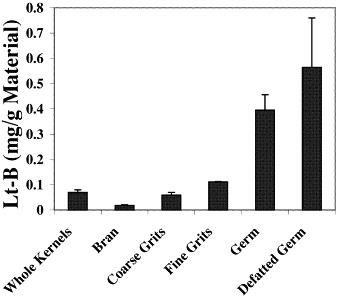
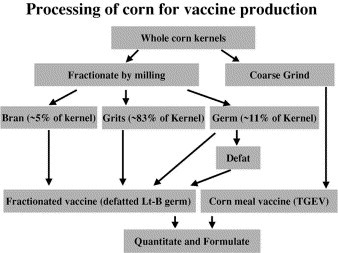
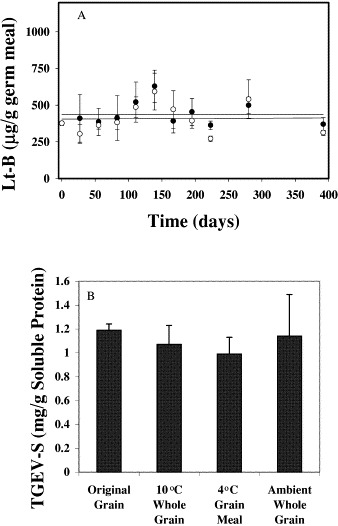
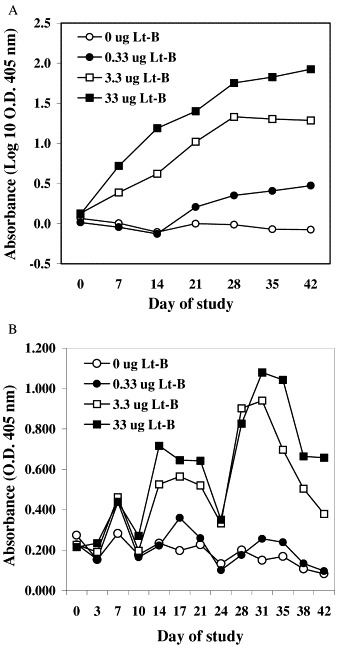
The use of recombinant gene technologies by the vaccine industry has revolutionized the way antigens are generated, and has provided safer, more effective means of protecting animals and humans against bacterial and viral pathogens. Viral and bacterial antigens for recombinant subunit vaccines have been produced in a variety of organisms. Transgenic plants are now recognized as legitimate sources for these proteins, especially in the developing area of oral vaccines, because antigens have been shown to be correctly processed in plants into forms that elicit immune responses when fed to animals or humans. Antigens expressed in maize (Zea mays) are particularly attractive since they can be deposited in the natural storage vessel, the corn seed, and can be conveniently delivered to any organism that consumes grain. We have previously demonstrated high level expression of the B-subunit of Escherichia coli heat-labile enterotoxin and the spike protein of swine transmissible gastroenteritis in corn, and have demonstrated that these antigens delivered in the seed elicit protective immune responses. Here we provide additional data to support the potency, efficacy, and stability of recombinant subunit vaccines delivered in maize seed.
疫苗行业对重组基因技术的运用彻底改变了抗原的生成方式,为保护动物和人类免受细菌和病毒病原体侵害提供了更安全、有效的手段。重组亚单位疫苗的病毒和细菌抗原已在多种生物体中生产出来。转基因植物如今被视为这些蛋白质的合法来源,尤其是在口服疫苗这一发展领域,因为已证明抗原在植物中能被正确加工成在喂给动物或人类时能引发免疫反应的形式。在玉米(Zea mays)中表达的抗原特别有吸引力,因为它们可以沉积在天然储存容器——玉米种子中,并且可以方便地递送给任何食用谷物的生物体。我们之前已证明大肠杆菌不耐热肠毒素的B亚单位和猪传染性胃肠炎的刺突蛋白在玉米中能高水平表达,并且已证明种子中递送的这些抗原能引发保护性免疫反应。在此我们提供更多数据以支持在玉米种子中递送的重组亚单位疫苗的效力、功效和稳定性。