Eisenbarth Stephanie C, Piggott Damani A, Huleatt James W, Visintin Irene, Herrick Christina A, Bottomly Kim
Section of Immunobiology, Yale University School of Medicine, New Haven, CT 06520, USA.
J Exp Med. 2002 Dec 16;196(12):1645-51. doi: 10.1084/jem.20021340.
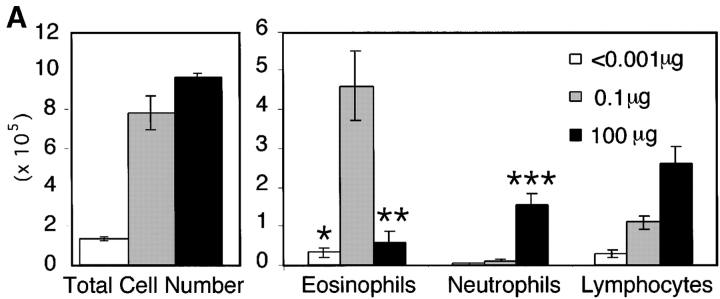
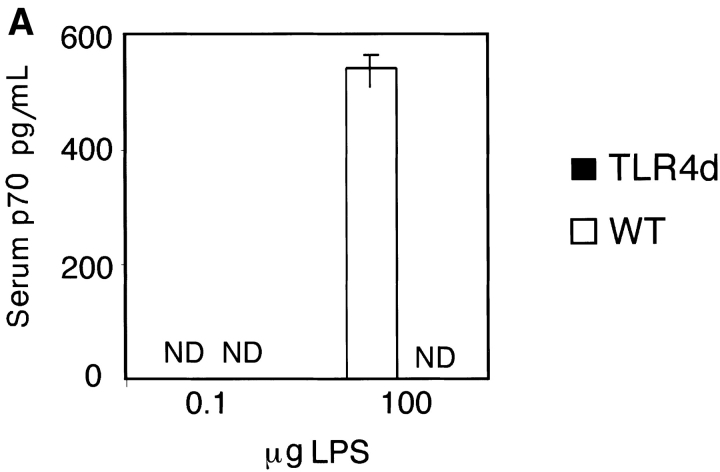
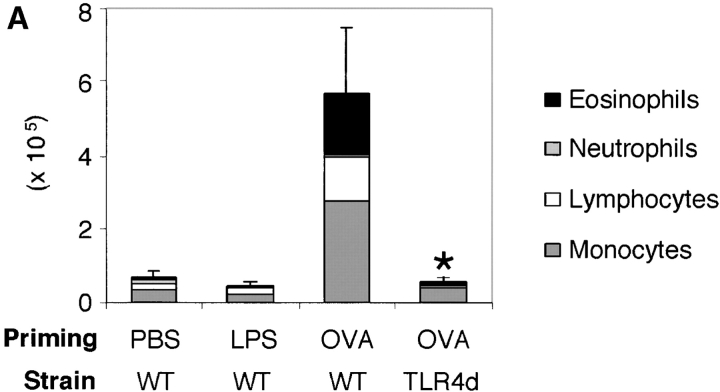
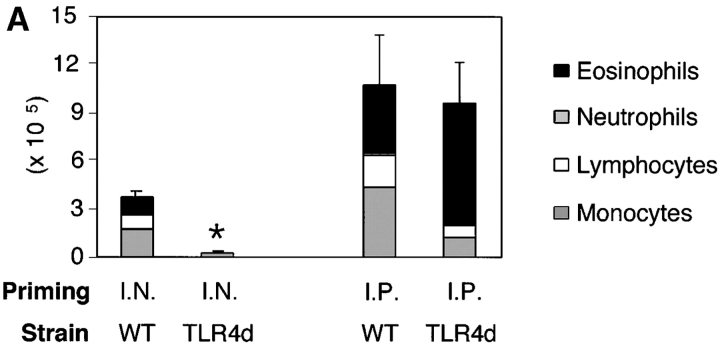
Allergic asthma is an inflammatory lung disease initiated and directed by T helper cells type 2 (Th2). The mechanism involved in generation of Th2 responses to inert inhaled antigens, however, is unknown. Epidemiological evidence suggests that exposure to lipopolysaccharide (LPS) or other microbial products can influence the development and severity of asthma. However, the mechanism by which LPS influences asthma pathogenesis remains undefined. Although it is known that signaling through Toll-like receptors (TLR) is required for adaptive T helper cell type 1 (Th1) responses, it is unclear if TLRs are needed for Th2 priming. Here, we report that low level inhaled LPS signaling through TLR4 is necessary to induce Th2 responses to inhaled antigens in a mouse model of allergic sensitization. The mechanism by which LPS signaling results in Th2 sensitization involves the activation of antigen-containing dendritic cells. In contrast to low levels, inhalation of high levels of LPS with antigen results in Th1 responses. These studies suggest that the level of LPS exposure can determine the type of inflammatory response generated and provide a potential mechanistic explanation of epidemiological data on endotoxin exposure and asthma prevalence.
过敏性哮喘是一种由2型辅助性T细胞(Th2)引发和主导的炎症性肺部疾病。然而,Th2对惰性吸入性抗原产生反应的机制尚不清楚。流行病学证据表明,接触脂多糖(LPS)或其他微生物产物会影响哮喘的发展和严重程度。然而,LPS影响哮喘发病机制仍不明确。虽然已知通过Toll样受体(TLR)的信号传导是适应性1型辅助性T细胞(Th1)反应所必需的,但尚不清楚TLR是否是Th2启动所必需的。在此,我们报告在过敏性致敏小鼠模型中,通过TLR4的低水平吸入LPS信号传导是诱导Th2对吸入性抗原产生反应所必需的。LPS信号传导导致Th2致敏的机制涉及含抗原的树突状细胞的激活。与低水平相反,吸入高水平的LPS与抗原会导致Th1反应。这些研究表明,LPS暴露水平可以决定所产生的炎症反应类型,并为关于内毒素暴露与哮喘患病率的流行病学数据提供潜在的机制解释。