Lee Wei-Lih, Oberle Jessica R, Cooper John A
Department of Cell Biology and Physiology, Washington University School of Medicine, St. Louis, MO 63110, USA.
J Cell Biol. 2003 Feb 3;160(3):355-64. doi: 10.1083/jcb.200209022.
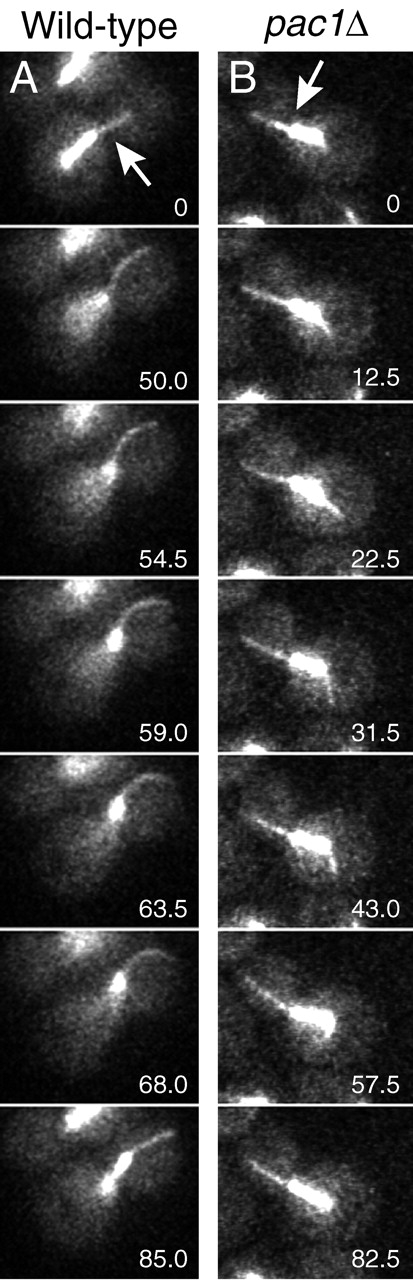
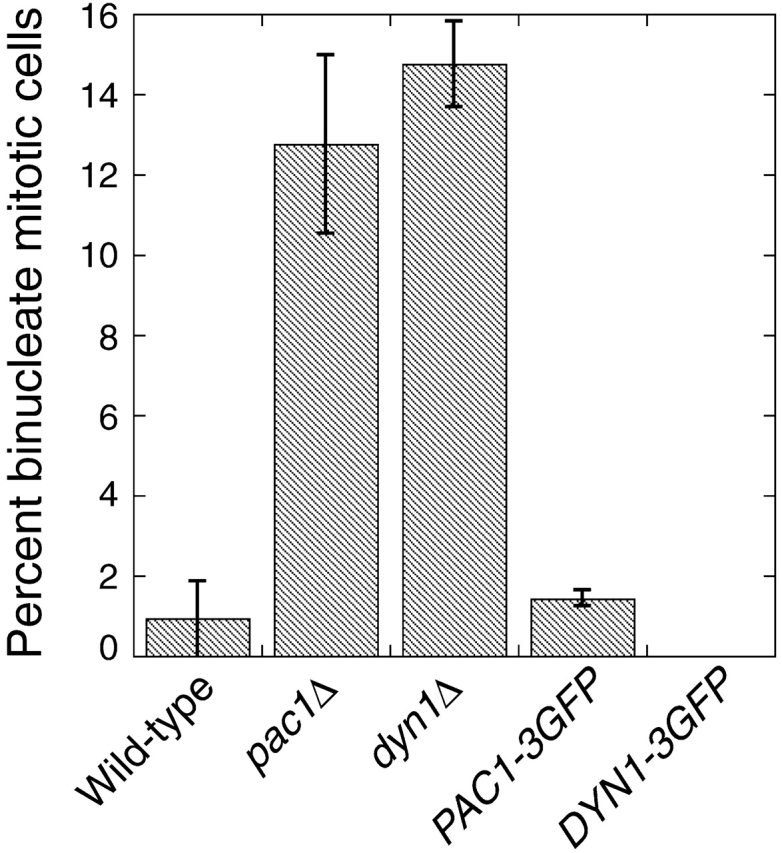
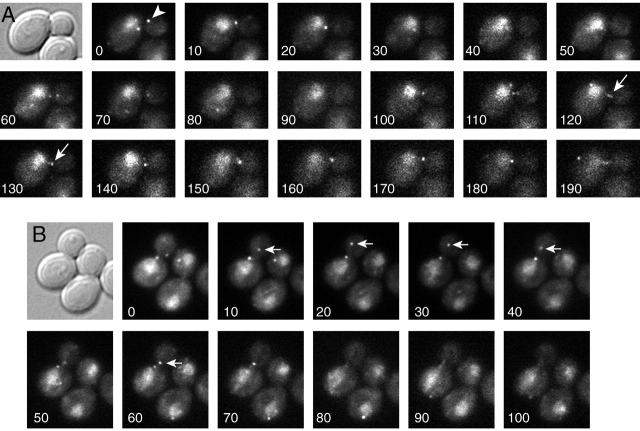
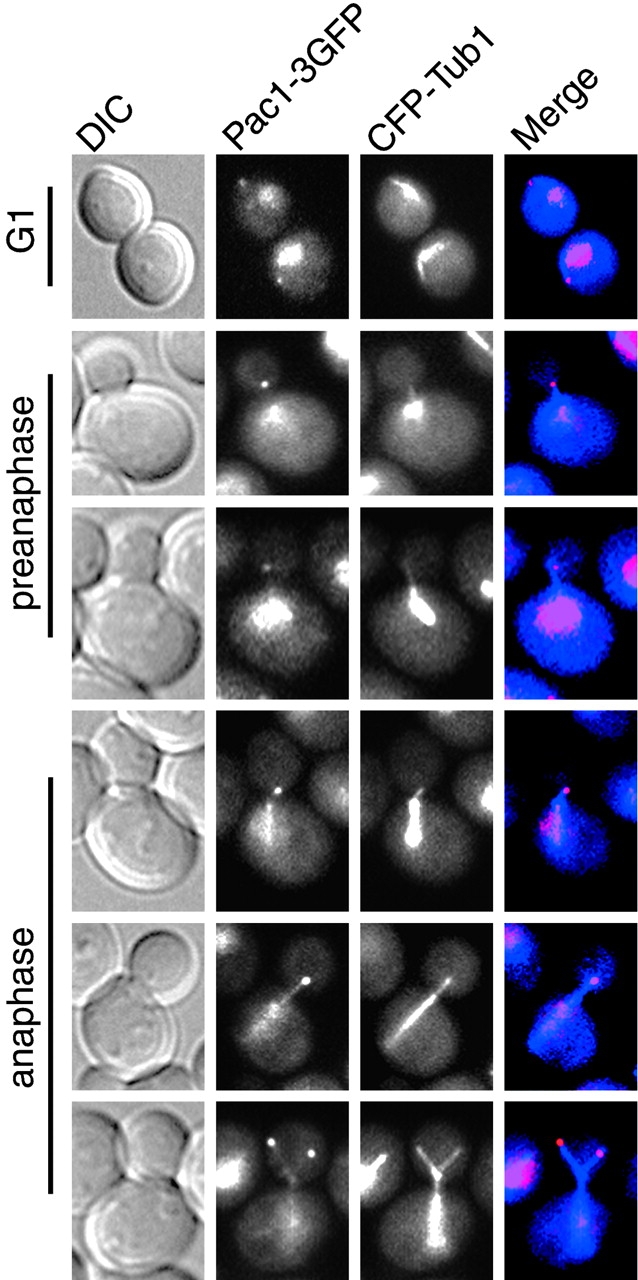
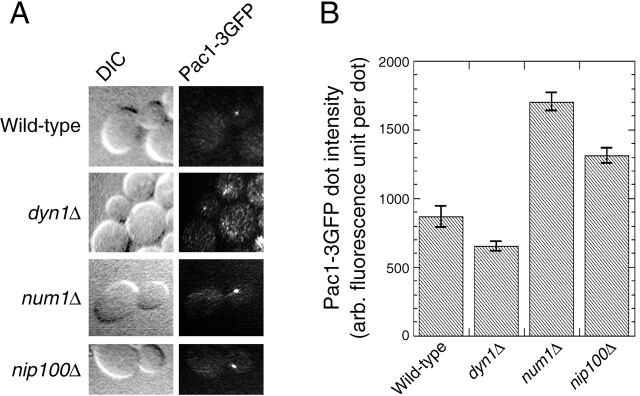
During mitosis in Saccharomyces cerevisiae, the mitotic spindle moves into the mother-bud neck via dynein-dependent sliding of cytoplasmic microtubules along the cortex of the bud. Here we show that Pac1, the yeast homologue of the human lissencephaly protein LIS1, plays a key role in this process. First, genetic interactions placed Pac1 in the dynein/dynactin pathway. Second, cells lacking Pac1 failed to display microtubule sliding in the bud, resulting in defective mitotic spindle movement and nuclear segregation. Third, Pac1 localized to the plus ends (distal tips) of cytoplasmic microtubules in the bud. This localization did not depend on the dynein heavy chain Dyn1. Moreover, the Pac1 fluorescence intensity at the microtubule end was enhanced in cells lacking dynactin or the cortical attachment molecule Num1. Fourth, dynein heavy chain Dyn1 also localized to the tips of cytoplasmic microtubules in wild-type cells. Dynein localization required Pac1 and, like Pac1, was enhanced in cells lacking the dynactin component Arp1 or the cortical attachment molecule Num1. Our results suggest that Pac1 targets dynein to microtubule tips, which is necessary for sliding of microtubules along the bud cortex. Dynein must remain inactive until microtubule ends interact with the bud cortex, at which time dynein and Pac1 appear to be offloaded from the microtubule to the cortex.
在酿酒酵母有丝分裂过程中,有丝分裂纺锤体通过动力蛋白依赖的细胞质微管沿着芽皮层的滑动进入母-芽颈。我们在此表明,人类无脑回蛋白LIS1的酵母同源物Pac1在此过程中起关键作用。首先,遗传相互作用将Pac1置于动力蛋白/动力蛋白激活蛋白途径中。其次,缺乏Pac1的细胞未能在芽中显示微管滑动,导致有丝分裂纺锤体运动和核分离缺陷。第三,Pac1定位于芽中细胞质微管的正端(远端)。这种定位不依赖于动力蛋白重链Dyn1。此外,在缺乏动力蛋白激活蛋白或皮层附着分子Num1的细胞中,微管末端的Pac1荧光强度增强。第四,动力蛋白重链Dyn1在野生型细胞中也定位于细胞质微管的末端。动力蛋白的定位需要Pac1,并且与Pac1一样,在缺乏动力蛋白激活蛋白成分Arp1或皮层附着分子Num1的细胞中增强。我们的结果表明,Pac1将动力蛋白靶向微管末端,这是微管沿芽皮层滑动所必需的。动力蛋白必须保持无活性,直到微管末端与芽皮层相互作用,此时动力蛋白和Pac1似乎从微管卸载到皮层。