Hunter Andrew W, Caplow Michael, Coy David L, Hancock William O, Diez Stefan, Wordeman Linda, Howard Jonathon
Department of Physiology and Biophysics, University of Washington, Seattle, WA 98195, USA.
Mol Cell. 2003 Feb;11(2):445-57. doi: 10.1016/s1097-2765(03)00049-2.
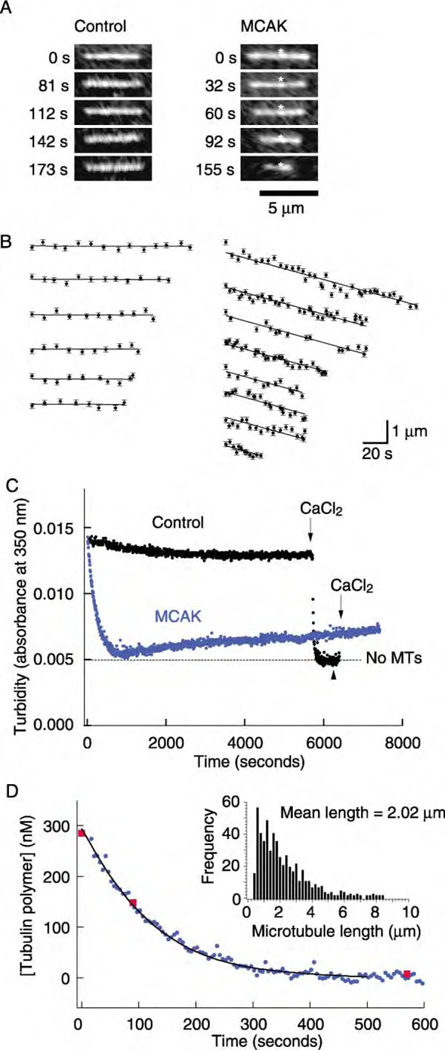
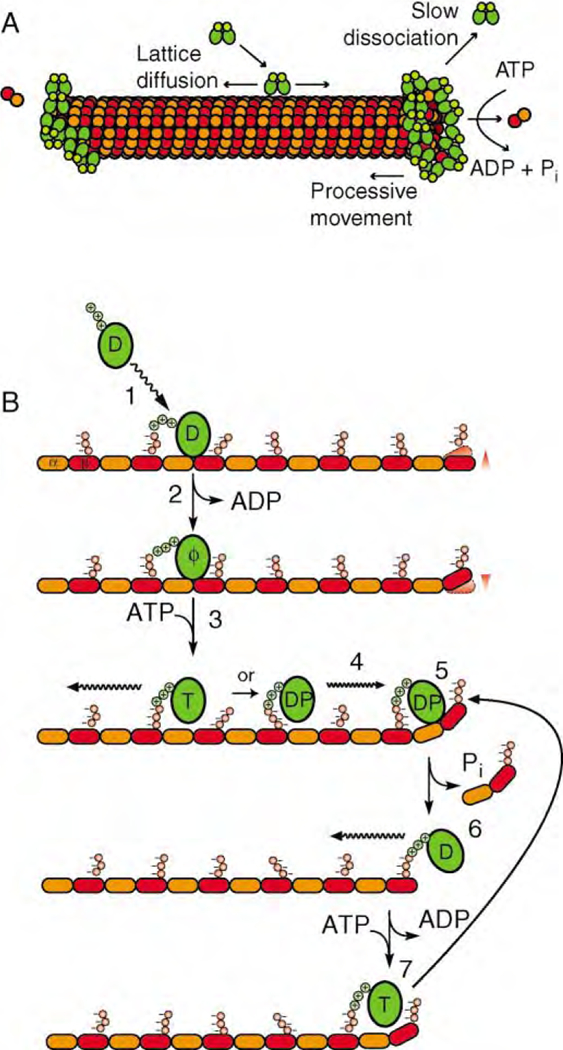
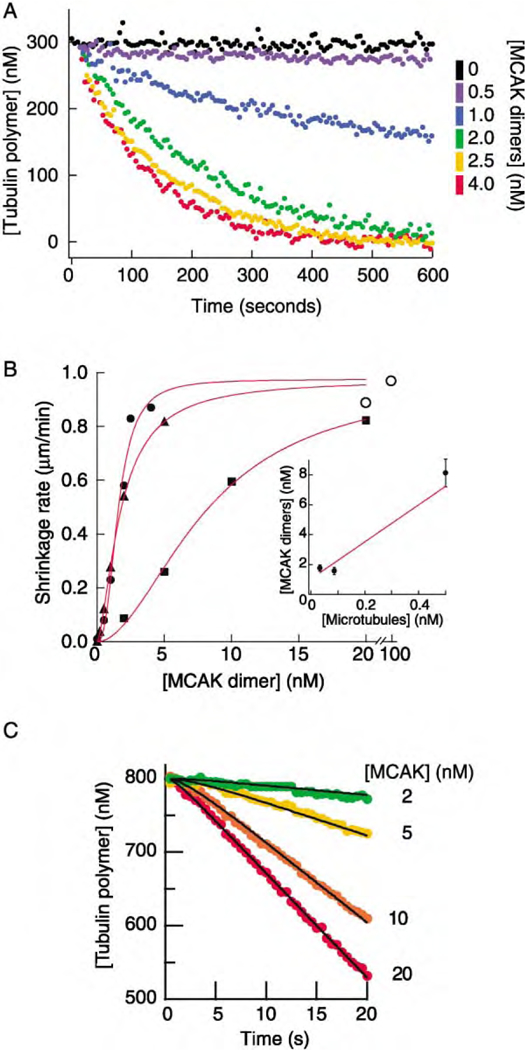
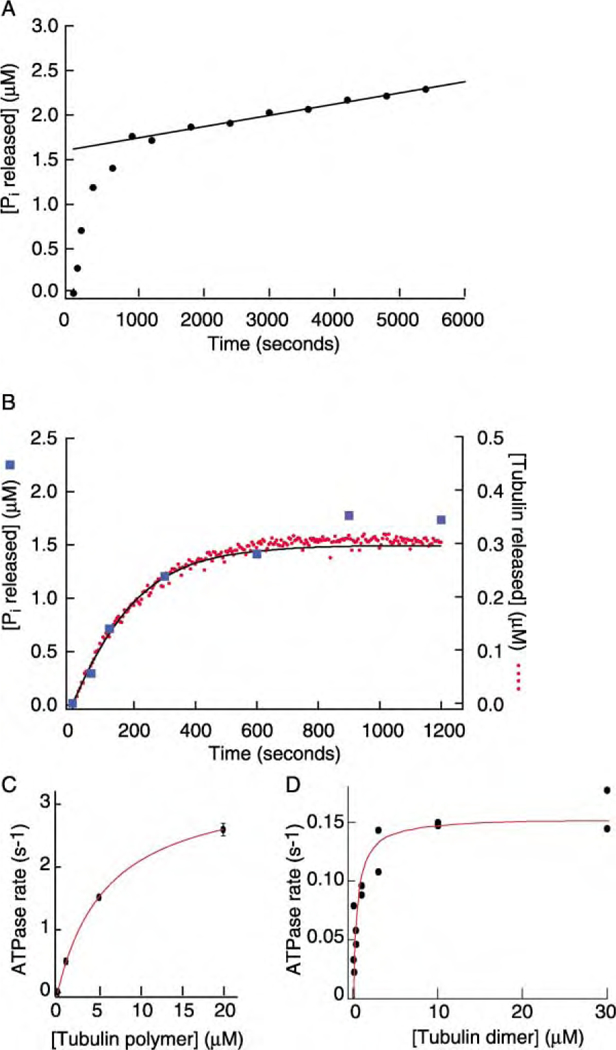
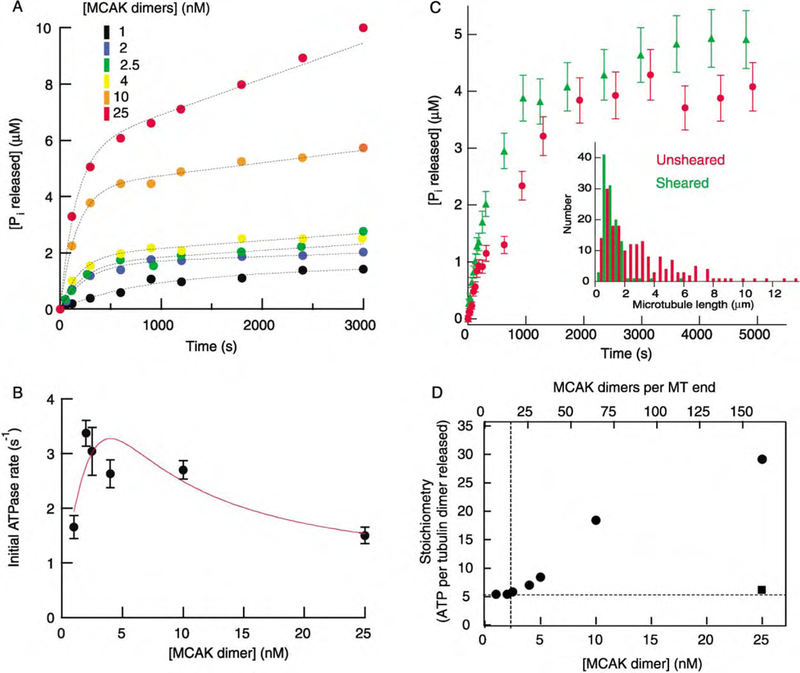
MCAK belongs to the Kin I subfamily of kinesin-related proteins, a unique group of motor proteins that are not motile but instead destabilize microtubules. We show that MCAK is an ATPase that catalytically depolymerizes microtubules by accelerating, 100-fold, the rate of dissociation of tubulin from microtubule ends. MCAK has one high-affinity binding site per protofilament end, which, when occupied, has both the depolymerase and ATPase activities. MCAK targets protofilament ends very rapidly (on-rate 54 micro M(-1).s(-1)), perhaps by diffusion along the microtubule lattice, and, once there, removes approximately 20 tubulin dimers at a rate of 1 s(-1). We propose that up to 14 MCAK dimers assemble at the end of a microtubule to form an ATP-hydrolyzing complex that processively depolymerizes the microtubule.
MCAK属于驱动蛋白相关蛋白的Kin I亚家族,这是一组独特的运动蛋白,它们并不移动,而是使微管不稳定。我们发现MCAK是一种ATP酶,它通过将微管蛋白从微管末端的解离速率提高100倍,催化性地使微管解聚。MCAK在每个原丝末端有一个高亲和力结合位点,当该位点被占据时,同时具有解聚酶和ATP酶活性。MCAK能非常迅速地靶向原丝末端(结合速率为54 μM⁻¹·s⁻¹),可能是通过沿微管晶格扩散实现的,一旦到达那里,它以1 s⁻¹的速率去除约20个微管蛋白二聚体。我们提出,多达14个MCAK二聚体在微管末端组装形成一个ATP水解复合体,该复合体持续地使微管解聚。