Fryer A D, Jacoby D B
Department of Environmental Health Sciences, School of Hygiene and Public Health, Johns Hopkins University, Baltimore, Maryland 21205.
J Clin Invest. 1992 Dec;90(6):2292-8. doi: 10.1172/JCI116116.
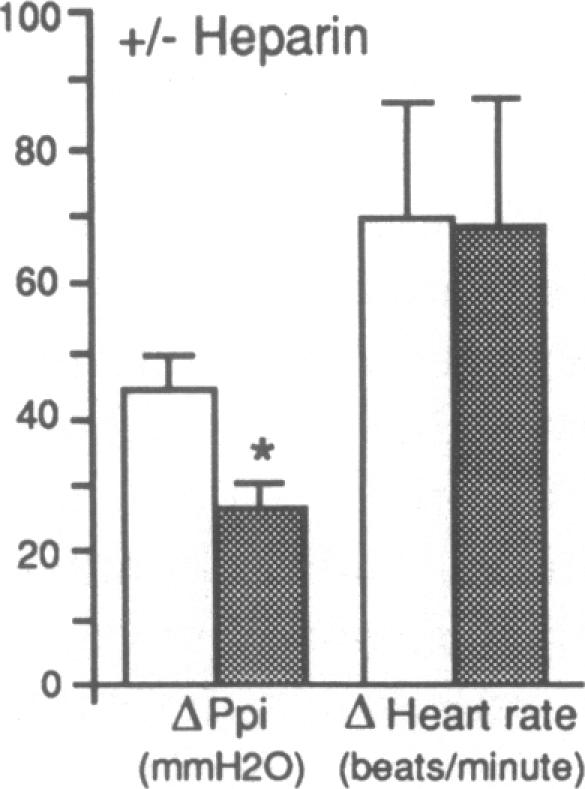
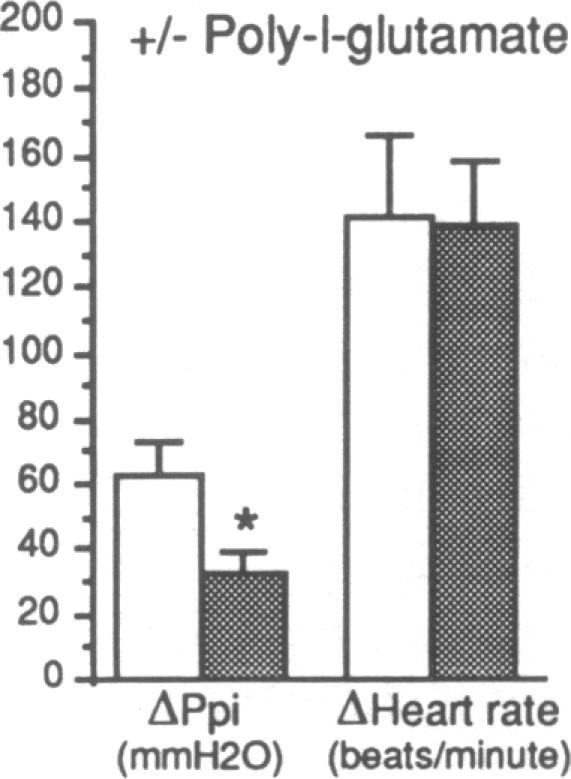
The effect of heparin and poly-L-glutamate on the function of inhibitory M2 muscarinic autoreceptors on parasympathetic nerves in the lung was tested in antigen-challenged guinea pigs. After antigen challenge, M2 receptor function is decreased, thus increasing release of acetylcholine from the vagus and potentiating vagally induced bronchoconstriction. Guinea pigs were anesthetized, tracheostomized, vagotomized, paralyzed, and ventilated. Electrical stimulation of the vagi caused bronchoconstriction and bradycardia. In controls, pilocarpine attenuated vagally induced bronchoconstriction by stimulating neuronal M2 muscarinic receptors. Conversely, blocking these autoreceptors with gallamine potentiated vagally induced bronchoconstriction. In challenged animals the effects of both drugs were markedly reduced, confirming M2 receptor dysfunction. 20 min after heparin or poly-L-glutamate, the effects of both pilocarpine and gallamine on vagally induced bronchoconstriction were restored, demonstrating recovery of M2 receptor function. Neither heparin nor poly-L-glutamate affected vagally induced responses in control animals. Thus antigen-induced dysfunction of M2 receptors can be reversed by polyanionic polysaccharides (heparin) or polyanionic peptides (poly-L-glutamate). This suggests that a polycationic substance such as eosinophil major basic protein, cationic protein, or peroxidase may be responsible for antigen-induced pulmonary M2 receptor dysfunction.
在抗原激发的豚鼠中测试了肝素和聚-L-谷氨酸对肺中副交感神经上抑制性M2毒蕈碱自身受体功能的影响。抗原激发后,M2受体功能降低,从而增加了迷走神经中乙酰胆碱的释放并增强了迷走神经诱导的支气管收缩。豚鼠麻醉后进行气管切开、迷走神经切断、麻痹并进行通气。电刺激迷走神经会引起支气管收缩和心动过缓。在对照组中,毛果芸香碱通过刺激神经元M2毒蕈碱受体减弱了迷走神经诱导的支气管收缩。相反,用加拉明阻断这些自身受体会增强迷走神经诱导的支气管收缩。在激发的动物中,两种药物的作用均明显降低,证实了M2受体功能障碍。给予肝素或聚-L-谷氨酸20分钟后,毛果芸香碱和加拉明对迷走神经诱导的支气管收缩的作用均恢复,表明M2受体功能恢复。肝素和聚-L-谷氨酸均未影响对照动物中迷走神经诱导的反应。因此,抗原诱导的M2受体功能障碍可被聚阴离子多糖(肝素)或聚阴离子肽(聚-L-谷氨酸)逆转。这表明,诸如嗜酸性粒细胞主要碱性蛋白、阳离子蛋白或过氧化物酶等聚阳离子物质可能是抗原诱导的肺M2受体功能障碍的原因。