Sugita Sunao, Streilein J Wayne
Schepens Eye Research Institute, Department of Ophthalmology, Harvard Medical School, Boston, MA 02114, USA.
J Exp Med. 2003 Jul 7;198(1):161-71. doi: 10.1084/jem.20030097. Epub 2003 Jun 30.
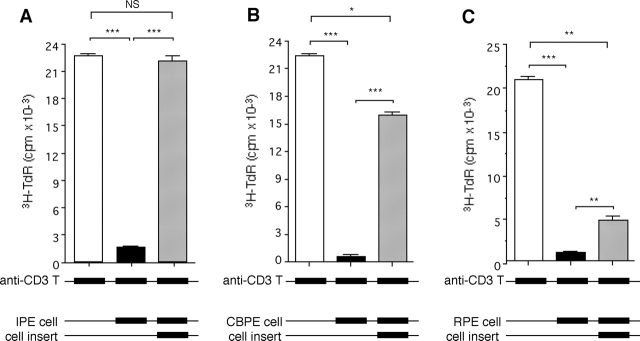
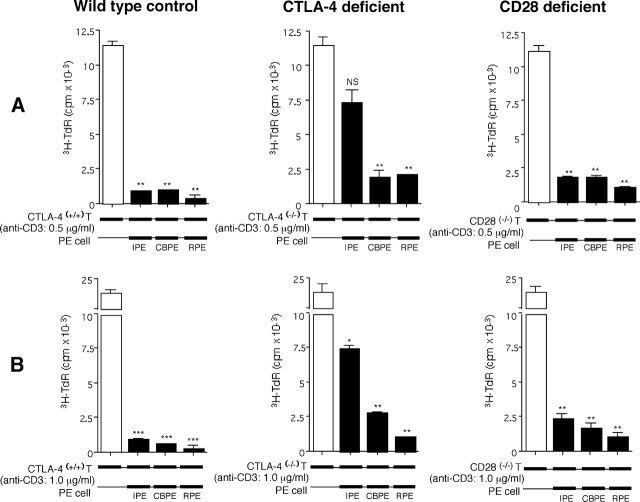
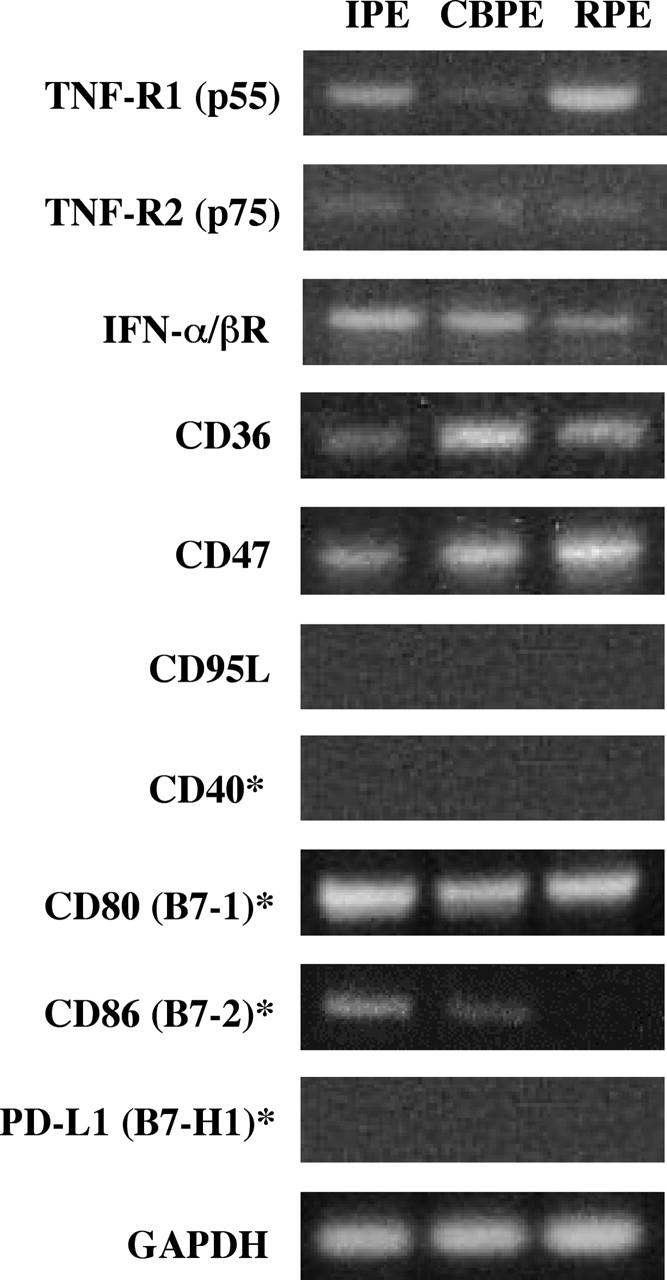
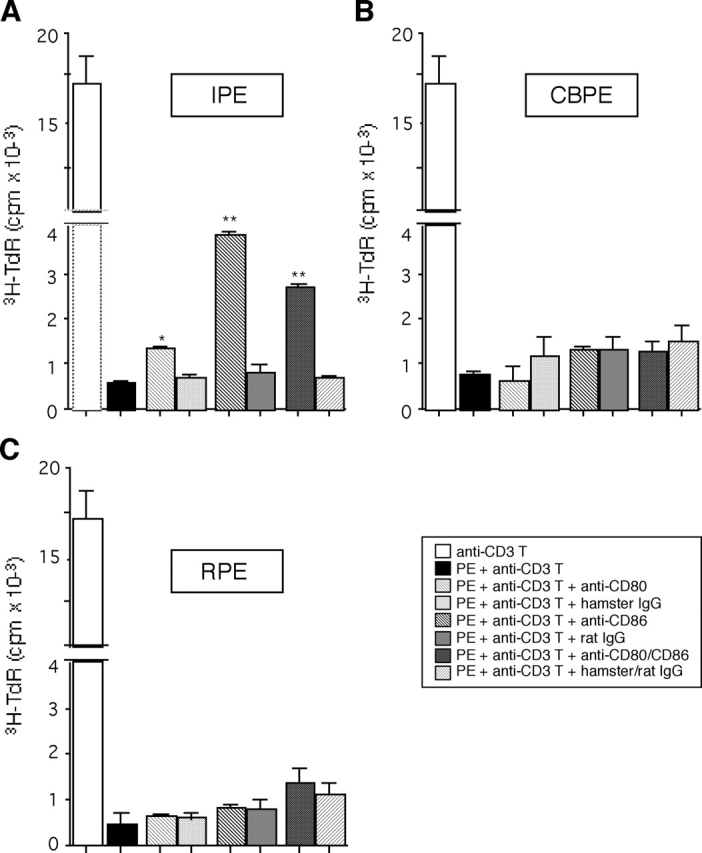
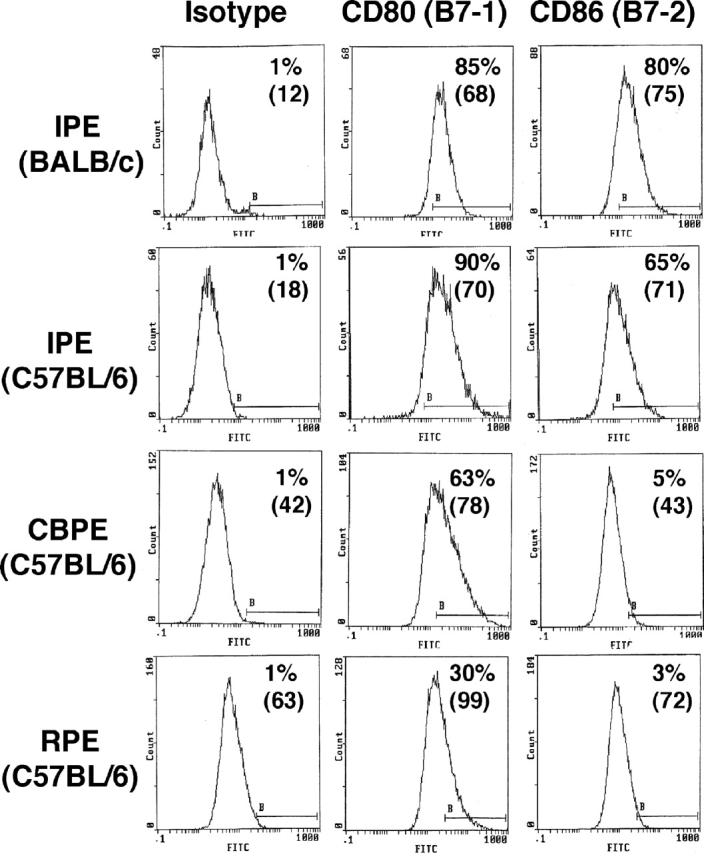
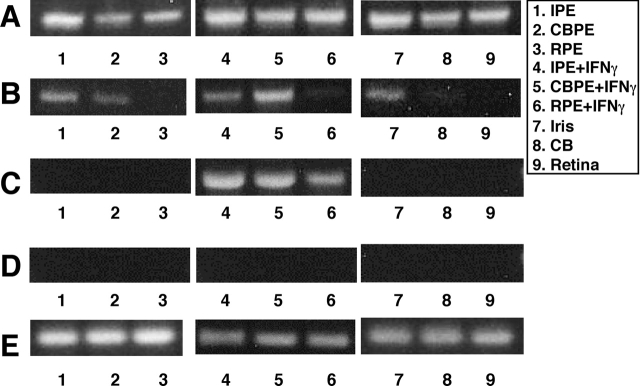
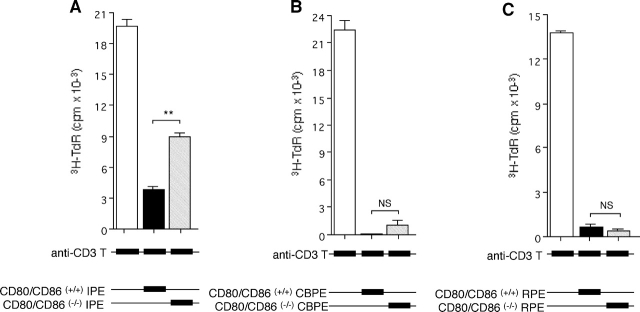
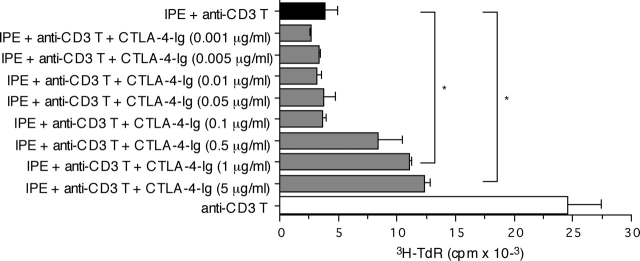
A monolayer of pigment epithelium (PE) lines the iris PE (IPE), ciliary body PE, and retina PE of the inner eye, an immune-privileged site. These neural crest-derived epithelial cells participate in ocular immune privilege through poorly defined molecular mechanisms. Murine PE cells cultured from different ocular tissues suppress T cell activation by differing mechanisms. In particular, IPE cells suppress primarily via direct cell to cell contact. By examining surface expression of numerous candidate molecules (tumor necrosis factor receptor [TNFR]1, TNFR2, CD36, CD40, CD47, CD80, CD86, PD-L1, CD95 ligand, and type I interferon receptor), we report that IPE cells uniquely express on their surface the costimulatory molecule CD86. When IPE were blocked with anti-CD86 or were derived from CD80/CD86 (but not CD80) knockout (KO) mice, the cells displayed reduced capacity to suppress T cell activation. IPE also failed to suppress activation of T cells in the presence of cytotoxic T lymphocyte-associated antigen 4 (CTLA-4) immunoglobulin or if the T cells were obtained from CTLA-4 (but not CD28) KO mice. We conclude that iris pigment epithelial cells constitutively express cell surface CD86, which enables the cells to contact inhibit T cells via direct interaction with CTLA-4. Thus, ocular immune privilege is achieved in part by subversion of molecules that are usually used for conventional immune costimulation.
色素上皮(PE)单层细胞衬于眼内的虹膜色素上皮(IPE)、睫状体色素上皮和视网膜色素上皮,这是一个免疫赦免部位。这些神经嵴衍生的上皮细胞通过定义不清的分子机制参与眼部免疫赦免。从不同眼组织培养的小鼠色素上皮细胞通过不同机制抑制T细胞活化。特别是,IPE细胞主要通过直接细胞间接触来抑制。通过检测众多候选分子(肿瘤坏死因子受体 [TNFR]1、TNFR2、CD36、CD40、CD47、CD80、CD86、程序性死亡受体配体1 [PD-L1]、CD95配体和I型干扰素受体)的表面表达,我们报告IPE细胞在其表面独特地表达共刺激分子CD86。当用抗CD86阻断IPE或使用来自CD80/CD86(而非CD80)基因敲除(KO)小鼠的IPE时,这些细胞抑制T细胞活化的能力降低。在存在细胞毒性T淋巴细胞相关抗原4(CTLA-4)免疫球蛋白的情况下,IPE也无法抑制T细胞活化,或者如果T细胞来自CTLA-4(而非CD28)基因敲除小鼠,IPE同样无法抑制T细胞活化。我们得出结论,虹膜色素上皮细胞组成性地表达细胞表面CD86,这使得细胞能够通过与CTLA-4直接相互作用来接触抑制T细胞。因此,眼部免疫赦免部分是通过颠覆通常用于传统免疫共刺激的分子来实现的。