Department of Ophthalmology, Nippon Medical School, 1-1-5 Sendagi, Bunkyo-ku, Tokyo 113-8603, Japan.
Department of Ophthalmology, Nippon Medical School, Tama-Nagayama Hospital, 1-7-1 Nagayama, Tama, Tokyo 206-8512, Japan.
Int J Mol Sci. 2020 May 31;21(11):3962. doi: 10.3390/ijms21113962.
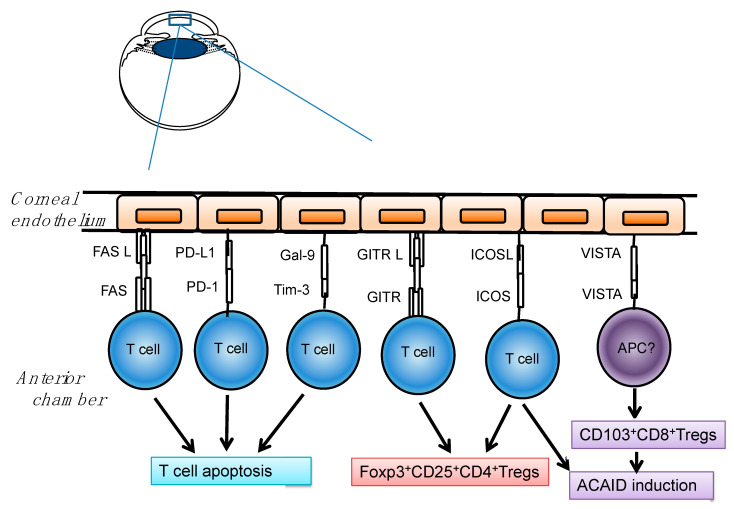
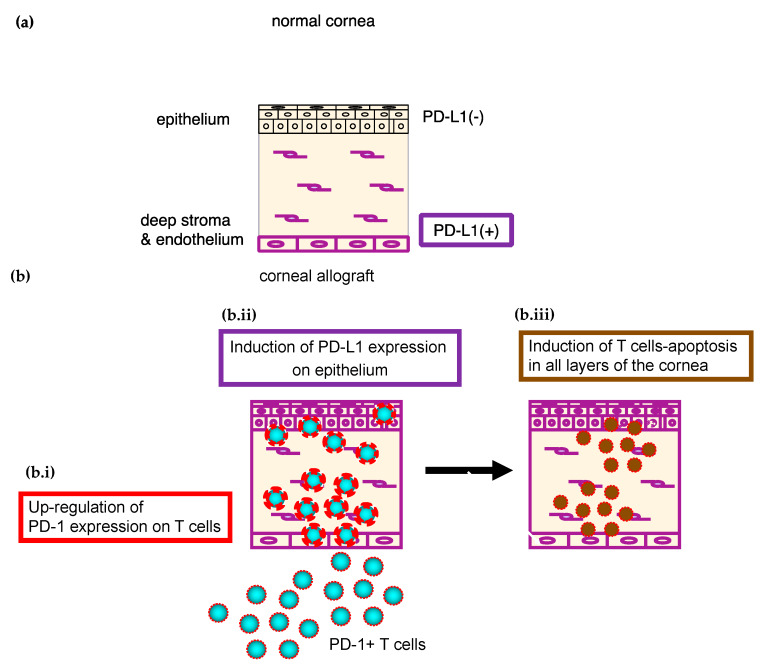
The eye is provided with immune protection against pathogens in a manner that greatly reduces the threat of inflammation-induced vision loss. Immune-mediated inflammation and allograft rejection are greatly reduced in the eye, a phenomenon called 'immune privilege'. Corneal tissue has inherent immune privilege properties with underlying three mechanisms: (1) anatomical, cellular, and molecular barriers in the cornea; (2) an immunosuppressive microenvironment; and (3) tolerance related to regulatory T cells and anterior chamber-associated immune deviation. This review describes the molecular mechanisms of the immunosuppressive microenvironment and regulatory T cells in the cornea that have been elucidated from animal models of ocular inflammation, especially those involving corneal transplantation, it also provides an update on immune checkpoint molecules in corneal and systemic immune regulation, and its relevance for dry eye associated with checkpoint inhibitor therapy.
眼睛通过一种方式提供对病原体的免疫保护,从而大大降低了炎症引起的视力丧失的威胁。眼睛中的免疫介导的炎症和同种异体移植物排斥反应大大减少,这一现象被称为“免疫特权”。角膜组织具有固有免疫特权特性,其潜在的三个机制为:(1)角膜中的解剖、细胞和分子屏障;(2)免疫抑制微环境;(3)与调节性 T 细胞和前房相关的免疫偏离有关的耐受性。本综述描述了从眼部炎症的动物模型中阐明的角膜中免疫抑制微环境和调节性 T 细胞的分子机制,特别是涉及角膜移植的模型,还提供了关于角膜和全身免疫调节中的免疫检查点分子的最新信息,以及它们与检查点抑制剂治疗相关的干眼症的相关性。