Anantharaman Vivek, Aravind L
National Center for Biotechnology Information, National Library of Medicine, National Institutes of Health, Bethesda, MD 20894, USA.
BMC Genomics. 2003 Aug 12;4(1):34. doi: 10.1186/1471-2164-4-34.
A great diversity of multi-pass membrane receptors, typically with 7 transmembrane (TM) helices, is observed in the eukaryote crown group. So far, they are relatively rare in the prokaryotes, and are restricted to the well-characterized sensory rhodopsins of various phototropic prokaryotes.
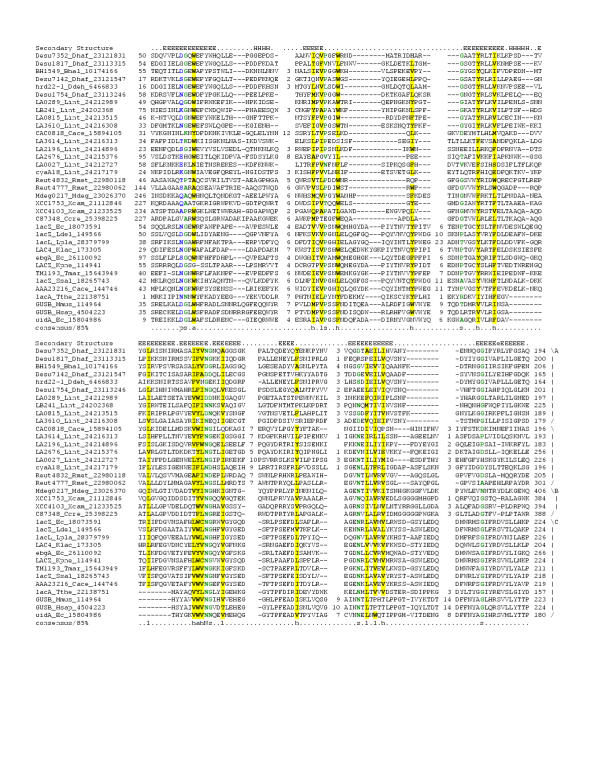
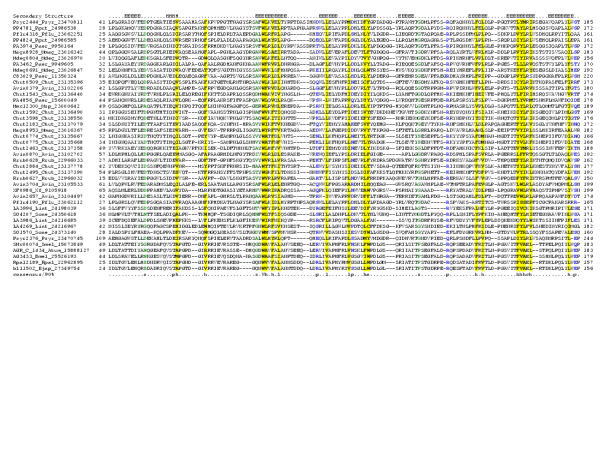
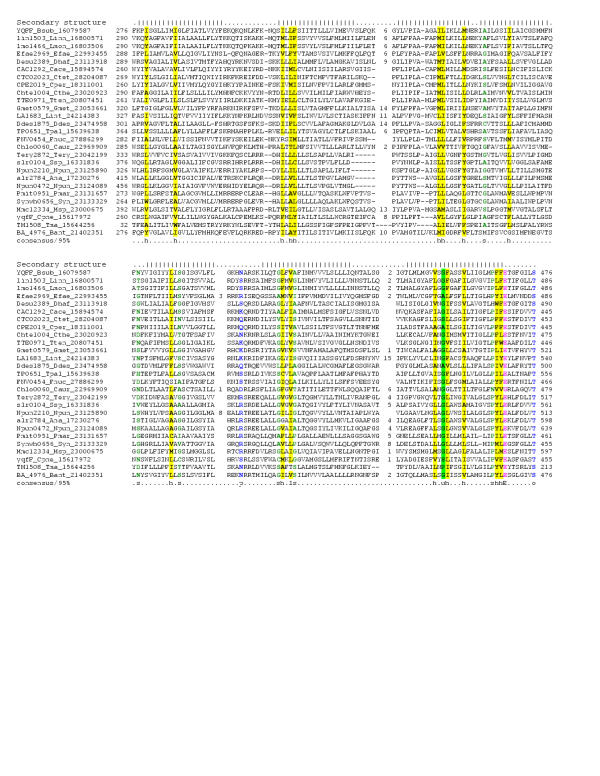
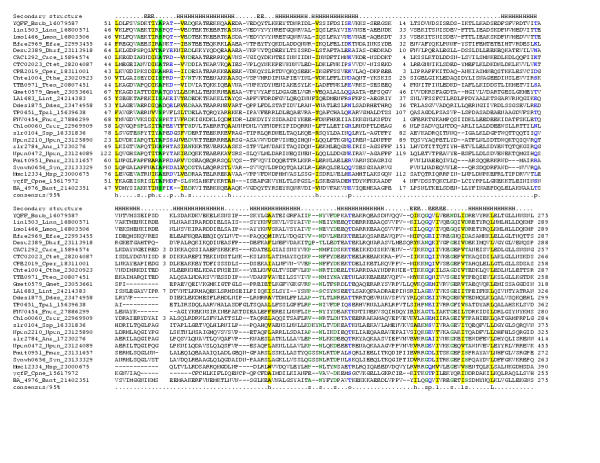
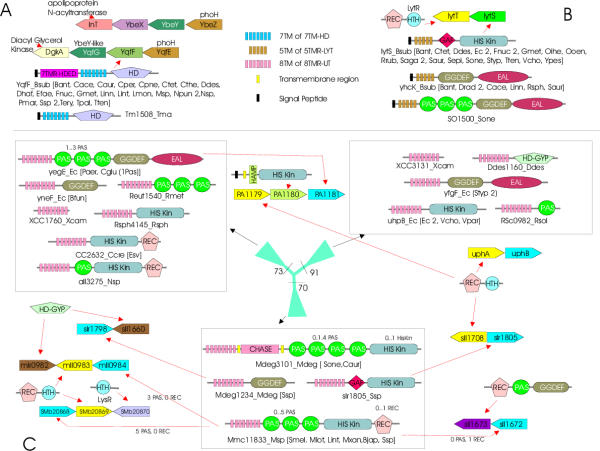
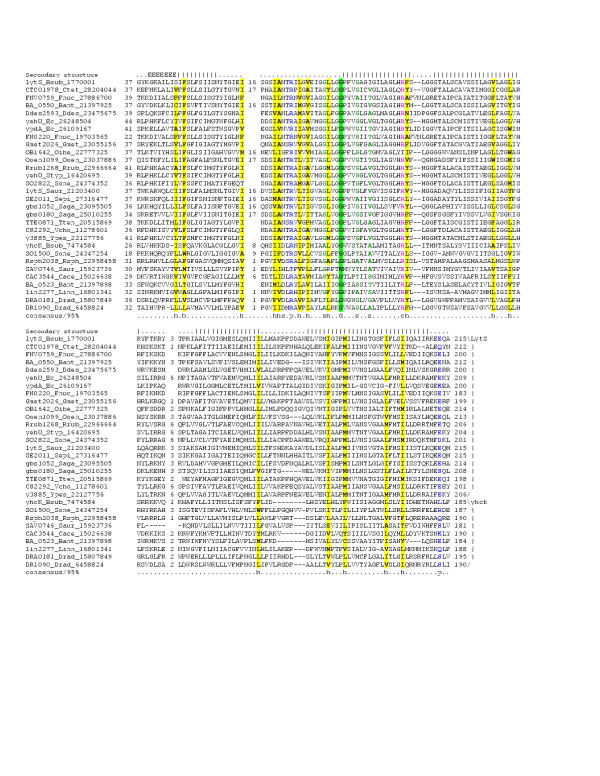
Utilizing the currently available wealth of prokaryotic genomic sequences, we set up a computational screen to identify putative 7 (TM) and other multi-pass membrane receptors in prokaryotes. As a result of this procedure we were able to recover two widespread families of 7 TM receptors in bacteria that are distantly related to the eukaryotic 7 TM receptors and prokaryotic rhodopsins. Using sequence profile analysis, we were able to establish that the first members of these receptor families contain one of two distinct N-terminal extracellular globular domains, which are predicted to bind ligands such as carbohydrates. In their intracellular portions they contain fusions to a variety of signaling domains, which suggest that they are likely to transduce signals via cyclic AMP, cyclic diguanylate, histidine phosphorylation, dephosphorylation, and through direct interactions with DNA. The second family of bacterial 7 TM receptors possesses an alpha-helical extracellular domain, and is predicted to transduce a signal via an intracellular HD hydrolase domain. Based on comparative analysis of gene neighborhoods, this receptor is predicted to function as a regulator of the diacylglycerol-kinase-dependent glycerolipid pathway. Additionally, our procedure also recovered other types of putative prokaryotic multi-pass membrane associated receptor domains. Of these, we characterized two widespread, evolutionarily mobile multi-TM domains that are fused to a variety of C-terminal intracellular signaling domains. One of these typified by the Gram-positive LytS protein is predicted to be a potential sensor of murein derivatives, whereas the other one typified by the Escherichia coli UhpB protein is predicted to function as sensor of conformational changes occurring in associated membrane proteins
We present evidence for considerable variety in the types of uncharacterized surface receptors in bacteria, and reconstruct the evolutionary processes that model their diversity. The identification of novel receptor families in prokaryotes is likely to aid in the experimental analysis of signal transduction and environmental responses of several bacteria, including pathogens such as Leptospira, Treponema, Corynebacterium, Coxiella, Bacillus anthracis and Cytophaga.
在真核生物冠群中观察到大量多样的多跨膜受体,通常具有7个跨膜(TM)螺旋。到目前为止,它们在原核生物中相对较少,并且仅限于各种趋光性原核生物中特征明确的感官视紫红质。
利用目前可用的丰富原核生物基因组序列,我们建立了一个计算筛选程序,以识别原核生物中假定的7(TM)和其他多跨膜受体。通过这个程序,我们能够在细菌中发现两个广泛存在的7 TM受体家族,它们与真核生物7 TM受体和原核生物视紫红质有远缘关系。使用序列谱分析,我们能够确定这些受体家族的第一个成员包含两个不同的N端细胞外球状结构域之一,预计它们会结合碳水化合物等配体。在它们的细胞内部分,它们包含与多种信号结构域的融合,这表明它们可能通过环磷酸腺苷、环二鸟苷酸、组氨酸磷酸化、去磷酸化以及通过与DNA的直接相互作用来转导信号。第二类细菌7 TM受体具有一个α螺旋细胞外结构域,预计通过细胞内HD水解酶结构域转导信号。基于基因邻域的比较分析,预计该受体作为二酰基甘油激酶依赖性甘油脂质途径的调节剂发挥作用。此外,我们的程序还发现了其他类型的假定原核生物多跨膜相关受体结构域。其中,我们鉴定了两个广泛存在的、进化上可移动的多TM结构域,它们与多种C端细胞内信号结构域融合。其中一个以革兰氏阳性LytS蛋白为代表,预计是胞壁质衍生物的潜在传感器,而另一个以大肠杆菌UhpB蛋白为代表,预计作为相关膜蛋白中发生的构象变化的传感器发挥作用。
我们提供了细菌中未表征表面受体类型具有相当多样性的证据,并重建了模拟其多样性的进化过程。原核生物中新受体家族的鉴定可能有助于对几种细菌(包括钩端螺旋体、梅毒螺旋体、棒状杆菌、柯克斯氏体、炭疽芽孢杆菌和噬纤维菌等病原体)的信号转导和环境反应进行实验分析。