Hoang A T, Wang W, Gralla J D
Department of Chemistry and Biochemistry, University of California, Los Angeles 90024.
Mol Cell Biol. 1992 Jul;12(7):3087-93. doi: 10.1128/mcb.12.7.3087-3093.1992.
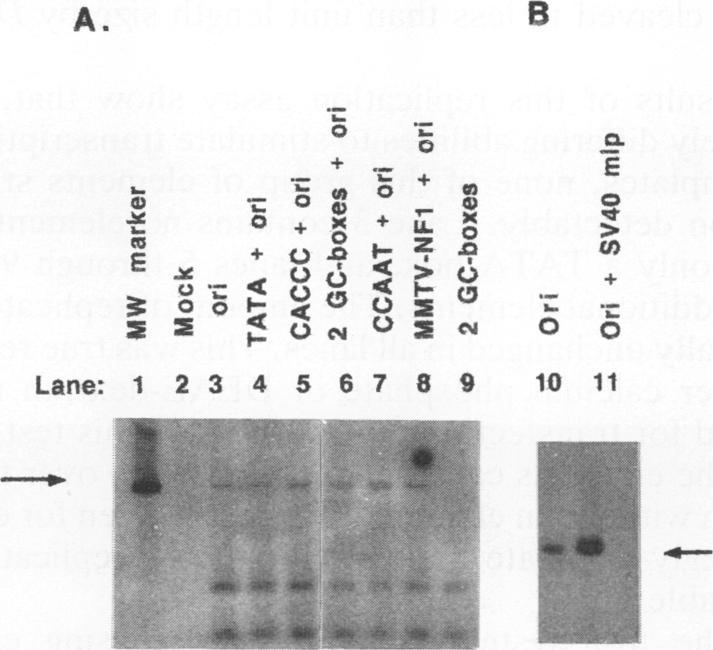
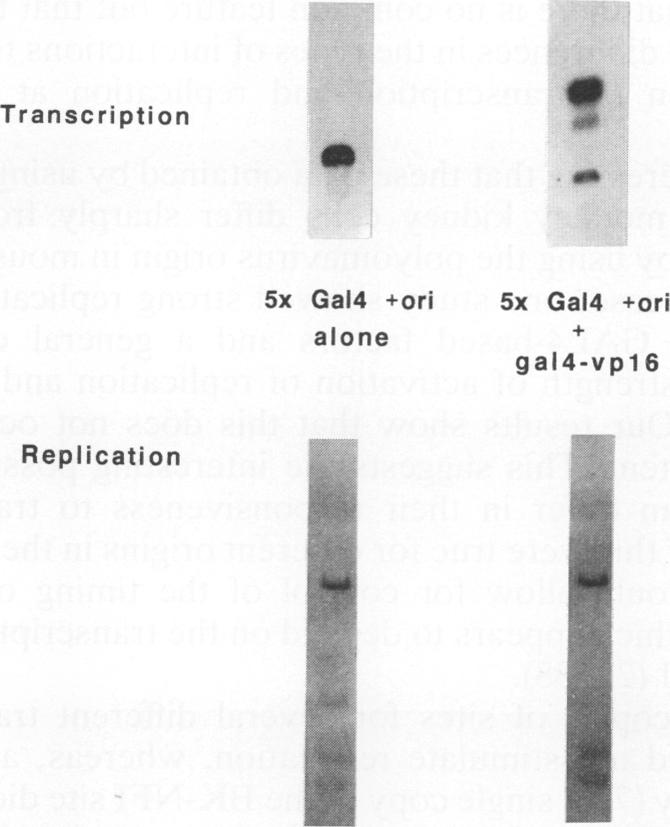
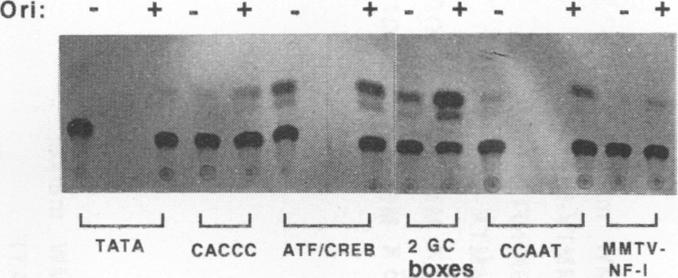
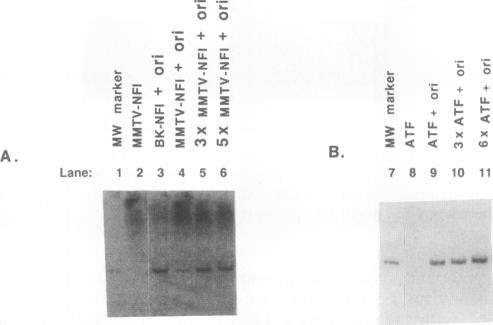
Binding sites for cellular transcription factors were placed near the simian virus 40 origin of replication, and their effect on replication and TATA-dependent transcription was measured in COS cells. The hierarchy of transcriptional stimulation changed when the plasmids replicated. Only one of seven inserted sequences, a moderately weak transcription element, stimulated replication detectably. However, when two nonstimulatory sites were present in multiple copies they did activate replication. Multiple sites for the chimeric activator GAL4-VP16 did not stimulate replication even though transcription was stimulated strongly. The results indicate that the ability of a binding site to stimulate replication from the simian virus 40 ori is not based on its transcriptional activation potential but is instead related to a separate replication activation potential that can be increased by having multiple sites.
将细胞转录因子的结合位点置于猿猴病毒40复制起点附近,并在COS细胞中测定它们对复制及TATA依赖转录的影响。当质粒复制时,转录刺激的层次发生了变化。七个插入序列中只有一个,即一个中等强度的弱转录元件,能检测到对复制的刺激作用。然而,当两个无刺激作用的位点以多拷贝形式存在时,它们确实能激活复制。嵌合激活因子GAL4-VP16的多个位点即使能强烈刺激转录,也不会刺激复制。结果表明,结合位点刺激猿猴病毒40 ori复制的能力并非基于其转录激活潜力,而是与一种可通过多个位点增加的独立复制激活潜力相关。