Sterry W, Mielke V, Konter U, Kellner I, Boehncke W H
Department of Dermatology, University of Ulm, Germany.
Am J Pathol. 1992 Oct;141(4):855-60.
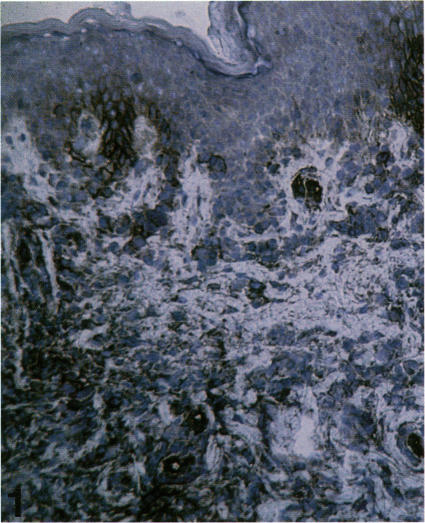
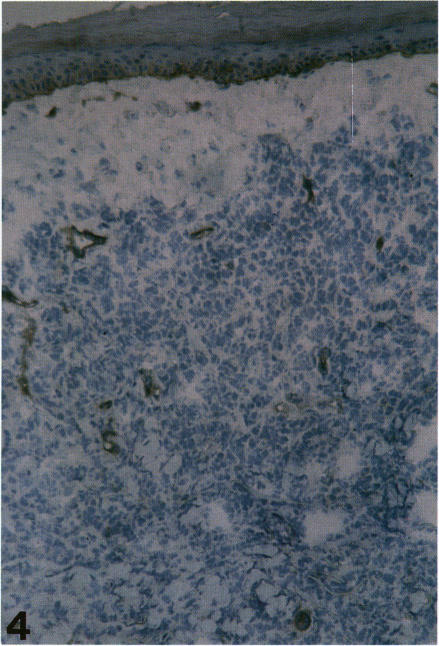
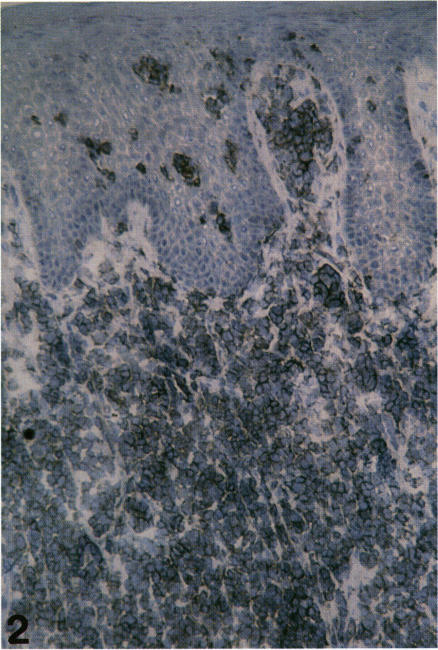
To better understand the molecular mechanisms of epidermotropism, we immunohistochemically analyzed the expression pattern of adhesion molecules belonging to the integrin and immunoglobulin superfamilies in cases of mycosis fungoides (MF) (n = 15), pleomorphic T cell lymphoma (n = 10), and high-grade T cell lymphoma (n = 7). The cutaneous T cell lymphomas (CTCLs) investigated were categorized into cases with or without epidermotropism. Focal neoexpression of ICAM-1 on keratinocytes was restricted to epidermotropic lymphomas. Both LFA-1 and LFA-3 were expressed on infiltrating cells in all cases investigated. In contrast, beta 1-integrins showed differential expression, most prominent in the case of VLA-1 and VLA-6: These molecules were present on infiltrating cells in most cases with epidermotropic MF and absent in most other CTCLs. We conclude that the phenomenon of epidermotropism might involve different sets of adhesion molecules in different entities of CTCL, with VLA-1 being the most influential beta 1-integrin in the case of MF.
为了更好地理解向表皮性的分子机制,我们采用免疫组织化学方法分析了蕈样肉芽肿(MF)(n = 15)、多形性T细胞淋巴瘤(n = 10)和高级别T细胞淋巴瘤(n = 7)病例中整合素和免疫球蛋白超家族黏附分子的表达模式。所研究的皮肤T细胞淋巴瘤(CTCL)分为有向表皮性或无向表皮性的病例。ICAM-1在角质形成细胞上的局灶性新表达仅限于向表皮性淋巴瘤。在所有研究病例中,LFA-1和LFA-3均在浸润细胞上表达。相比之下,β1整合素表现出差异表达,在VLA-1和VLA-6的情况下最为显著:这些分子在大多数向表皮性MF病例的浸润细胞上存在,而在大多数其他CTCL中不存在。我们得出结论,向表皮性现象可能在不同实体的CTCL中涉及不同组的黏附分子,在MF病例中VLA-1是最具影响力的β1整合素。