Buée L, Hof P R, Roberts D D, Delacourte A, Morrison J H, Fillit H M
Department of Geriatrics and Adult Development, Mount Sinai School of Medicine, New York, New York.
Am J Pathol. 1992 Oct;141(4):783-8.
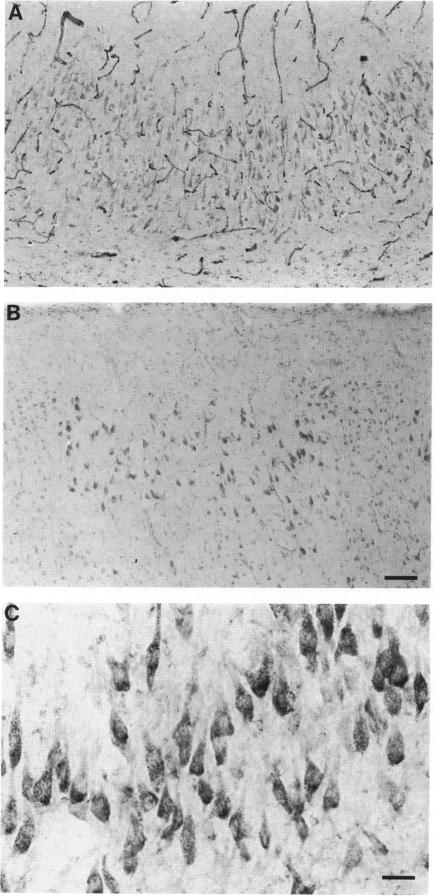
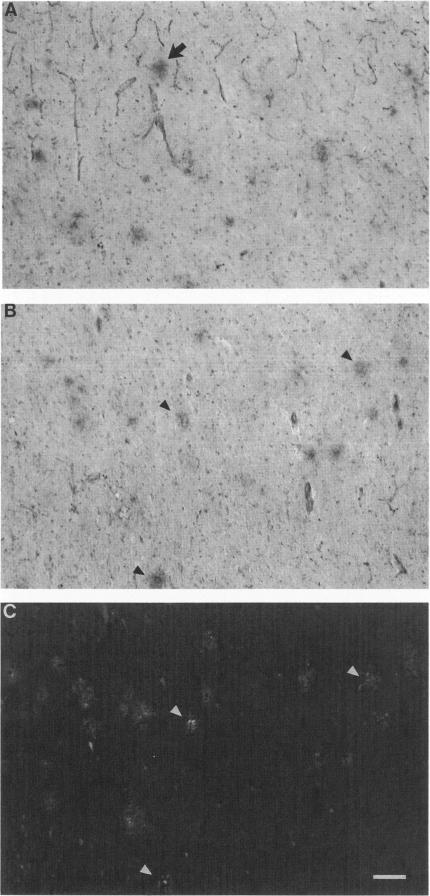
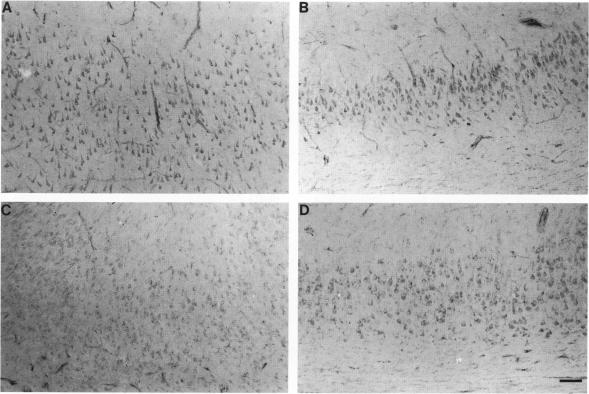
Thrombospondin is part of a family of adhesive glycoproteins and is involved in a number of physiologic processes such as angiogenesis and neurite outgrowth. Immunohistochemical localization of thrombospondin in normal human brains was investigated in the hippocampus and inferior temporal cortex. Two antibodies (one polyclonal and one monoclonal) against thrombospondin-labeled microvessels, glial cells, and a subpopulation of pyramidal neurons. The distribution of thrombospondin staining in patients with Alzheimer's disease was found to be comparable to control subjects. However, in patients with Alzheimer's disease a subset of pyramidal neurons that may be vulnerable in Alzheimer's disease exhibited decreased staining. This decrease in the intensity of labeling might constitute a marker for a neuronal population prone to early degeneration. In addition, thrombospondin staining was demonstrated in senile plaques in Alzheimer's disease. These results suggest that thrombospondin may be involved in the process of neuronal degeneration and senile plaque formation.
血小板反应蛋白是粘附糖蛋白家族的一部分,参与多种生理过程,如血管生成和神经突生长。研究了血小板反应蛋白在正常人脑海马和颞下回皮质中的免疫组织化学定位。两种针对血小板反应蛋白的抗体(一种多克隆抗体和一种单克隆抗体)标记了微血管、神经胶质细胞和一部分锥体神经元。发现阿尔茨海默病患者中血小板反应蛋白染色的分布与对照受试者相当。然而,在阿尔茨海默病患者中,一部分可能在阿尔茨海默病中易损的锥体神经元染色减少。标记强度的这种降低可能构成易早期退化的神经元群体的标志物。此外,在阿尔茨海默病的老年斑中也证实有血小板反应蛋白染色。这些结果表明血小板反应蛋白可能参与神经元退化和老年斑形成的过程。