PORTERFIELD J S
Bull World Health Organ. 1960;22(3-4):373-80.
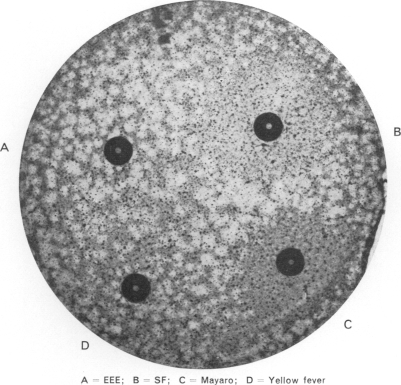
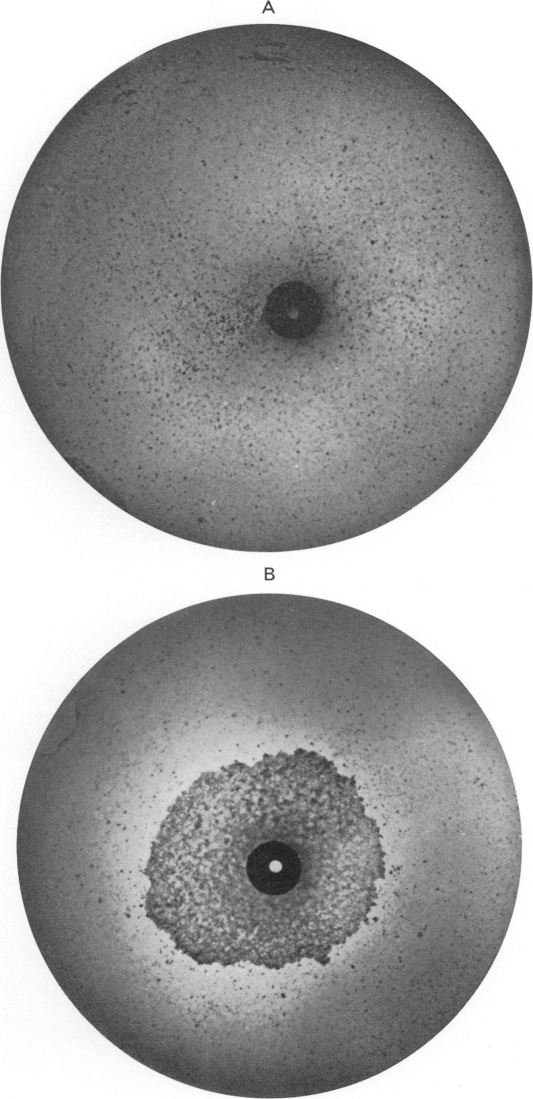
The plaque-neutralization method developed by Dulbecco and co-workers for the study of the virus of western equine encephalomyelitis in cultures of chick fibroblasts, though probably unequalled for accuracy, has not been adopted for general use in laboratories engaged in research on the arthropod-borne viruses, for two reasons: (a) the belief that the technique would be suitable only for viruses with a powerful cytopathic effect on chick-embryo cells, and (b) the laborious procedures involved.The simple plaque-inhibition test described in this paper was devised with the requirements of the field or diagnostic laboratory in mind; while less precise than Dulbecco's method, this test is sufficiently accurate for many purposes and is far less laborious. The range of applicability of the technique is discussed, the author claiming that it can be used both as a qualitative test for the presence of neutralizing antibodies to a particular plaque-producing virus and as a test for the identification of unknown plaque-producing viruses.
杜尔贝科及其同事开发的用于在鸡胚成纤维细胞培养物中研究西部马脑炎病毒的蚀斑中和法,尽管在准确性方面可能无与伦比,但尚未被从事节肢动物传播病毒研究的实验室普遍采用,原因有两个:(a)认为该技术仅适用于对鸡胚细胞有强大细胞病变效应的病毒,以及(b)所涉及的程序繁琐。本文所述的简单蚀斑抑制试验是考虑到现场或诊断实验室的要求而设计的;虽然不如杜尔贝科的方法精确,但该试验对于许多目的来说足够准确,而且省力得多。文中讨论了该技术的适用范围,作者声称它既可以用作检测针对特定蚀斑产生病毒的中和抗体存在的定性试验,也可以用作鉴定未知蚀斑产生病毒的试验。