Eisner Gottfried, Koch Hans-Georg, Beck Konstanze, Brunner Joseph, Muller Matthias
Institut für Biochemie und Molekularbiologie, Hermann-Herder-Strasse 7, D-79104 Freiburg, Germany.
J Cell Biol. 2003 Oct 13;163(1):35-44. doi: 10.1083/jcb.200306069. Epub 2003 Oct 6.
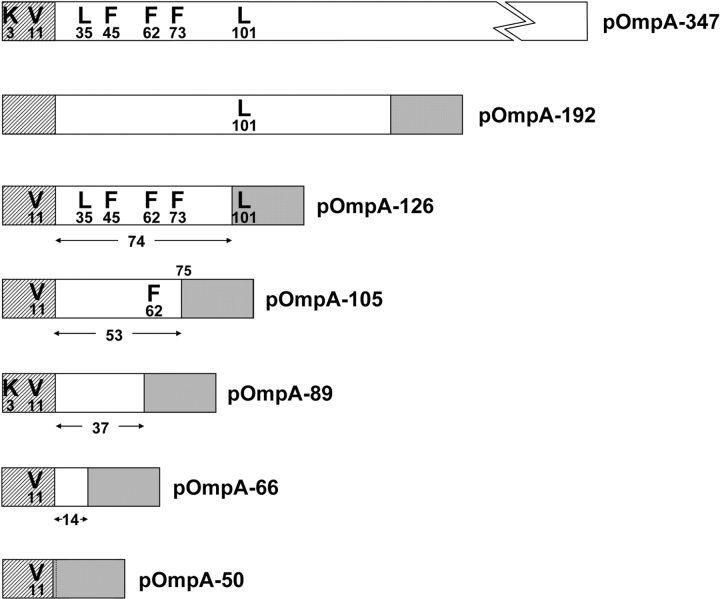
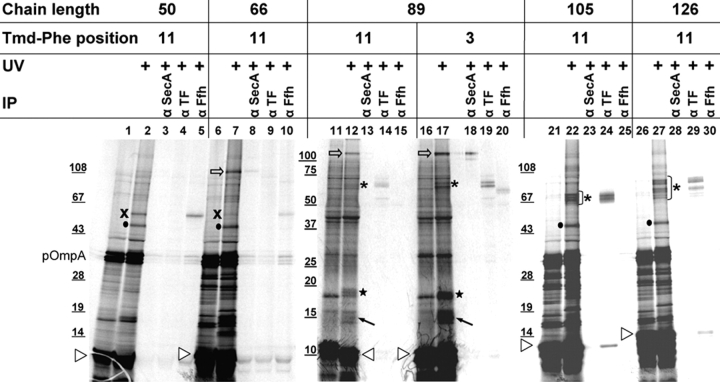
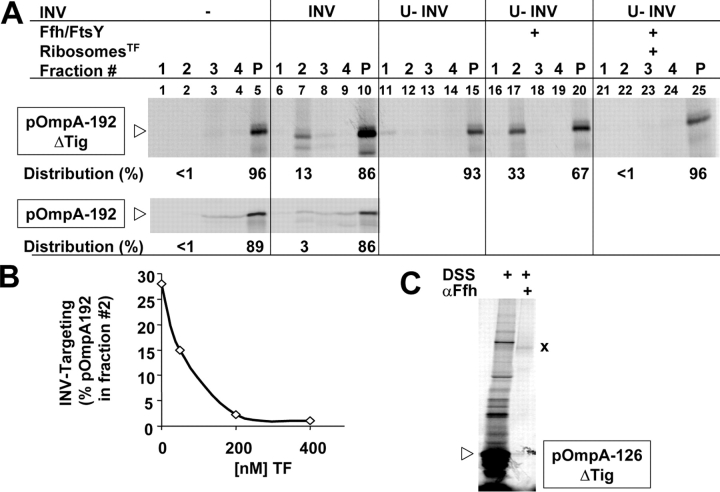
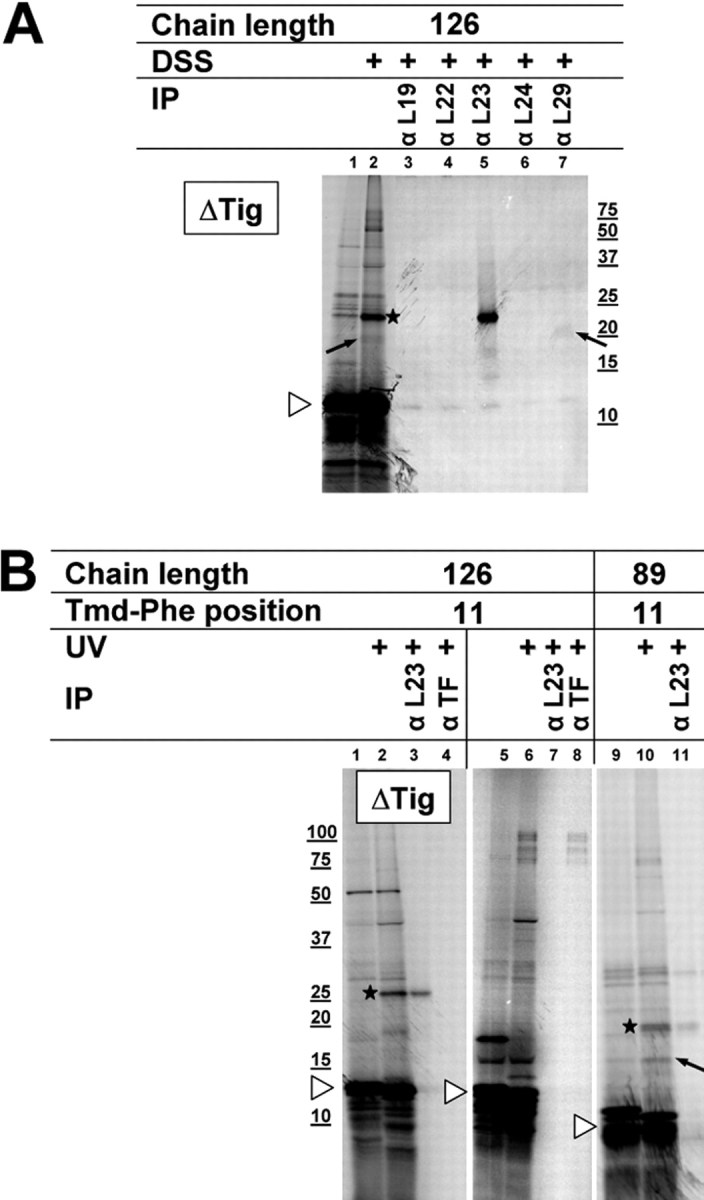
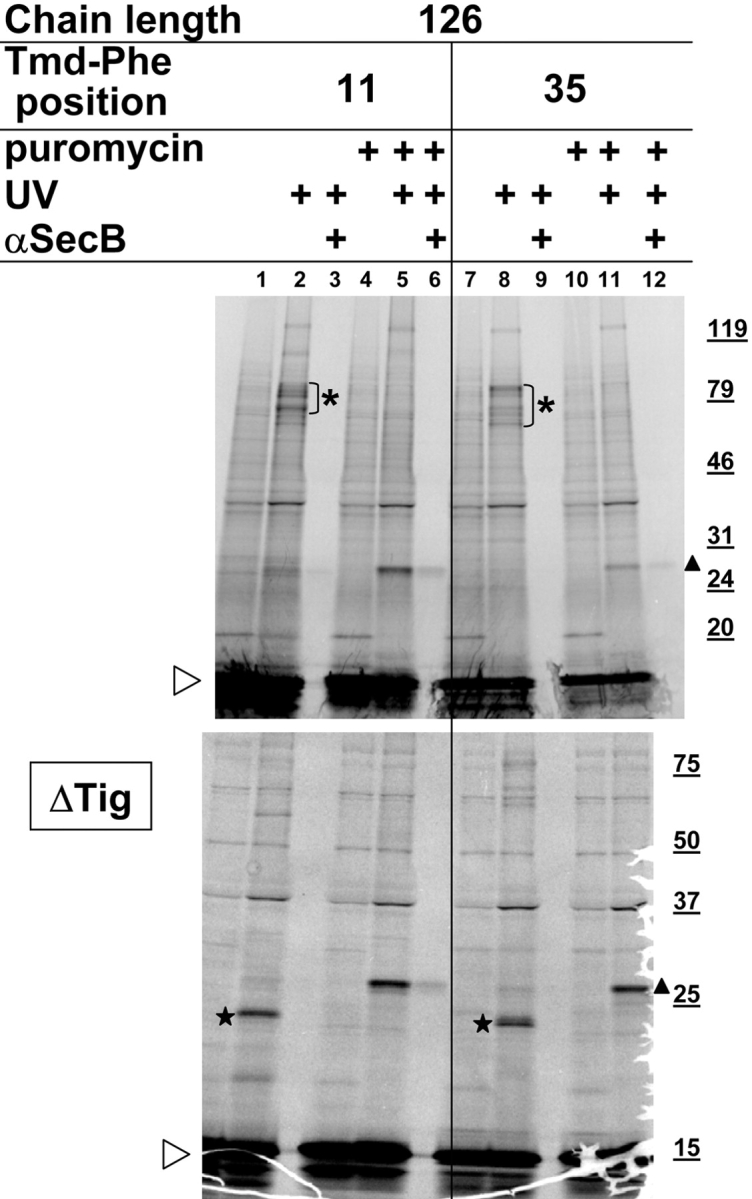
We have systematically analyzed the molecular environment of the signal sequence of a growing secretory protein from Escherichia coli using a stage- and site-specific cross-linking approach. Immediately after emerging from the ribosome, the signal sequence of pOmpA is accessible to Ffh, the protein component of the bacterial signal recognition particle, and to SecA, but it remains attached to the surface of the ribosome via protein L23. These contacts are lost upon further growth of the nascent chain, which brings the signal sequence into sole proximity to the chaperone Trigger factor (TF). In its absence, nascent pOmpA shows extended contacts with L23, and even long chains interact in these conditions proficiently with Ffh. Our results suggest that upon emergence from the ribosome, the signal sequence of an E. coli secretory protein gradually becomes sequestered by TF. Although TF thereby might control the accessibility of pOmpA's signal sequence to Ffh and SecA, it does not influence interaction of pOmpA with SecB.
我们使用阶段特异性和位点特异性交联方法,系统地分析了来自大肠杆菌的正在生长的分泌蛋白信号序列的分子环境。从核糖体中出现后,pOmpA的信号序列可被细菌信号识别颗粒的蛋白质成分Ffh以及SecA识别,但它仍通过蛋白质L23附着在核糖体表面。随着新生链的进一步生长,这些接触会消失,这使得信号序列仅与伴侣蛋白触发因子(TF)接近。在没有TF的情况下,新生的pOmpA与L23有广泛的接触,甚至长链在这些条件下也能与Ffh有效相互作用。我们的结果表明,从核糖体中出现后,大肠杆菌分泌蛋白的信号序列逐渐被TF隔离。因此,尽管TF可能控制pOmpA信号序列对Ffh和SecA的可及性,但它不影响pOmpA与SecB的相互作用。