Bangert Marc, Altenmüller Eckart O
Institute of Music Physiology and Musicians Medicine, Hanover University of Music and Drama, Hohenzollernstrasse 47, D-30161 Hanover, Germany.
BMC Neurosci. 2003 Oct 15;4:26. doi: 10.1186/1471-2202-4-26.
Performing music requires fast auditory and motor processing. Regarding professional musicians, recent brain imaging studies have demonstrated that auditory stimulation produces a co-activation of motor areas, whereas silent tapping of musical phrases evokes a co-activation in auditory regions. Whether this is obtained via a specific cerebral relay station is unclear. Furthermore, the time course of plasticity has not yet been addressed.
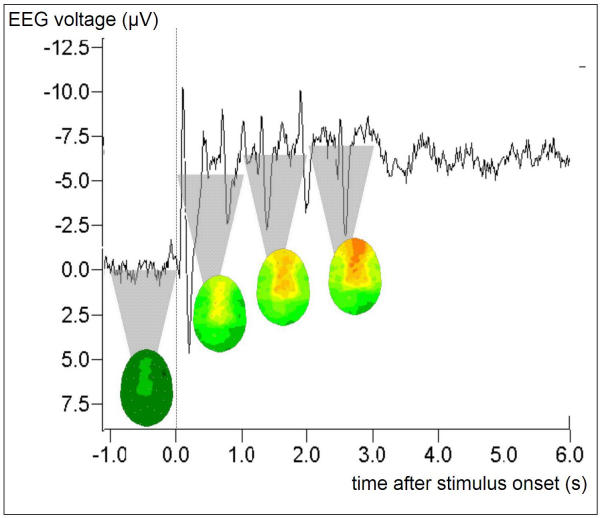
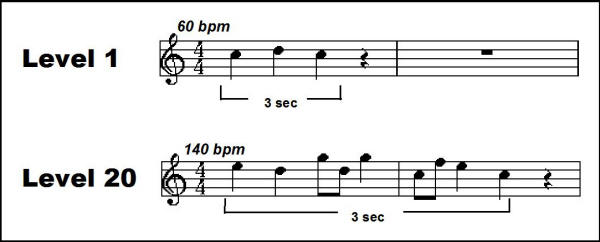
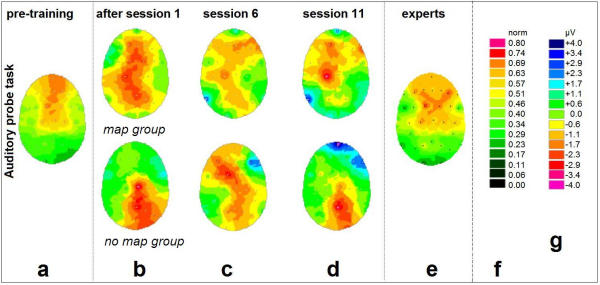
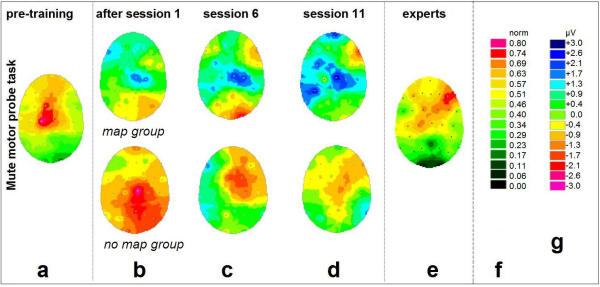
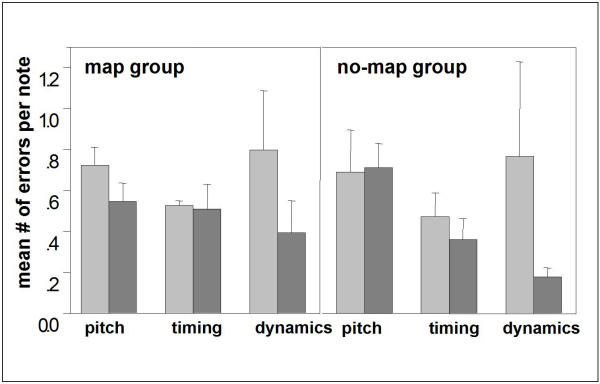
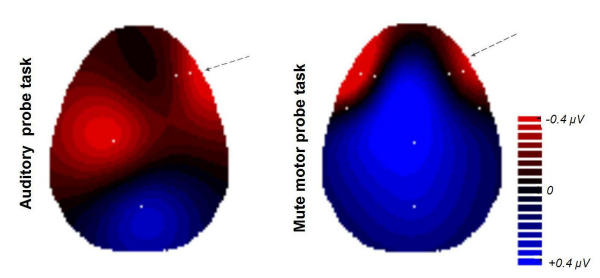
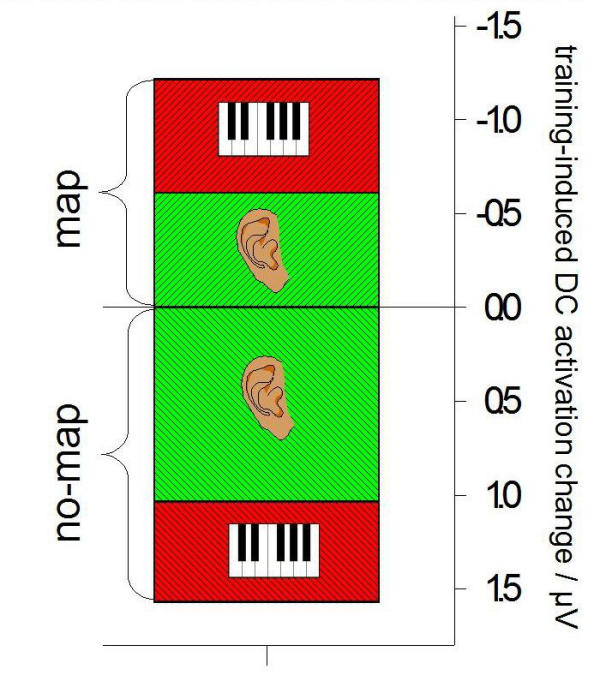
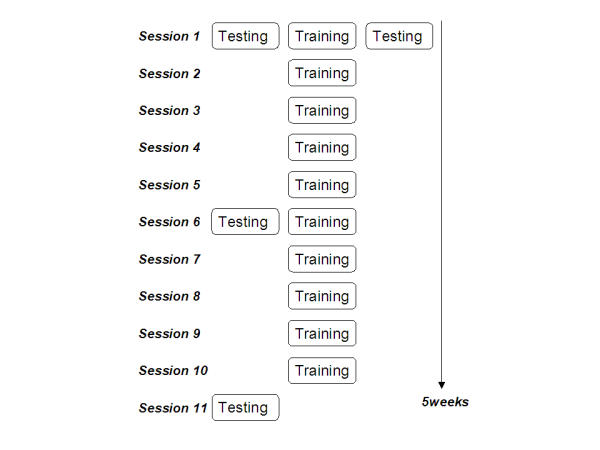
Changes in cortical activation patterns (DC-EEG potentials) induced by short (20 minute) and long term (5 week) piano learning were investigated during auditory and motoric tasks. Two beginner groups were trained. The 'map' group was allowed to learn the standard piano key-to-pitch map. For the 'no-map' group, random assignment of keys to tones prevented such a map. Auditory-sensorimotor EEG co-activity occurred within only 20 minutes. The effect was enhanced after 5-week training, contributing elements of both perception and action to the mental representation of the instrument. The 'map' group demonstrated significant additional activity of right anterior regions.
We conclude that musical training triggers instant plasticity in the cortex, and that right-hemispheric anterior areas provide an audio-motor interface for the mental representation of the keyboard.
演奏音乐需要快速的听觉和运动处理能力。对于专业音乐家,最近的脑成像研究表明,听觉刺激会引起运动区域的共同激活,而对音乐乐句进行无声敲击则会在听觉区域引发共同激活。目前尚不清楚这是否通过特定的大脑中继站实现。此外,可塑性的时间进程尚未得到研究。
在听觉和运动任务期间,研究了短期(20分钟)和长期(5周)钢琴学习所诱导的皮质激活模式(直流脑电图电位)的变化。训练了两个初学者组。“有图谱”组被允许学习标准的钢琴琴键与音高对应图谱。对于“无图谱”组,琴键与音调的随机分配阻止了这种图谱的形成。听觉-感觉运动脑电图共同活动仅在20分钟内就出现了。经过5周的训练后,这种效应得到增强,将感知和动作的元素都纳入到乐器的心理表征中。“有图谱”组在右前区域表现出显著的额外活动。
我们得出结论,音乐训练会触发皮质的即时可塑性,并且右半球前部区域为键盘的心理表征提供了一个听觉-运动接口。