Zuidervaart W, van der Velden P A, Hurks M H, van Nieuwpoort F A, Out-Luiting C J J, Singh A D, Frants R R, Jager M J, Gruis N A
Department of Ophthalmology, Leiden University Medical Centre, Postbus 9600, 2300 RC Leiden, The Netherlands.
Br J Cancer. 2003 Nov 17;89(10):1914-9. doi: 10.1038/sj.bjc.6601374.
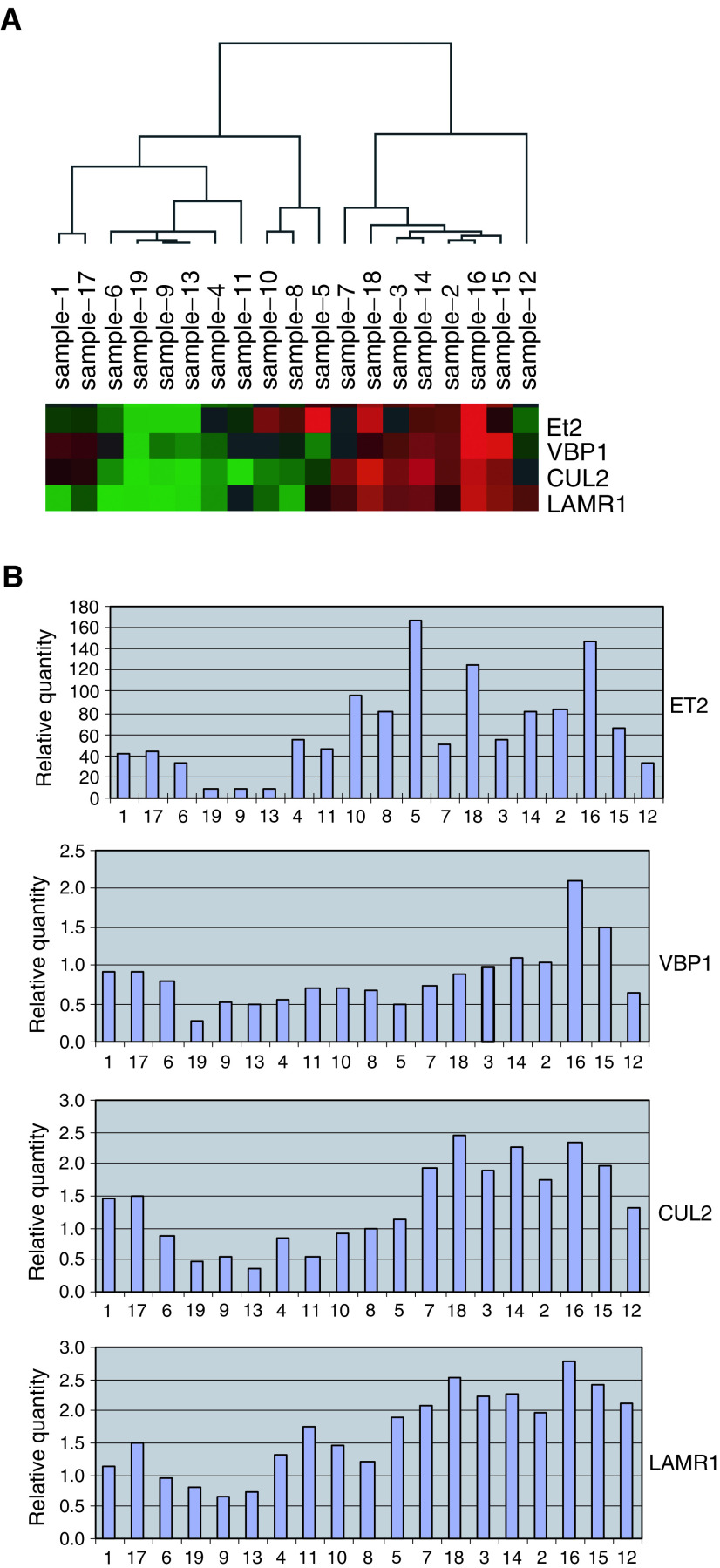
Microarray is a powerful tool to compare the gene expression of different tumour specimens and cell lines simultaneously and quantitatively. To get a better insight into genes that are involved in uveal melanoma tumorigenesis, we compared the gene expression profiles of 12 different uveal melanoma cell lines with three melanocyte cell cultures obtained from healthy donor eyes. Gene expression profiles were obtained by nylon filter arrays, containing 1176 gene spots related to cancer development. The expression levels of selected genes were validated on cell lines and primary uveal melanomas by real time RT-PCR, and were subsequently included in cluster analysis. Four candidate tumour markers, Laminin Receptor 1, Endothelin 2, Von Hippel Lindau Binding protein 1 and Cullin 2, have been selected from genes that were differentially expressed in the uveal melanoma cell lines compared to the normal uveal melanocytes. In primary uveal melanomas, these four markers could discriminate between two classes of uveal melanoma, which may be indicative of a differential disease process.
微阵列是一种强大的工具,可同时定量比较不同肿瘤标本和细胞系的基因表达。为了更深入了解与葡萄膜黑色素瘤发生相关的基因,我们将12种不同的葡萄膜黑色素瘤细胞系的基因表达谱与从健康供体眼睛获得的三种黑素细胞培养物进行了比较。基因表达谱通过尼龙滤膜阵列获得,该阵列包含1176个与癌症发展相关的基因斑点。通过实时逆转录聚合酶链反应在细胞系和原发性葡萄膜黑色素瘤上验证了所选基因的表达水平,随后将其纳入聚类分析。从与正常葡萄膜黑素细胞相比在葡萄膜黑色素瘤细胞系中差异表达的基因中选择了四种候选肿瘤标志物,即层粘连蛋白受体1、内皮素2、冯·希佩尔·林道结合蛋白1和Cullin 2。在原发性葡萄膜黑色素瘤中,这四种标志物可以区分两类葡萄膜黑色素瘤,这可能表明疾病过程存在差异。