Rasmussen Thomas Høj, Nielsen Flemming, Andersen Helle Raun, Nielsen Jesper Bo, Weihe Pal, Grandjean Philippe
Department of Environmental Medicine, Institute of Public Health, University of Southern Denmark, Odense, Denmark.
Environ Health. 2003 Oct 15;2(1):12. doi: 10.1186/1476-069X-2-12.
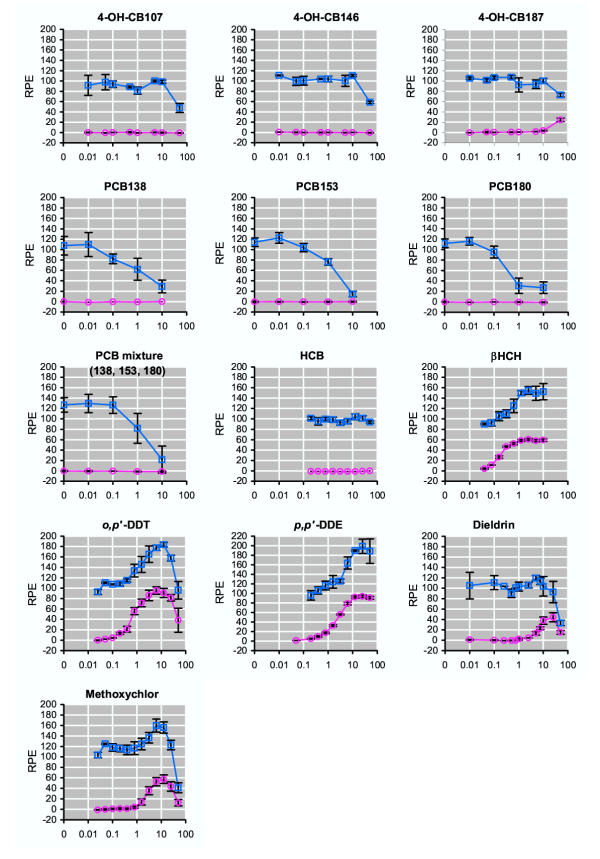
Epidemiological documentation of endocrine disruption is complicated by imprecise exposure assessment, especially when exposures are mixed. Even if the estrogenic activity of all compounds were known, the combined effect of possible additive and/or inhibiting interaction of xenoestrogens in a biological sample may be difficult to predict from chemical analysis of single compounds alone. Thus, analysis of mixtures allows evaluation of combined effects of chemicals each present at low concentrations.
We have developed an optimized in vitro E-Screen test to assess the combined functional estrogenic response of human serum. The xenoestrogens in serum were separated from endogenous steroids and pharmaceuticals by solid-phase extraction followed by fractionation by high-performance liquid chromatography. After dissolution of the isolated fraction in ethanol-DMSO, the reconstituted extract was added with estrogen-depleted fetal calf serum to MCF-7 cells, the growth of which is stimulated by estrogen. After a 6-day incubation on a microwell plate, cell proliferation was assessed and compared with the effect of a 17-beta-estradiol standard.
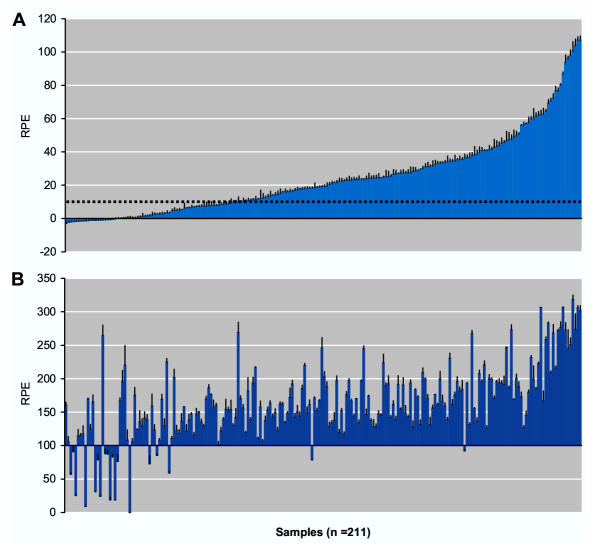
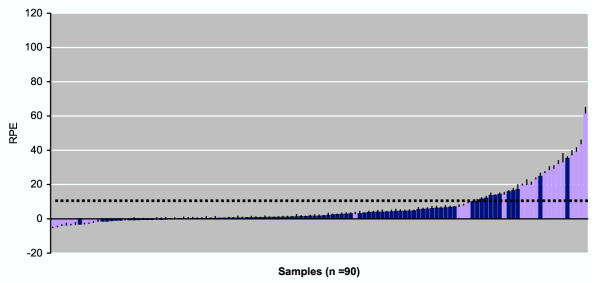
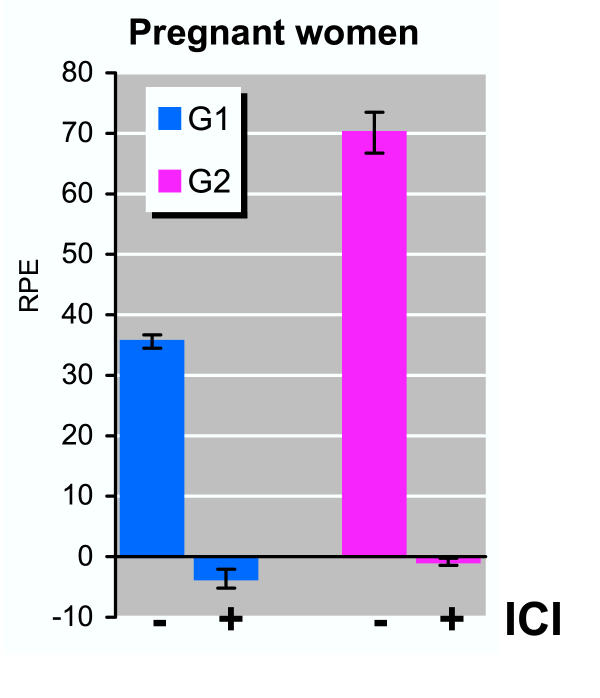
To determine the applicability of this approach, we assessed the estrogenicity of serum samples from 30 pregnant and 60 non-pregnant Danish women thought to be exposed only to low levels of endocrine disruptors. We also studied 211 serum samples from pregnant Faroese women, whose marine diet included whale blubber that contain a high concentration of persistent halogenated pollutants. The estrogenicity of the serum from Danish controls exceeded the background in 22.7 % of the cases, while the same was true for 68.1 % of the Faroese samples. The increased estrogenicity response did not correlate with the lipid-based concentrations of individual suspected endocrine disruptors in the Faroese samples. When added along with the estradiol standard, an indication of an enhanced estrogenic response was found in most cases. Thus, the in vitro estrogenicity response offers a promising and feasible approach for an aggregated exposure assessment for xenoestrogens in serum.
内分泌干扰的流行病学记录因暴露评估不精确而变得复杂,尤其是当存在多种混合暴露时。即使所有化合物的雌激素活性已知,仅通过单一化合物的化学分析也可能难以预测生物样品中异雌激素可能的相加和/或抑制相互作用的综合效应。因此,对混合物进行分析有助于评估低浓度存在的各种化学物质的综合效应。
我们开发了一种优化的体外E-Screen试验,以评估人血清的综合功能性雌激素反应。血清中的异雌激素通过固相萃取与内源性类固醇和药物分离,随后通过高效液相色谱进行分级分离。将分离出的级分溶解于乙醇-二甲基亚砜中后,将重构提取物与雌激素缺乏的胎牛血清一起添加到MCF-7细胞中,雌激素可刺激该细胞生长。在微孔板上孵育6天后,评估细胞增殖情况,并与17-β-雌二醇标准品的效应进行比较。
为确定该方法的适用性,我们评估了30名丹麦孕妇和60名丹麦非孕妇血清样本的雌激素活性,这些人被认为仅暴露于低水平的内分泌干扰物。我们还研究了211份法罗群岛孕妇的血清样本,她们的海洋饮食中包括含有高浓度持久性卤代污染物的鲸脂。丹麦对照组血清的雌激素活性在22.7%的病例中超过背景值,而法罗群岛样本中这一比例为68.1%。法罗群岛样本中雌激素活性反应的增加与个体疑似内分泌干扰物的基于脂质的浓度无关。当与雌二醇标准品一起添加时,在大多数情况下发现雌激素反应增强的迹象。因此,体外雌激素活性反应为血清中异雌激素的综合暴露评估提供了一种有前景且可行的方法。