Wang Lejin, Fan Chun, Topol Sarah E, Topol Eric J, Wang Qing
Center for Cardiovascular Genetics, Department of Cardiovascular Medicine, Lerner Research Institute, Cleveland Clinic Foundation, Cleveland Clinic Lerner College of Medicine of Case Western Reserve University, Cleveland, OH 44195, USA.
Science. 2003 Nov 28;302(5650):1578-81. doi: 10.1126/science.1088477.
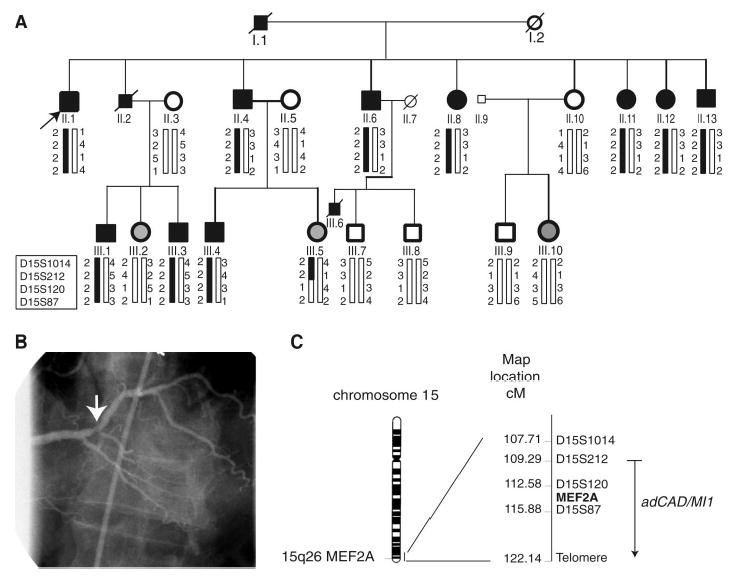
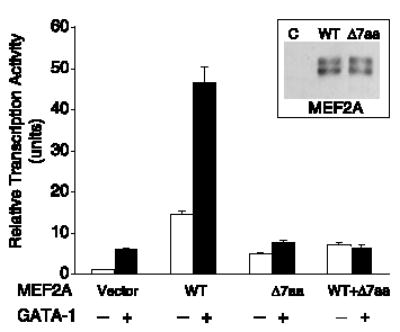
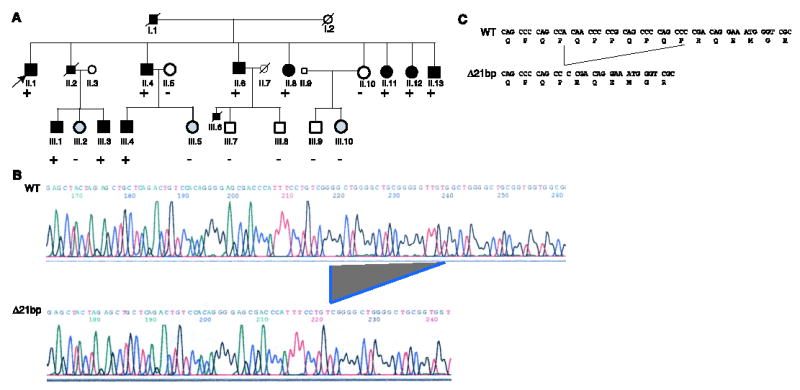
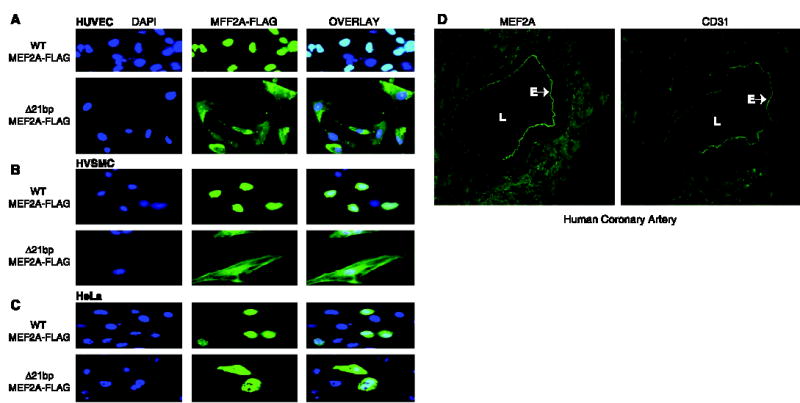
The early genetic pathway(s) triggering the pathogenesis of coronary artery disease (CAD) and myocardial infarction (MI) remain largely unknown. Here, we describe an autosomal dominant form of CAD/MI (adCAD1) that is caused by the deletion of seven amino acids in transcription factor MEF2A. The deletion disrupts nuclear localization of MEF2A, reduces MEF2A-mediated transcription activation, and abolishes synergistic activation by MEF2A and by the transcription factor GATA-1 through a dominant-negative mechanism. The MEF2A protein demonstrates strong expression in the endothelium of coronary arteries. These results identify a pathogenic gene for a familial vascular disease with features of CAD and implicate the MEF2A signaling pathway in the pathogenesis of CAD/MI.
引发冠状动脉疾病(CAD)和心肌梗死(MI)发病机制的早期遗传途径在很大程度上仍不清楚。在此,我们描述了一种常染色体显性形式的CAD/MI(adCAD1),它是由转录因子MEF2A中七个氨基酸的缺失所导致的。该缺失破坏了MEF2A的核定位,降低了MEF2A介导的转录激活,并通过显性负性机制消除了MEF2A与转录因子GATA-1的协同激活作用。MEF2A蛋白在冠状动脉内皮中表现出强表达。这些结果确定了一种具有CAD特征的家族性血管疾病的致病基因,并表明MEF2A信号通路参与了CAD/MI的发病机制。