Koch S, Mayer F, Honecker F, Schittenhelm M, Bokemeyer C
Department of Oncology, Hematology, Immunology, and Rheumatology, Medizinische Klinik, University of Tübingen Medical Center, Otfried-Müller-Str. 10, Tuebingen 72076, Germany.
Br J Cancer. 2003 Dec 1;89(11):2133-9. doi: 10.1038/sj.bjc.6601375.
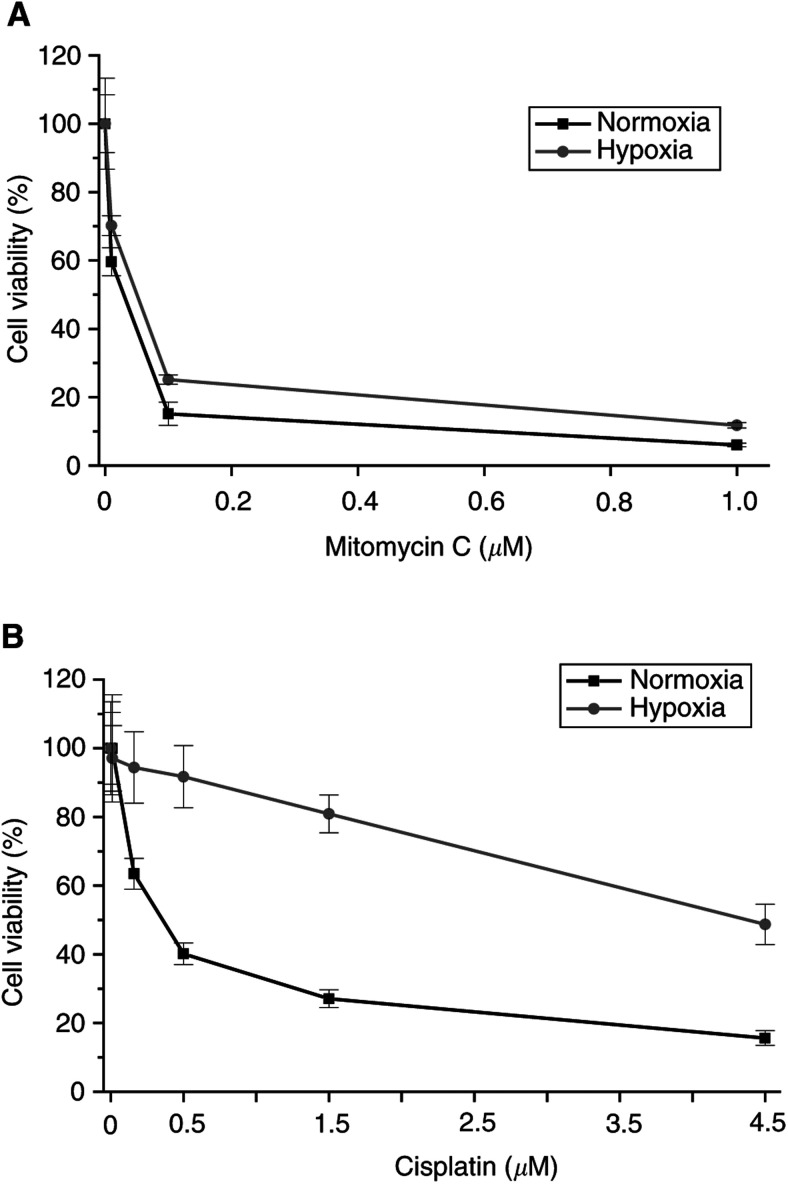
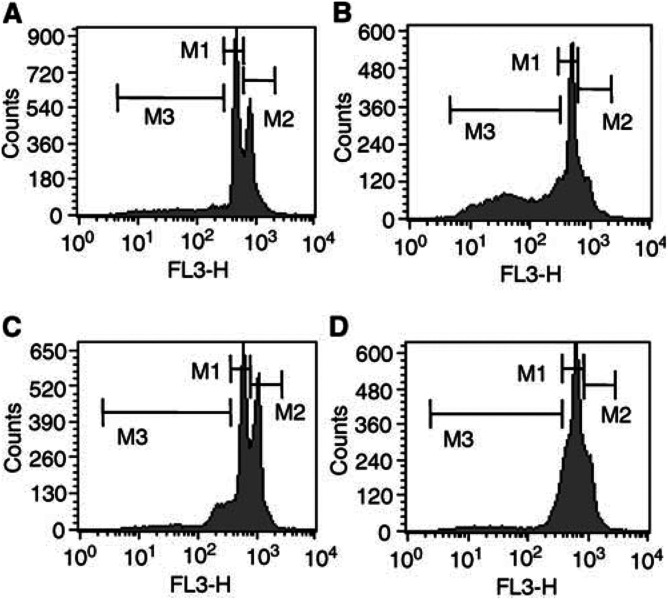
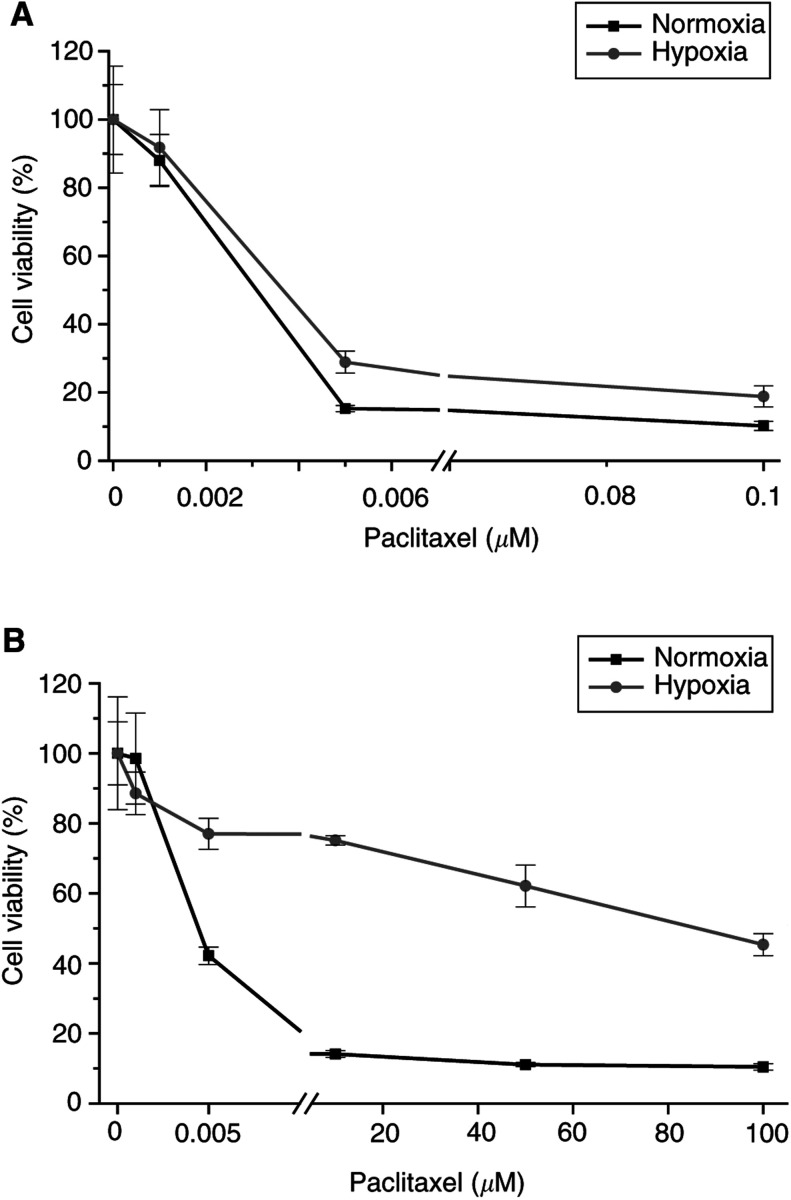
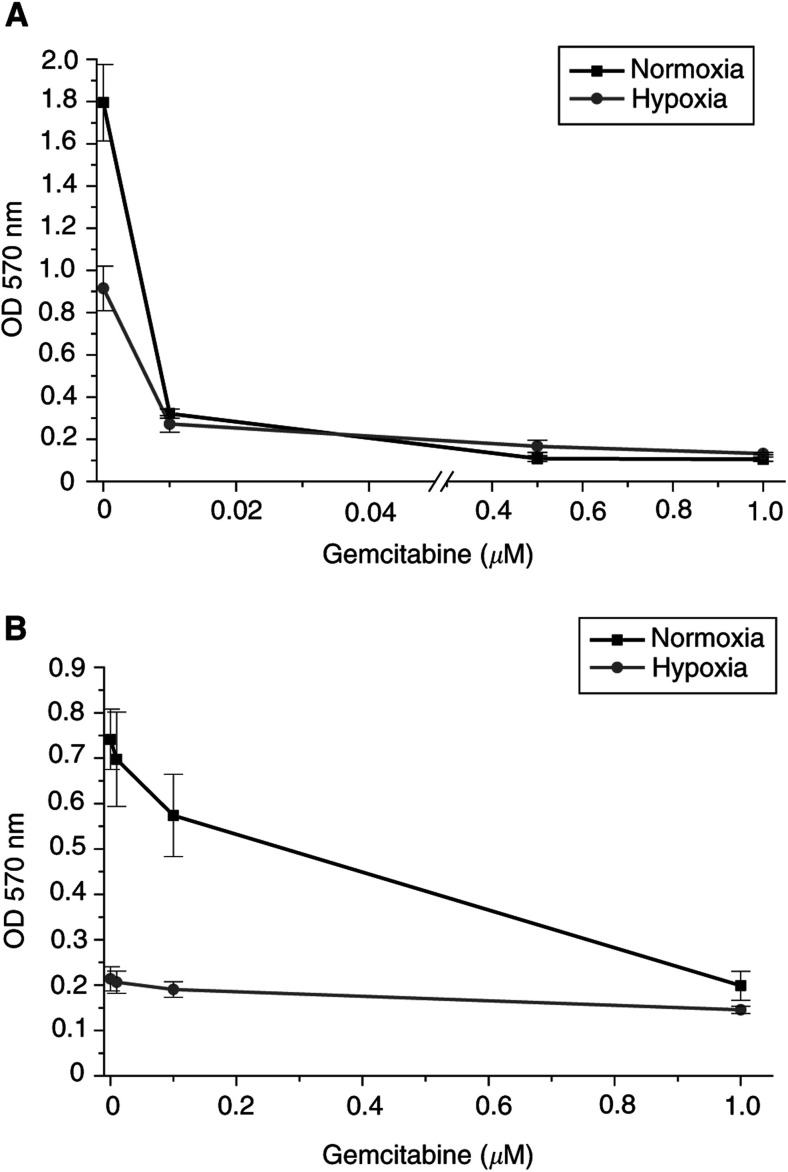
Platinum-based chemotherapy is the main treatment element to achieve cure for patients with metastatic germ cell tumours. Drug resistance in testicular germ cell tumours (TGCTs) is rare and the reasons are not fully understood. While recent investigations have indicated decreased efficacy of chemotherapy in several tumour types under hypoxic conditions, this aspect has not been investigated in TGCTs so far. Furthermore, for cisplatin - the most active drug in this disease - controversial effects of hypoxia on cytotoxic efficacy have been reported. The relative efficacy of cytotoxic agents for the treatment of TGCT patients was studied in three different cell lines derived from human embryonal carcinomas (EC) in an in vitro hypoxia model. NT2, 2102 EP, and NCCIT were tested for their sensitivity towards cisplatin, etoposide, bleomycin, 4-OOH-ifosfamide, carboplatin, paclitaxel, gemcitabine, oxaliplatin, irinotecan, and mitomycin C under normoxic and hypoxic conditions using the MTT assay. Inhibitory concentrations IC(50) of the tested agents under both conditions were compared. Selected results were confirmed by flow-cytometric assessment of the apoptotic index. In all cells, doubling times were prolonged in hypoxia (NT2<NCCIT<2102 EP). All drugs were less effective under hypoxic conditions, including mitomycin C (eg, 1.6-fold increase of IC(50) in hypoxia compared to normoxia for NT2) and cisplatin (eg, NT2: two-fold increase). The relative effect of hypoxia on the IC(50) depended mainly on the cell line, and to a lesser extent on the drug. The results indicate that the reduced cell proliferation in hypoxia might be an important factor, but not the only determinant of a reduced cytotoxicity. In view of the broad spectrum of drugs with different modes of action tested, the relative resistance cannot be mediated by substance-specific resistance mechanisms like hypoxia-induced upregulation of P-glycoprotein or increased DNA-repair capacity, since many unrelated drugs were affected to a comparable extent in their efficacy by hypoxia. This study also provides the rationale to test the hypothesis whether improving tumour oxygenation by raising haemoglobin concentrations, for example, with erythropoietin in patients with TGCTs receiving chemotherapy may improve the outcome.
铂类化疗是实现转移性生殖细胞肿瘤患者治愈的主要治疗手段。睾丸生殖细胞肿瘤(TGCTs)中的耐药情况罕见,其原因尚未完全明确。虽然近期研究表明在低氧条件下,化疗对几种肿瘤类型的疗效有所降低,但这方面在TGCTs中尚未得到研究。此外,对于顺铂(该疾病中最有效的药物),低氧对细胞毒性疗效的影响存在争议报道。在体外低氧模型中,研究了细胞毒性药物对TGCT患者的相对疗效,该模型使用了三种源自人胚胎癌(EC)的不同细胞系。采用MTT法检测NT2、2102 EP和NCCIT在常氧和低氧条件下对顺铂、依托泊苷、博来霉素、4 - OOH - 异环磷酰胺、卡铂、紫杉醇、吉西他滨、奥沙利铂、伊立替康和丝裂霉素C的敏感性。比较了两种条件下受试药物的半数抑制浓度IC(50)。通过流式细胞术评估凋亡指数对选定结果进行了确认。在所有细胞中,低氧条件下倍增时间延长(NT2 < NCCIT < 2102 EP)。所有药物在低氧条件下效果均较差,包括丝裂霉素C(例如,NT2在低氧条件下的IC(50)相比常氧增加了1.6倍)和顺铂(例如,NT2:增加了两倍)。低氧对IC(50)的相对影响主要取决于细胞系,在较小程度上取决于药物。结果表明,低氧条件下细胞增殖减少可能是一个重要因素,但不是细胞毒性降低的唯一决定因素。鉴于测试的具有不同作用模式的药物种类广泛,相对耐药性不可能由物质特异性耐药机制介导,如低氧诱导的P - 糖蛋白上调或DNA修复能力增强,因为许多不相关的药物在疗效上受到低氧的影响程度相当。这项研究还为检验以下假设提供了理论依据:例如,对于接受化疗的TGCT患者,通过使用促红细胞生成素提高血红蛋白浓度来改善肿瘤氧合是否可能改善治疗结果。