O'Brien Rebecca M, Cannon Aoife, Reynolds John V, Lysaght Joanne, Lynam-Lennon Niamh
Department of Surgery, Trinity St. James's Cancer Institute, Trinity Translational Medicine Institute, Trinity College Dublin and St. James's Hospital, Dublin 8, Ireland.
Cancer Immunology and Immunotherapy Group, Trinity St. James's Cancer Institute, Trinity Translational Medicine Institute, Trinity College Dublin and St. James's Hospital, Dublin 8, Ireland.
Cancers (Basel). 2021 Mar 10;13(6):1209. doi: 10.3390/cancers13061209.
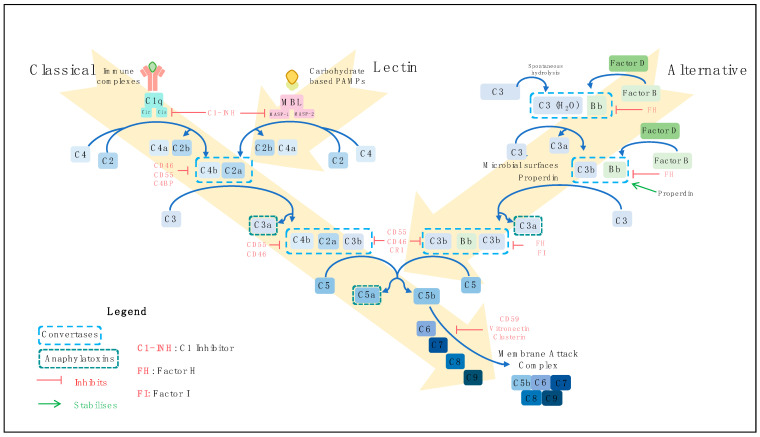
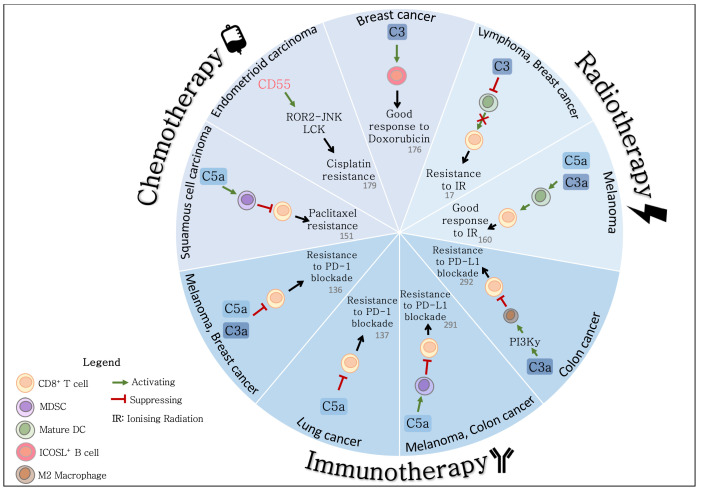
In recent years, our knowledge of the complement system beyond innate immunity has progressed significantly. A modern understanding is that the complement system has a multifaceted role in malignancy, impacting carcinogenesis, the acquisition of a metastatic phenotype and response to therapies. The ability of local immune cells to produce and respond to complement components has provided valuable insights into their regulation, and the subsequent remodeling of the tumour microenvironment. These novel discoveries have advanced our understanding of the immunosuppressive mechanisms supporting tumour growth and uncovered potential therapeutic targets. This review discusses the current understanding of complement in cancer, outlining both direct and immune cell-mediated roles. The role of complement in response to therapies such as chemotherapy, radiation and immunotherapy is also presented. While complement activities are largely context and cancer type-dependent, it is evident that promising therapeutic avenues have been identified, in particular in combination therapies.
近年来,我们对补体系统在固有免疫之外的认识有了显著进展。现代观点认为,补体系统在恶性肿瘤中具有多方面作用,影响肿瘤发生、转移表型的获得以及对治疗的反应。局部免疫细胞产生和响应补体成分的能力为其调控以及随后肿瘤微环境的重塑提供了有价值的见解。这些新发现增进了我们对支持肿瘤生长的免疫抑制机制的理解,并揭示了潜在的治疗靶点。本综述讨论了目前对补体在癌症中的认识,概述了其直接作用和免疫细胞介导的作用。还介绍了补体在化疗、放疗和免疫治疗等治疗反应中的作用。虽然补体活性在很大程度上取决于具体情况和癌症类型,但显然已经确定了有前景的治疗途径,特别是在联合治疗方面。