García Alexis, Fox James G
Division of Comparative Medicine, Massachusetts Institute of Technology, Cambridge, Massachusetts 02139, USA.
Emerg Infect Dis. 2003 Dec;9(12):1592-7. doi: 10.3201/eid0912.030223.
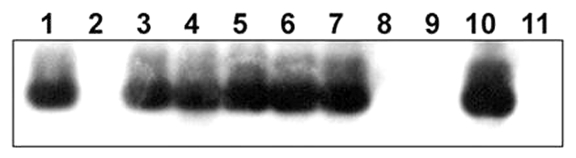
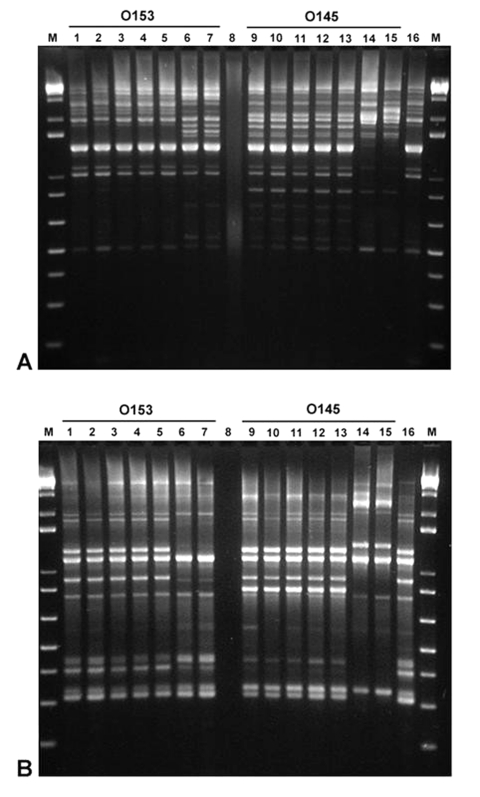
We investigated the prevalence of enterohemorrhagic Escherichia coli (EHEC) in rabbits acquired from two commercial vendors and a local petting zoo. Fecal samples from 34 Dutch Belted (DB) and 15 New Zealand White (NZW) rabbits were cultured; and isolates were biotyped, serotyped, tested by polymerase chain reaction (PCR), and genotyped by repetitive-element sequence-based PCR (Rep-PCR). Seven (25%) of 28 DB rabbits acquired from one commercial source were positive for EHEC, including O153:H- and O153:H7. One (9%) of 11 NZW rabbits from the same source was positive for eae-, stx1+ O153 strains. In contrast, six DB rabbits from another commercial source and four rabbits from a petting zoo were negative for EHEC. Rep-PCR demonstrated that the O153 EHEC and O145 enteropathogenic E. coli were two distinct clones. Our study indicates that rabbits are a new reservoir host of EHEC that may pose a zoonotic risk for humans.
我们调查了从两家商业供应商和一个当地宠物动物园获取的兔子中肠出血性大肠杆菌(EHEC)的流行情况。对34只荷兰带兔(DB)和15只新西兰白兔(NZW)的粪便样本进行培养;对分离株进行生物分型、血清分型、聚合酶链反应(PCR)检测,并通过基于重复元件序列的PCR(Rep-PCR)进行基因分型。从一个商业来源获取的28只DB兔中有7只(25%)EHEC呈阳性,包括O153:H-和O153:H7。来自同一来源的11只NZW兔中有1只(9%)eae-、stx1+ O153菌株呈阳性。相比之下,来自另一个商业来源的6只DB兔和来自宠物动物园的4只兔子EHEC呈阴性。Rep-PCR表明,O153 EHEC和O145肠致病性大肠杆菌是两个不同的克隆。我们的研究表明,兔子是EHEC的新储存宿主,可能对人类构成人畜共患病风险。