Edwards Geoffrey
Department of Pharmacology and Therapeutics, The University of Liverpool, Sherrington Buildings, Ashton Street, Liverpool, UK.
Filaria J. 2003 Oct 24;2 Suppl 1(Suppl 1):S8. doi: 10.1186/1475-2883-2-S1-S8.
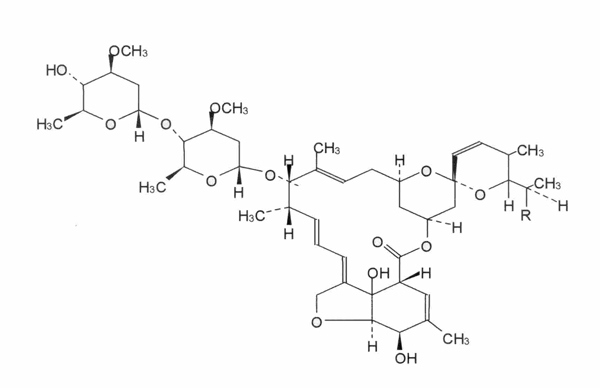
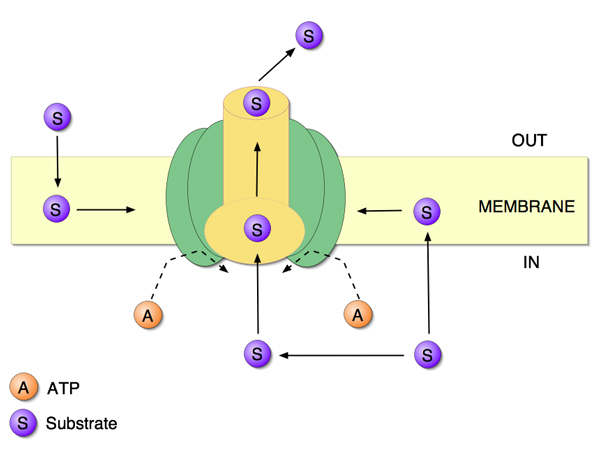
The macrocyclic lactone ivermectin (Mectizan(R)) is widely used for the control of human filarial infections, particularly as a donated product for onchocerciasis and lymphatic filariasis. In the case of control of lymphatic filariasis in Africa, it is used in combination with donated albendazole. In areas co-endemic for Onchocerciasis and Loa loa, serious adverse reactions have been observed in patients with apparently high microfilaria counts of Loa loa. Recent findings suggest that the severe central nervous system side effects seen in various vertebrates following ivermectin treatment may be due to an absence of, or functional deficiency in P-glycoprotein. P-glycoprotein is expressed in the apical membrane of brain capillary epithelial cells and is responsible for limiting the brain penetration of a range of compounds. Toxicity of ivermectin in some collie dogs may be explained by a 4-bp deletion mutation of the mdr1 gene resulting in a frame shift, generating stop codons that prematurely terminate synthesis of P-glycoprotein. Additionally, sub-populations of CF-1 identified as expressing reduced levels of P-glycoprotein exhibit increased toxicity to substrates of this transporter. Furthermore, while the traditional view of drug-drug interactions is alteration in drug clearance mediated through a change in hepatic drug metabolism, some of these changes may arise through competition for binding sites on P-glycoprotein in the blood-brain barrier, resulting in reduced extracellular efflux and enhanced CNS toxicity. In conclusion, P-glycoprotein is an integral component of the human blood brain barrier and plays a central role in limiting drug uptake into the brain. Altered expression or function of p-glycoprotein could conceivably allow elevation of brain concentrations of ivermectin and produce severe neurotoxicity. This might arise through a genetic polymorphism in p-glycoprotein or co-administration of ivermectin with a drug or foodstuff that might inhibit this efflux transporter.
大环内酯类药物伊维菌素(商品名:美迪善)被广泛用于控制人体丝虫感染,特别是作为治疗盘尾丝虫病和淋巴丝虫病的捐赠药物。在非洲控制淋巴丝虫病时,它与捐赠的阿苯达唑联合使用。在盘尾丝虫病和罗阿丝虫病共同流行的地区,在罗阿丝虫微丝蚴计数明显较高的患者中观察到了严重的不良反应。最近的研究结果表明,伊维菌素治疗后在各种脊椎动物中出现的严重中枢神经系统副作用可能是由于P-糖蛋白缺失或功能缺陷所致。P-糖蛋白在脑毛细血管上皮细胞的顶端膜中表达,负责限制一系列化合物进入大脑。伊维菌素对某些柯利犬的毒性可能是由于mdr1基因的4个碱基对缺失突变导致移码,产生终止密码子,从而过早终止P-糖蛋白的合成。此外,被鉴定为P-糖蛋白表达水平降低的CF-1亚群对该转运体底物的毒性增加。此外,虽然传统的药物相互作用观点是通过肝脏药物代谢的变化介导药物清除的改变,但其中一些变化可能是由于血脑屏障中P-糖蛋白结合位点的竞争导致细胞外流出减少和中枢神经系统毒性增强所致。总之,P-糖蛋白是人体血脑屏障的一个组成部分,在限制药物进入大脑方面起着核心作用。P-糖蛋白表达或功能的改变可能会导致伊维菌素在大脑中的浓度升高,并产生严重的神经毒性。这可能是由于P-糖蛋白的基因多态性,或者伊维菌素与可能抑制这种流出转运体的药物或食物同时使用所致。