Rico-Villademoros Fernando, Hernando Teresa, Sanz Juan-Luis, López-Alonso Antonio, Salamanca Oscar, Camps Carlos, Rosell Rafael
Biometrica, Eloy Gonzalo 27, 28010-Madrid, Spain.
BMC Med Res Methodol. 2004 Mar 25;4:6. doi: 10.1186/1471-2288-4-6.
The purpose of this study was to determine the standard tasks performed by clinical research coordinators (CRCs) in oncology clinical trials.
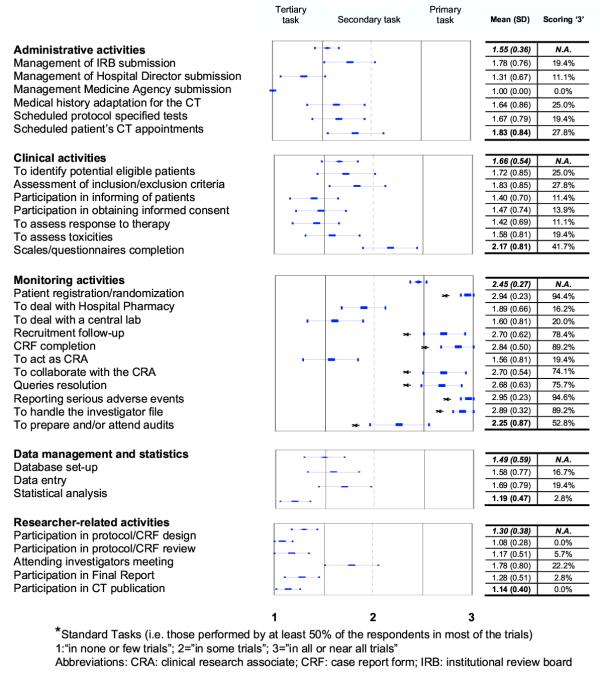
Forty-one CRCs were anonymously surveyed, using a four-page self-administered questionnaire focused on demographics, qualifications, and professional experience. The survey questions on responsibilities consisted of an ad-hoc 32-item questionnaire where respondents had to rate the frequency of involvement in the listed activities using a 3-point scale. We defined as "standard" a task that was rated as "in all or nearly all trials" by at least half of the respondents.
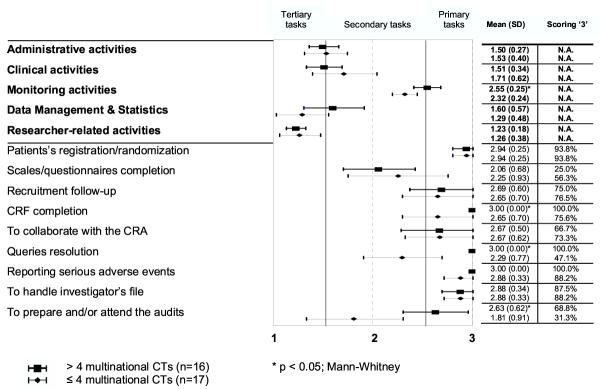
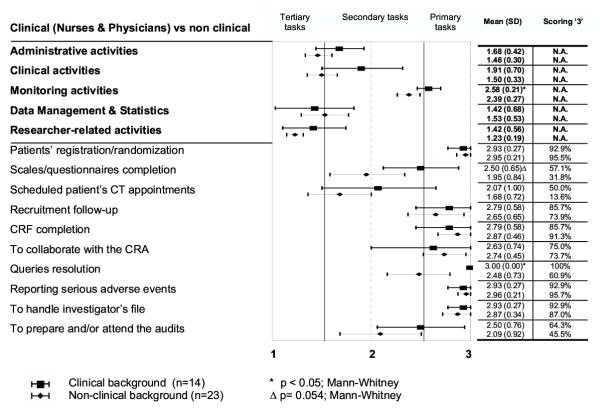
A response rate of 90% (37 out of 41) was achieved after two mailings. Less than half of the respondents had received additional training in oncology, clinical research or Good Clinical Practices (GCP). Overall, all standard tasks performed by CRCs were in the category of "monitoring activities" (those usually performed by a Clinical Research Associate "CRA") and included patient registration/randomization, recruitment follow-up, case report form completion, collaboration with the CRA, serious adverse events reporting, handling of investigator files, and preparing the site for and/or attending audits.
CRCs play a key role in the implementation of oncology clinical trials, which goes far beyond mere data collection and/or administrative support, and directly contributes to the gathering of good quality data.
本研究的目的是确定临床研究协调员(CRC)在肿瘤学临床试验中执行的标准任务。
对41名CRC进行匿名调查,使用一份四页的自填式问卷,重点关注人口统计学、资质和专业经验。关于职责的调查问题包括一份特别设计的32项问卷,受访者必须使用3分制对参与所列活动的频率进行评分。我们将至少一半受访者评为“在所有或几乎所有试验中”执行的任务定义为“标准”任务。
经过两次邮寄,回复率达到90%(41人中37人)。不到一半的受访者接受过肿瘤学、临床研究或良好临床实践(GCP)方面的额外培训。总体而言,CRC执行的所有标准任务都属于“监测活动”类别(通常由临床研究助理“CRA”执行),包括患者登记/随机分组、招募随访、病例报告表填写、与CRA协作、严重不良事件报告、研究者文件处理以及为审核准备研究点和/或参加审核。
CRC在肿瘤学临床试验的实施中发挥着关键作用,这远远超出了单纯的数据收集和/或行政支持,直接有助于收集高质量的数据。