Gaxiola R, de Larrinoa I F, Villalba J M, Serrano R
European Molecular Biology Laboratory, Heidelberg, Germany.
EMBO J. 1992 Sep;11(9):3157-64. doi: 10.1002/j.1460-2075.1992.tb05392.x.
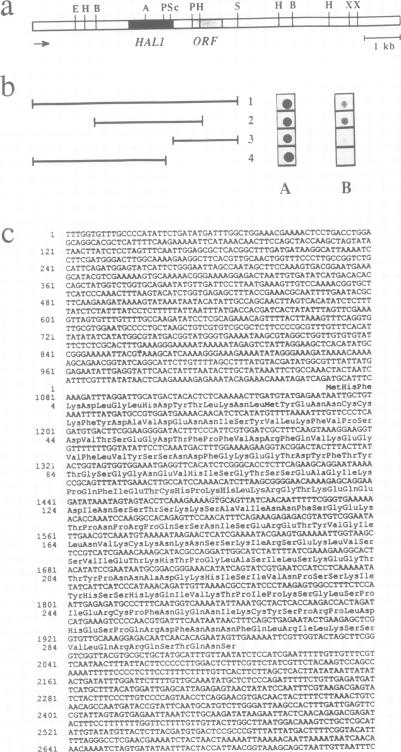
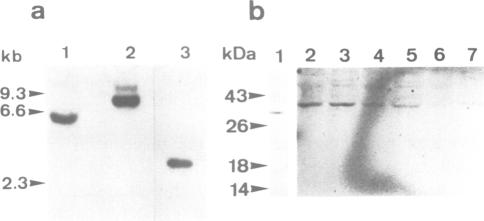
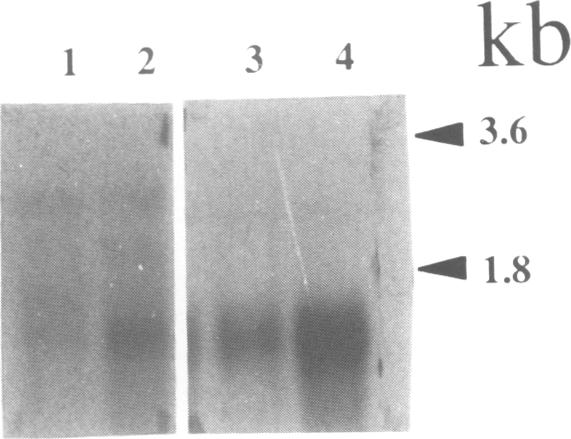
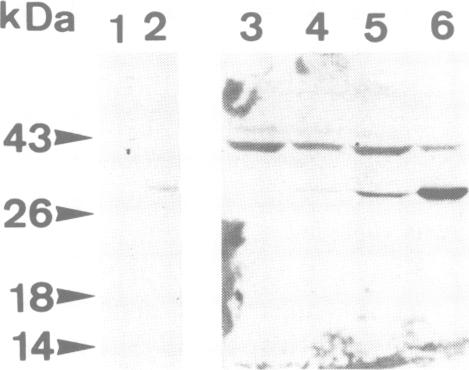
We have isolated a novel yeast gene, HAL1, which upon overexpression improves growth under salt stress. In addition, disruption of this gene decreases salt tolerance. Therefore HAL1 constitutes a rate-limiting determinant for halotolerance. It encodes a polar protein of 32 kDa located in the yeast cytoplasm and unrelated to sequences in data banks. The expression of this gene is increased by high concentrations of either NaCl, KCl or sorbitol. On the other hand, the growth advantage obtained by overexpression of HAL1 is specific for NaCl stress. In cells overexpressing HAL1, sodium toxicity seems to be counteracted by an increased accumulation of potassium. The HAL1 protein could interact with the transport systems which determine intracellular K+ homeostasis. The HAL1 gene and encoded protein are conserved in plants, being induced in these organisms by salt stress and abscisic acid. These results suggest that yeast serves as a convenient model system for the molecular biology of plant salt tolerance.
我们分离出了一个新的酵母基因HAL1,该基因过表达时可改善盐胁迫下的生长。此外,该基因的破坏会降低耐盐性。因此,HAL1构成了耐盐性的限速决定因素。它编码一种位于酵母细胞质中的32 kDa极性蛋白,与数据库中的序列无关。该基因的表达会因高浓度的NaCl、KCl或山梨醇而增加。另一方面,HAL1过表达所获得的生长优势对NaCl胁迫具有特异性。在过表达HAL1的细胞中,钠毒性似乎通过增加钾的积累而得到抵消。HAL1蛋白可能与决定细胞内K+稳态的转运系统相互作用。HAL1基因和编码的蛋白在植物中是保守的,在这些生物体中受盐胁迫和脱落酸诱导。这些结果表明,酵母是植物耐盐分子生物学研究的便利模型系统。