Blancato J, Singh B, Liu A, Liao D J, Dickson R B
Institute for Molecular and Human Genetics, 3970 Reservoir Road, NW, Washington, DC 20007, USA.
Br J Cancer. 2004 Apr 19;90(8):1612-9. doi: 10.1038/sj.bjc.6601703.
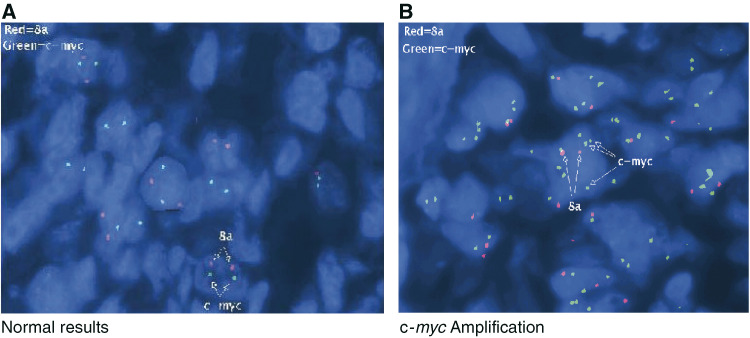
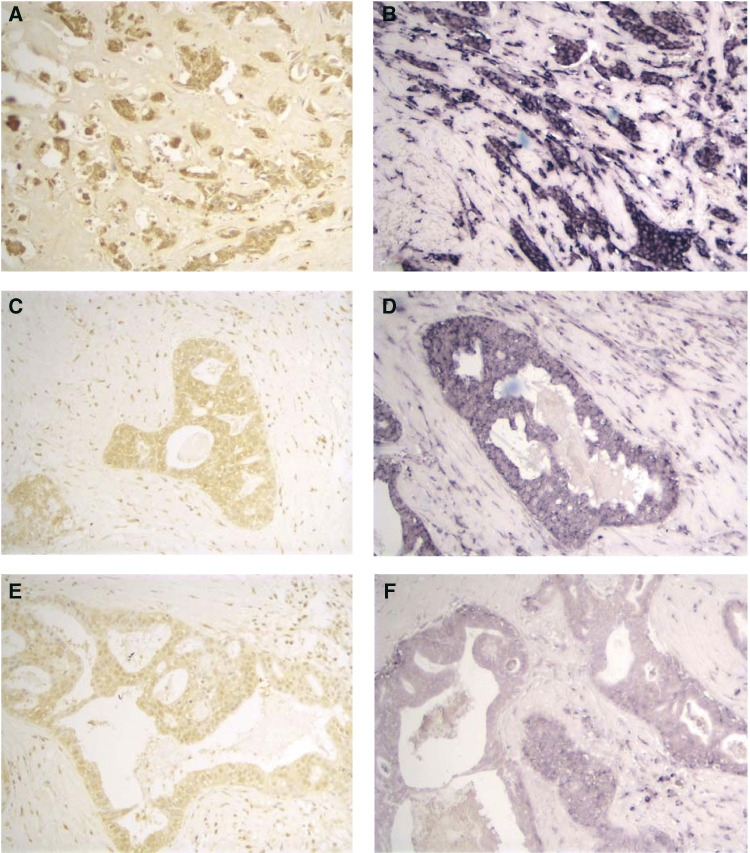
In this study, we analysed gene amplification, RNA expression and protein expression of the c-myc gene on archival tissue specimens of high-grade human breast cancer, using fluorescent in situ hybridisation (FISH), nonradioactive in situ hybridisation and immunohistochemistry. The specific question that we addressed was whether expression of c-Myc mRNA and protein were correlated with its gene copy amplification, as determined by FISH. Although c-Myc is one of the most commonly amplified oncogenes in human breast cancer, few studies have utilised in situ approaches to directly analyse the gene copy amplification, RNA transcription and protein expression on human breast tumour tissue sections. We now report that by using the sensitive FISH technique, a high proportion (70%) of high-grade breast carcinoma were amplified for the c-myc gene, irrespective of status of the oestrogen receptor. However, the level of amplification was low, ranging between one and four copies of gene gains, and the majority (84%) of the cases with this gene amplification gained only one to two copies. Approximately 92% of the cases were positive for c-myc RNA transcription, and essentially all demonstrated c-myc protein expression. In fact, a wide range of expression levels were detected. Statistically significant correlations were identified among the gene amplification indices, the RNA expression scores and protein expression scores. c-myc gene amplification, as detected by FISH, was significantly associated with expression of its mRNA, as measured by the intensity of in situ hybridisation in invasive cells (P=0.0067), and by the percentage of invasive cells positive for mRNA expression (P=0.0006). c-myc gene amplification was also correlated with the percentage of tumour cells which expressed high levels of its protein, as detected by immunohistochemistry in invasive cells (P=0.0016). Thus, although multiple mechanisms are known to regulate normal and aberrent expression of c-myc, in this study, where in situ methodologies were used to evaluate high-grade human breast cancers, gene amplification of c-myc appears to play a key role in regulating expression of its mRNA and protein.
在本研究中,我们使用荧光原位杂交(FISH)、非放射性原位杂交和免疫组织化学技术,分析了高级别人类乳腺癌存档组织标本中c-myc基因的基因扩增、RNA表达和蛋白质表达情况。我们所探讨的具体问题是,如FISH检测所示,c-Myc mRNA和蛋白质的表达是否与其基因拷贝扩增相关。尽管c-Myc是人类乳腺癌中最常扩增的致癌基因之一,但很少有研究采用原位方法直接分析人类乳腺肿瘤组织切片上的基因拷贝扩增、RNA转录和蛋白质表达。我们现在报告,通过使用灵敏的FISH技术,无论雌激素受体状态如何,高比例(70%)的高级别乳腺癌c-myc基因发生扩增。然而,扩增水平较低,基因增益介于1至4个拷贝之间,且大多数(84%)发生该基因扩增的病例仅获得1至2个拷贝。约92%的病例c-myc RNA转录呈阳性,且基本上所有病例均显示c-myc蛋白质表达。事实上,检测到了广泛的表达水平。在基因扩增指数、RNA表达评分和蛋白质表达评分之间发现了具有统计学意义的相关性。FISH检测到的c-myc基因扩增与侵袭性细胞原位杂交强度所测定的其mRNA表达显著相关(P = 0.0067),也与mRNA表达阳性的侵袭性细胞百分比显著相关(P = 0.0006)。c-myc基因扩增还与侵袭性细胞免疫组织化学检测显示的高水平表达其蛋白质的肿瘤细胞百分比相关(P = 0.0016)。因此,尽管已知多种机制调节c-myc的正常和异常表达,但在本研究中,采用原位方法评估高级别人类乳腺癌时,c-myc的基因扩增似乎在调节其mRNA和蛋白质表达中起关键作用。