Bocek Petr, Foucras Gilles, Paul William E
Division of Allergy, LAboratory of Immunology, National Institute of Allergy and Infectious Diseases, National Institutes of Health, 6610 Rockledge Dr., Rm. 3060, Bethesda, MD 20892, USA.
J Exp Med. 2004 Jun 21;199(12):1619-30. doi: 10.1084/jem.20032014.
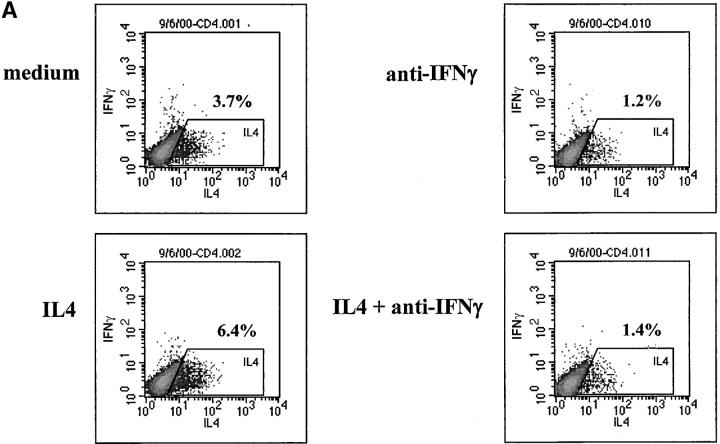
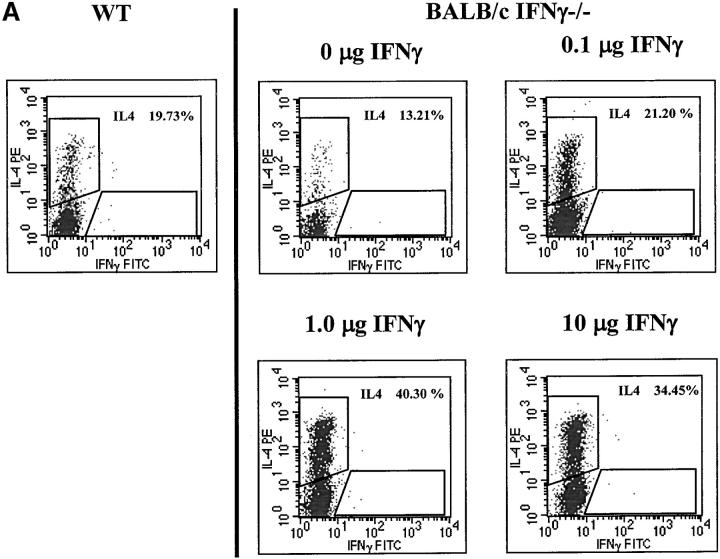
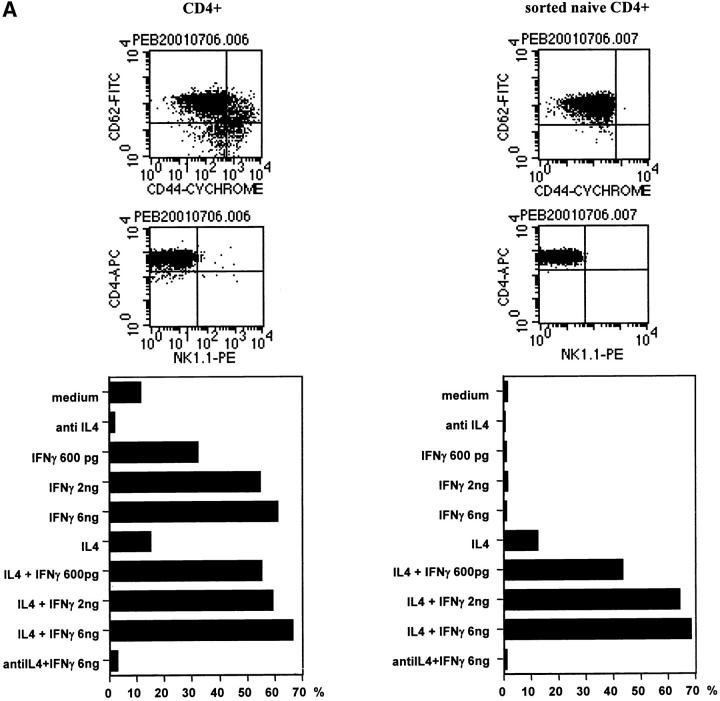
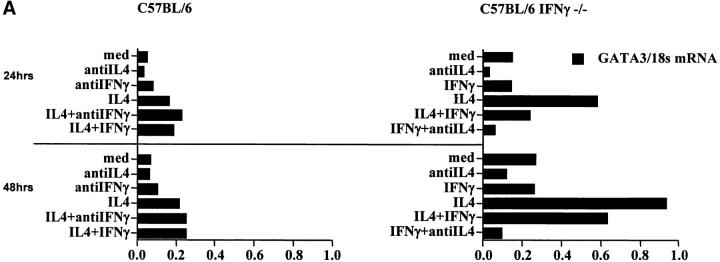
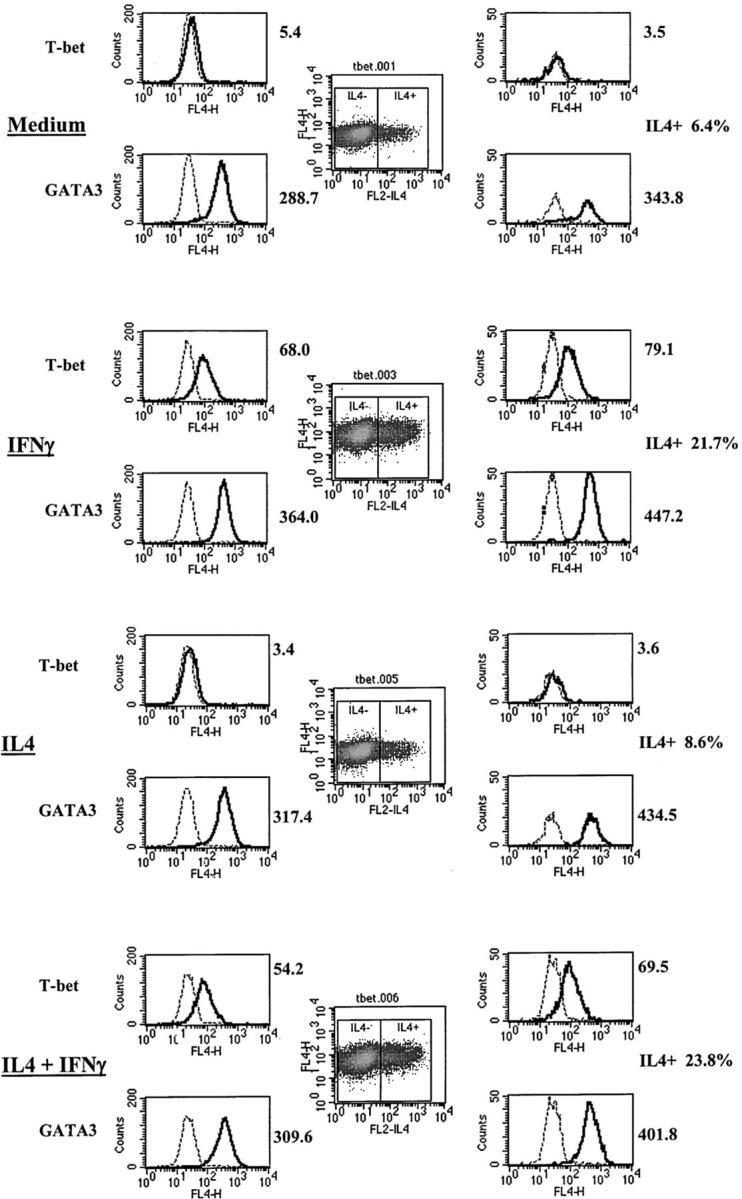
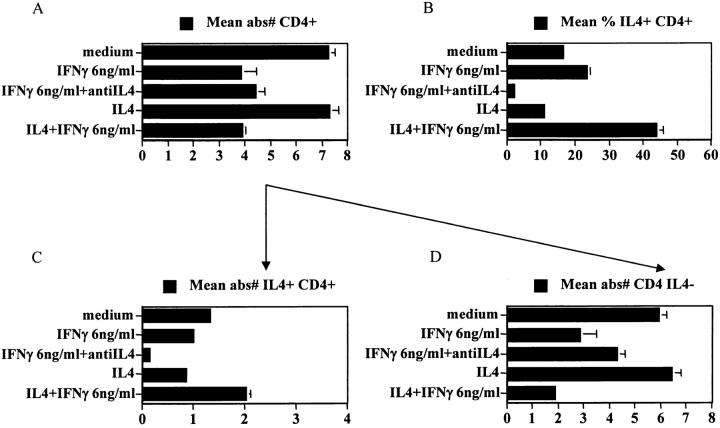
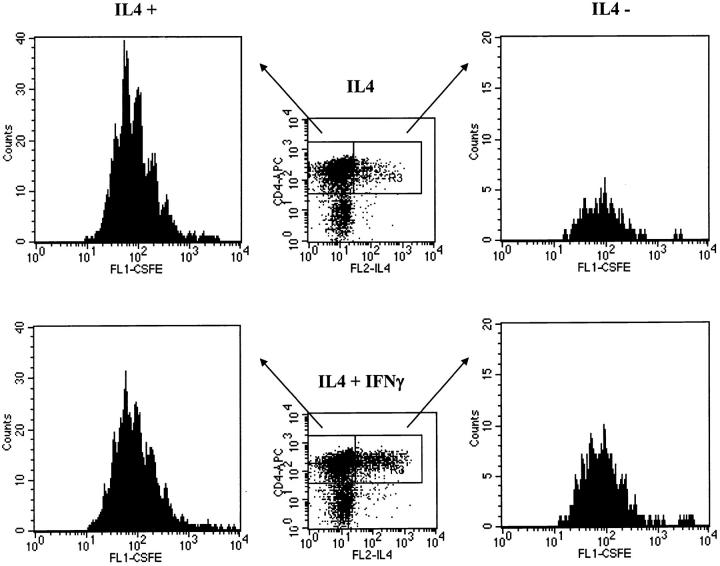
Classical studies have demonstrated that in vitro priming of naive CD4 T cells to become T helper (Th)2 cells is strikingly dependent on interleukin (IL)-4, whereas priming for interferon (IFN)gamma production is IL-12/IFNgamma-dependent. Therefore, it was quite surprising when we noted that priming of naive C57BL/6 CD4(+) cells to become IL-4 producers was substantially inhibited by the addition of anti-IFNgamma antibodies. This was true using immobilized anti-CD3 and anti-CD28 antibodies or soluble anti-CD3/anti-CD28 and antigen-presenting cells in the presence or absence of added IL-4. Priming of CD4 T cells from IFNgamma(-/-) C57BL/6 mice with immobilized anti-CD3 and anti-CD28 resulted in limited production of IL-4, even with the addition of 1,000 U/ml of IL-4. Titrating IFNgamma into such cultures showed a striking increase in the proportion of T cells that secreted IL-4 upon challenge; this effect was completely IL-4-dependent in that it was blocked with anti-IL-4 antibody. Thus, IFNgamma plays an unanticipated but substantial role in Th2 priming, although it is an important Th1 cytokine, and under certain circumstances a Th1 inducer.
经典研究表明,体外将初始CD4 T细胞诱导分化为辅助性T细胞(Th)2细胞的过程显著依赖于白细胞介素(IL)-4,而诱导产生干扰素(IFN)γ则依赖于IL-12/IFNγ。因此,当我们注意到添加抗IFNγ抗体可显著抑制初始C57BL/6 CD4(+)细胞向IL-4产生细胞的诱导分化时,着实令人惊讶。无论是使用固定化抗CD3和抗CD28抗体,还是在添加或不添加IL-4的情况下使用可溶性抗CD3/抗CD28和抗原呈递细胞,均是如此。用固定化抗CD3和抗CD28诱导IFNγ(-/-) C57BL/6小鼠的CD4 T细胞,即使添加1000 U/ml的IL-4,IL-4的产生也很有限。向此类培养物中滴定IFNγ显示,受到刺激后分泌IL-4的T细胞比例显著增加;这种效应完全依赖于IL-4,因为它可被抗IL-4抗体阻断。因此,IFNγ在Th2细胞诱导分化中发挥了意想不到但却重要的作用,尽管它是一种重要的Th1细胞因子,并且在某些情况下是Th1诱导剂。