Story David A
The University of Melbourne, Austin Health, Melbourne, Victoria, Australia.
Crit Care. 2004 Aug;8(4):253-8. doi: 10.1186/cc2861. Epub 2004 Apr 30.
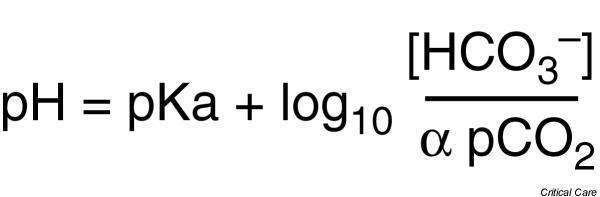
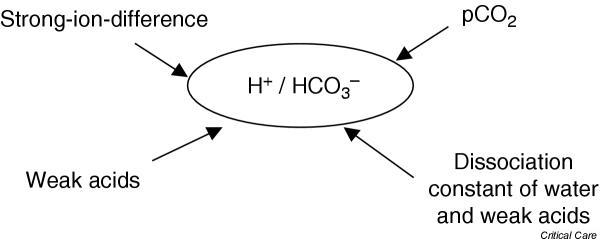
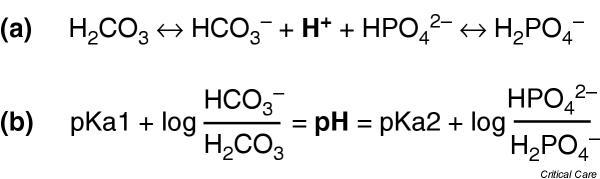
The history of assessing the acid-base equilibrium and associated disorders is intertwined with the evolution of the definition of an acid. In the 1950s clinical chemists combined the Henderson-Hasselbalch equation and the Bronsted-Lowry definition of an acid to produce the current bicarbonate ion-centred approach to metabolic acid-base disorders. Stewart repackaged pre-1950 ideas of acid-base in the late 1970s, including the Van Slyke definition of an acid. Stewart also used laws of physical chemistry to produce a new acid-base approach. This approach, using the strong ion difference (particularly the sodium chloride difference) and the concentration of weak acids (particularly albumin), pushes bicarbonate into a minor role as an acid-base indicator rather than as an important mechanism. The Stewart approach may offer new insights into acid-base disorders and therapies.
评估酸碱平衡及相关紊乱的历史与酸的定义的演变紧密相连。20世纪50年代,临床化学家将亨德森-哈塞尔巴尔赫方程与布朗斯特-劳里酸的定义相结合,形成了当前以碳酸氢根离子为中心的代谢性酸碱紊乱研究方法。20世纪70年代末,斯图尔特重新整理了20世纪50年代以前的酸碱理论,包括范斯莱克对酸的定义。斯图尔特还运用物理化学定律提出了一种新的酸碱研究方法。这种方法利用强离子差(特别是氯化钠差)和弱酸浓度(特别是白蛋白),使碳酸氢根在酸碱平衡中仅作为一个次要的指标,而非重要的调节机制。斯图尔特的方法可能为酸碱紊乱及治疗提供新的见解。