Fukuoka S, Freedman S D, Yu H, Sukhatme V P, Scheele G A
Laboratory of Cell and Molecular Biology, Charles A. Dana Research Institute, Thorndike Laboratory, Boston, MA 02215.
Proc Natl Acad Sci U S A. 1992 Feb 15;89(4):1189-93. doi: 10.1073/pnas.89.4.1189.
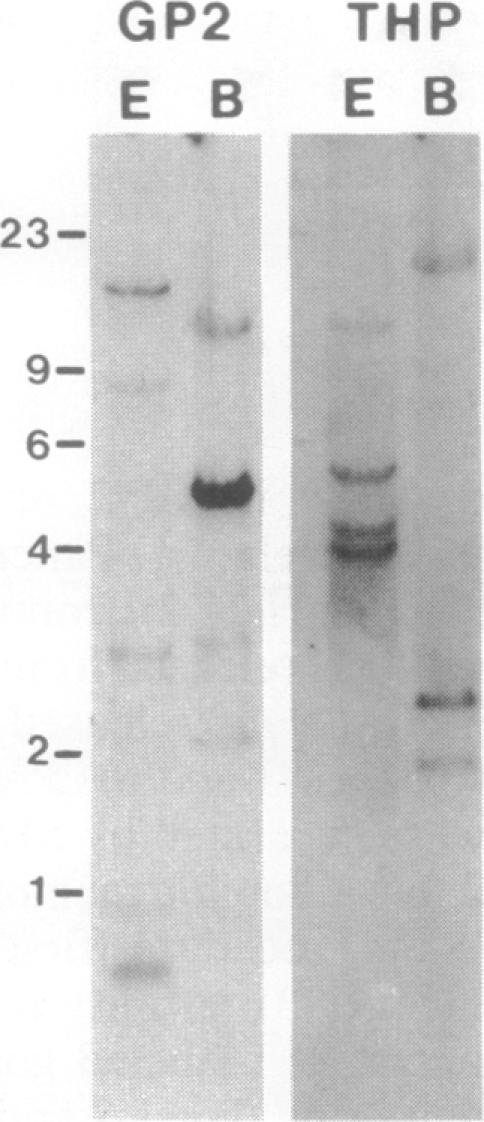
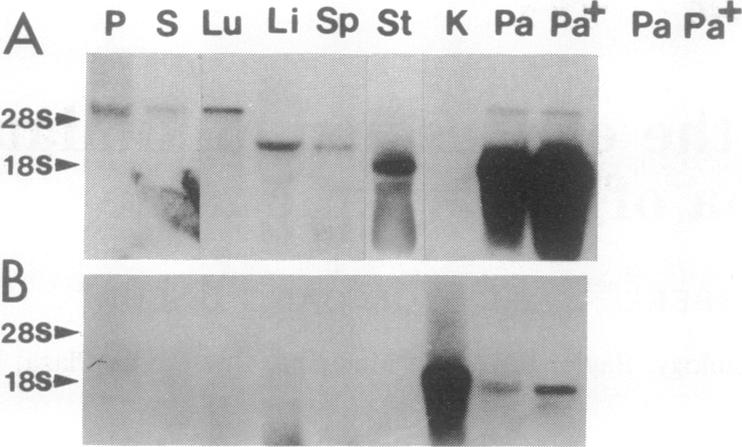
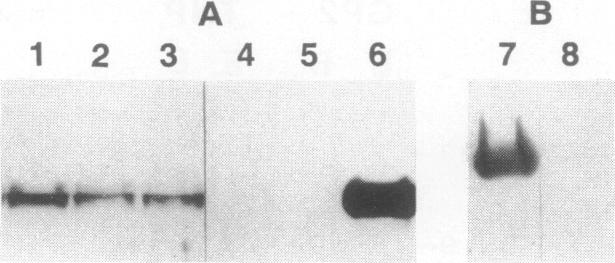
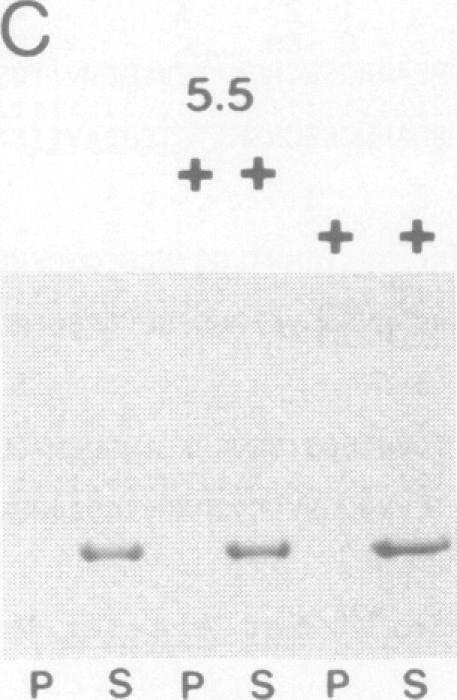
A family of homologous genes is shown to encode GP-2, the major glycosylphosphatidylinositol (GPI)-linked glycoprotein of pancreatic zymogen granule membranes, and Tamm-Horsfall protein (THP), a GPI-linked glycoprotein associated with apical vesicles in kidney thick ascending limb of Henle (TALH) cells. The C-terminal regions of GP-2 (Asp54-Phe530) and THP (Asp175-His644) from rat show 53% identity, 86% similarity, and 26 conserved cysteine residues including one epidermal growth factor motif. The unique N-terminal domain of rat THP (unique-THP, Pro29-Gln174) shows four conserved epidermal growth factor motifs, three in tandem and one in reverse orientation. GP-2 homologues are observed in a wide variety of epithelial cells, several of which contain highly regulated secretory processes. GP-2 released from zymogen granule membranes with phosphatidylinositol phospholipase C reacts with anti-cross-reactive determinant antibody (anti-CRD), confirming the GPI nature of the pancreatic homologue. In contrast, GP-2 and THP, released endogenously from pancreas and kidney, respectively, do not react with anti-cross-reactive determinant antibody, suggesting alternative enzymatic mechanisms for their physiological release. Globular domains of GP-2 and THP, but not albumin, show pH- and ion-dependent self-association in vitro. The GP-2/THP family appears to represent a newly discovered class of GPI-anchored proteins, which may utilize pH- and ion-dependent self-association mechanisms for establishing membrane (micro)domains targeted to intracellular secretory compartments.
已显示一个同源基因家族编码GP-2,它是胰腺酶原颗粒膜的主要糖基磷脂酰肌醇(GPI)连接糖蛋白,以及Tamm-Horsfall蛋白(THP),一种与亨氏袢升支粗段(TALH)细胞顶端小泡相关的GPI连接糖蛋白。大鼠的GP-2(Asp54-Phe530)和THP(Asp175-His644)的C末端区域显示出53%的同一性、86%的相似性以及26个保守的半胱氨酸残基,其中包括一个表皮生长因子基序。大鼠THP的独特N末端结构域(独特-THP,Pro29-Gln174)显示出四个保守的表皮生长因子基序,其中三个串联,一个反向排列。在多种上皮细胞中观察到了GP-2同源物,其中一些细胞含有高度调控的分泌过程。用磷脂酰肌醇磷脂酶C从酶原颗粒膜释放的GP-2与抗交叉反应决定簇抗体(抗CRD)反应,证实了胰腺同源物的GPI性质。相比之下,分别从胰腺和肾脏内源性释放的GP-2和THP不与抗交叉反应决定簇抗体反应,这表明它们的生理释放存在其他酶促机制。GP-2和THP的球状结构域,而不是白蛋白,在体外表现出pH和离子依赖性的自缔合。GP-2/THP家族似乎代表了一类新发现的GPI锚定蛋白,它们可能利用pH和离子依赖性的自缔合机制来建立靶向细胞内分泌区室的膜(微)结构域。