Paietta J V
Department of Biochemistry, Wright State University, Dayton, Ohio 45435.
Mol Cell Biol. 1992 Apr;12(4):1568-77. doi: 10.1128/mcb.12.4.1568-1577.1992.
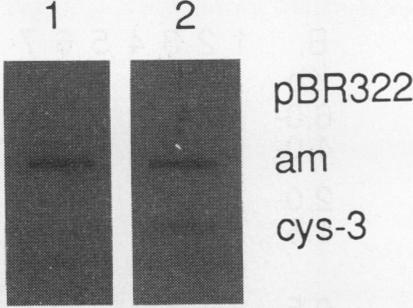
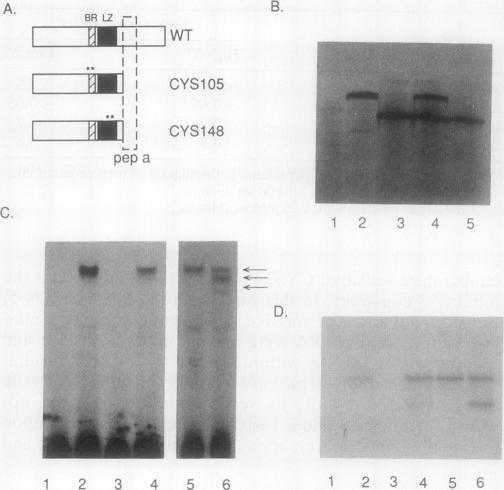
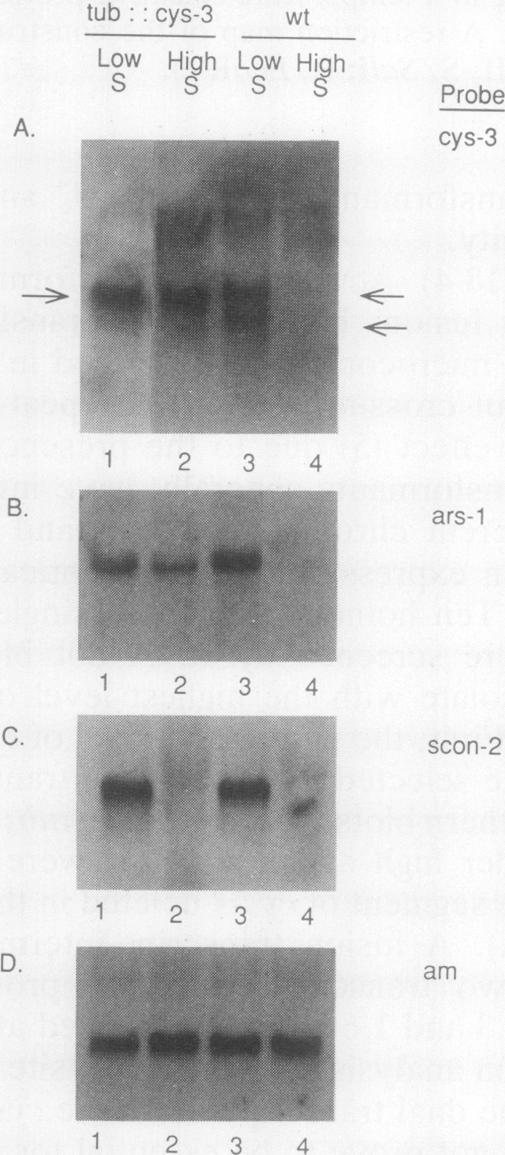
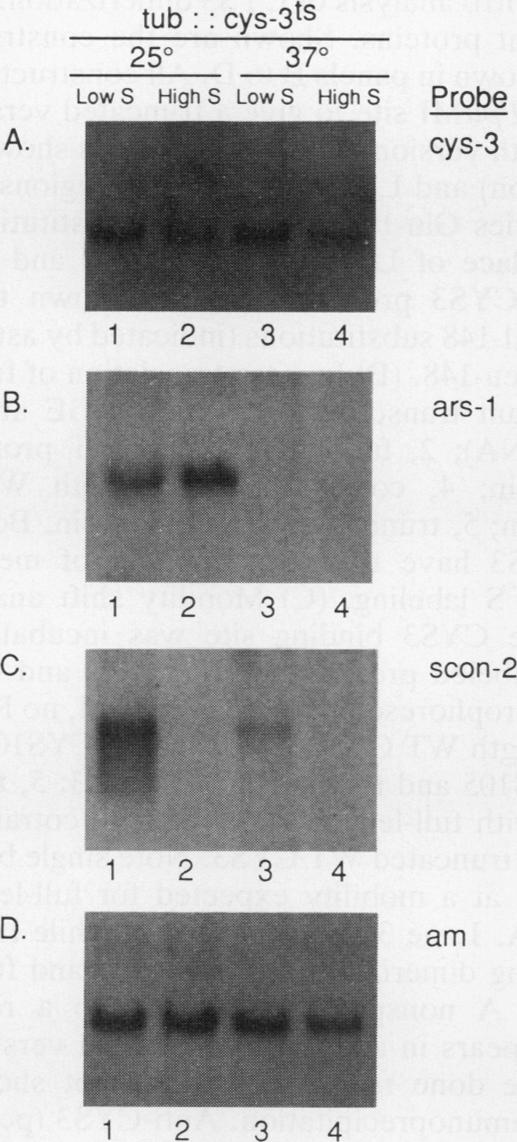
The cys-3+ gene of Neurospora crassa encodes a bZIP (basic region-leucine zipper) regulatory protein that is essential for sulfur structural gene expression (e.g., ars-1+). Nuclear transcription assays confirmed that cys-3+ was under sulfur-regulated transcriptional control and that cys-3+ transcription was constitutive in sulfur controller (scon)-negative regulator mutants. Given these results, I have tested whether expression of cys-3+ under high-sulfur (repressing) conditions was sufficient to induce sulfur gene expression. The N. crassa beta-tubulin (tub) promoter was fused to the cys-3+ coding segment and used to transform a cys-3 deletion mutant. Function of the tub::cys-3 fusion in homokaryotic transformants grown under high-sulfur conditions was confirmed by Northern (RNA) and Western immunoblot analysis. The tub::cys-3 transformants showed arylsulfatase gene expression under normally repressing high-sulfur conditions. A tub::cys-3ts fusion encoding a temperature-sensitive CYS3 protein was used to confirm that the induced structural gene expression was due to CYS3 protein function. Constitutive CYS3 production did not induce scon-2+ expression under repressing conditions. In addition, a cys-3 promoter fusion to lacZ showed that CYS3 production was sufficient to induce its own expression and provides in vivo evidence for autoregulation. Finally, an apparent inhibitory effect observed with a strain carrying a point mutation at the cys-3 locus was examined by in vitro heterodimerization studies. These results support an interpretation of CYS3 as a transcriptional activator whose regulation is a crucial control point in the signal response pathway triggered by sulfur limitation.
粗糙脉孢菌的cys-3+基因编码一种bZIP(碱性区域-亮氨酸拉链)调节蛋白,该蛋白对于硫结构基因的表达(如ars-1+)至关重要。细胞核转录分析证实,cys-3+处于硫调节的转录控制之下,并且cys-3+转录在硫调控因子(scon)阴性调节突变体中是组成型的。基于这些结果,我测试了在高硫(抑制)条件下cys-3+的表达是否足以诱导硫基因的表达。将粗糙脉孢菌β-微管蛋白(tub)启动子与cys-3+编码区段融合,并用于转化cys-3缺失突变体。通过Northern(RNA)和Western免疫印迹分析证实了tub::cys-3融合体在高硫条件下生长的同核体转化体中的功能。tub::cys-3转化体在通常抑制性的高硫条件下显示出芳基硫酸酯酶基因的表达。使用编码温度敏感型CYS3蛋白的tub::cys-3ts融合体来确认诱导的结构基因表达是由于CYS3蛋白的功能。在抑制条件下,组成型CYS3的产生并未诱导scon-2+的表达。此外,cys-3启动子与lacZ的融合表明CYS3的产生足以诱导其自身的表达,并为自我调节提供了体内证据。最后,通过体外异源二聚化研究检查了在cys-3位点携带点突变的菌株中观察到的明显抑制作用。这些结果支持将CYS3解释为一种转录激活因子,其调节是由硫限制触发的信号反应途径中的一个关键控制点。