Plant and Microbial Biology Department, University of California, Berkeleygrid.47840.3f, California, USA.
Energy Biosciences Institute, University of California, Berkeleygrid.47840.3f, California, USA.
mSphere. 2021 Oct 27;6(5):e0056421. doi: 10.1128/mSphere.00564-21. Epub 2021 Sep 15.
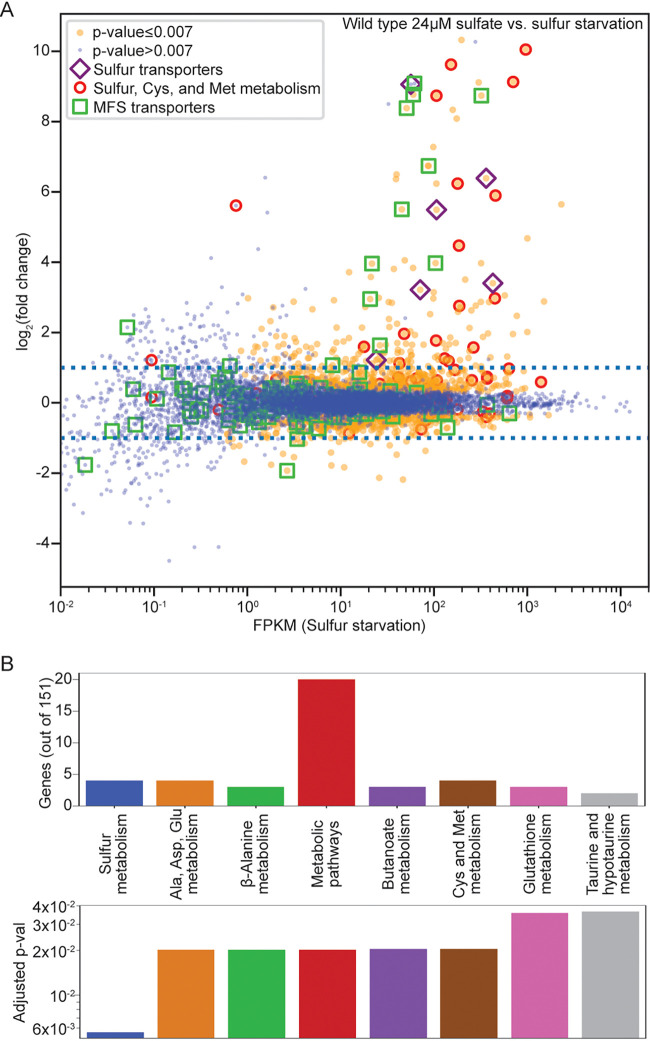
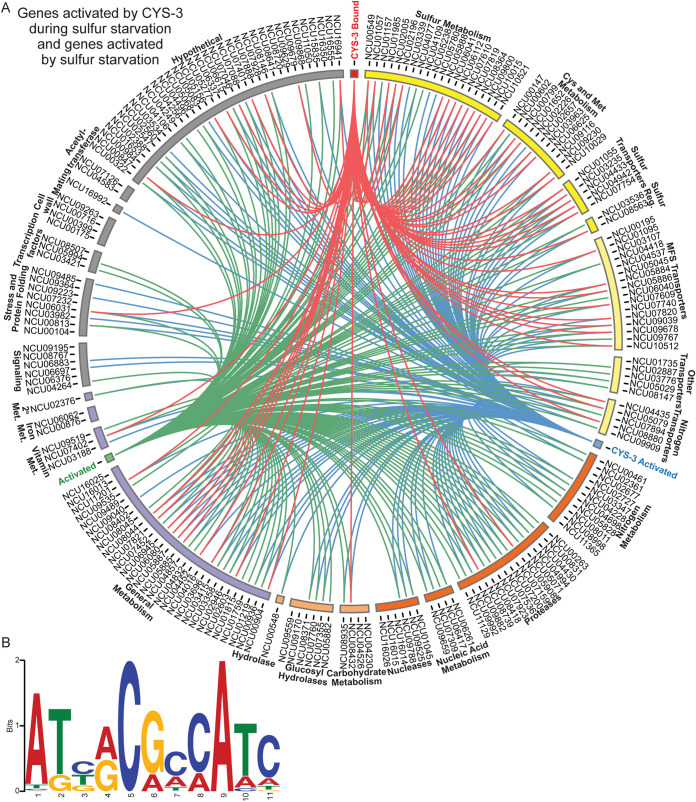
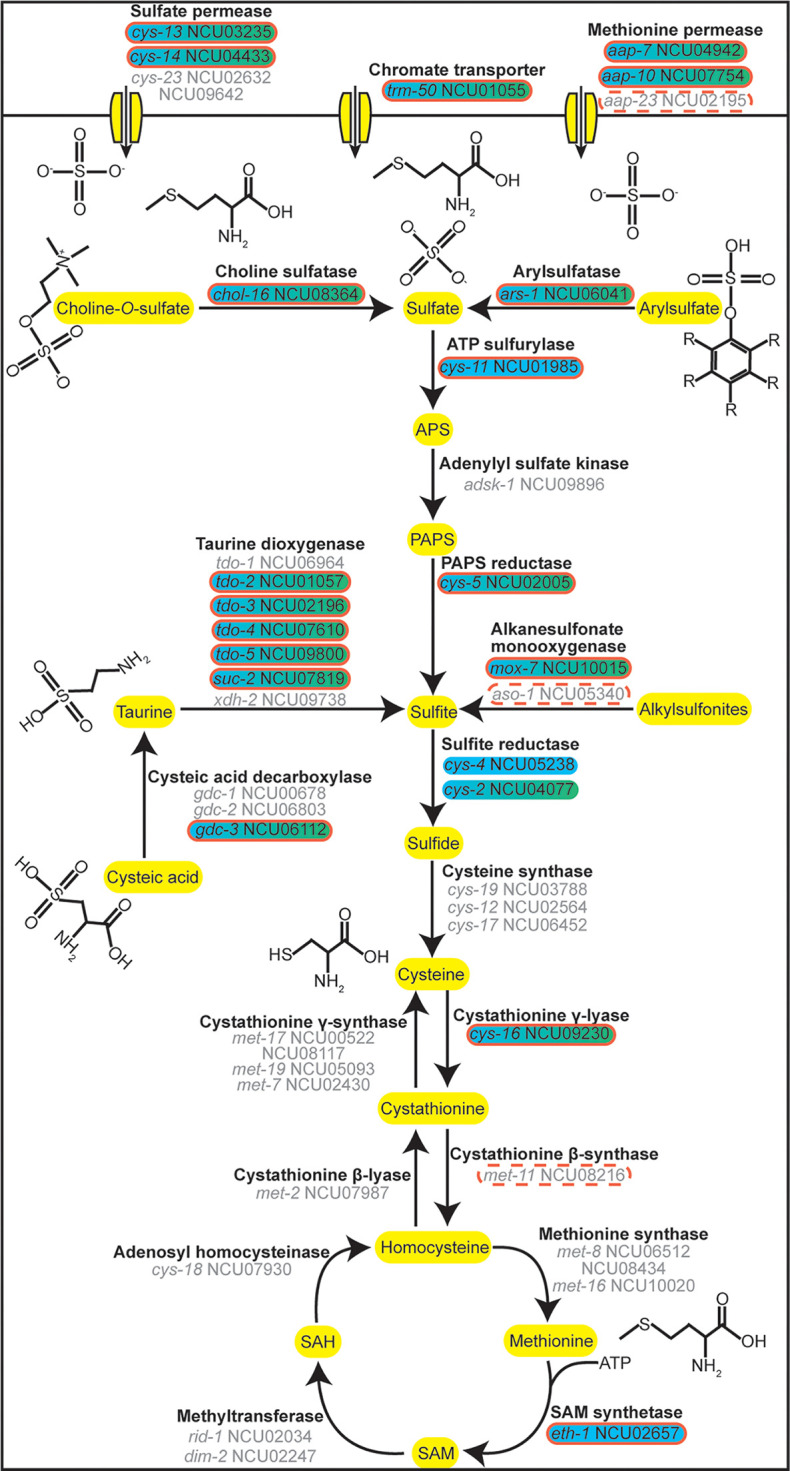
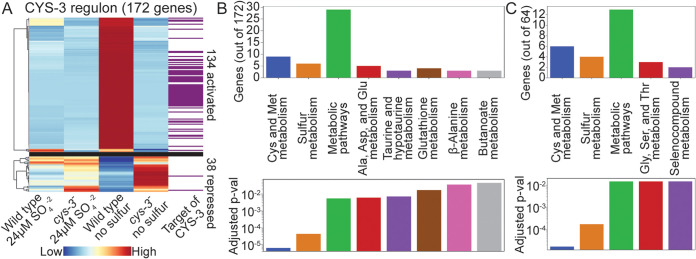
Accurate nutrient sensing is important for rapid fungal growth and exploitation of available resources. Sulfur is an important nutrient source found in a number of biological macromolecules, including proteins and lipids. The model filamentous fungus Neurospora crassa is capable of utilizing sulfur found in a variety of sources from amino acids to sulfate. During sulfur starvation, the transcription factor CYS-3 is responsible for upregulation of genes involved in sulfur uptake and assimilation. Using a combination of RNA sequencing and DNA affinity purification sequencing, we performed a global survey of the N. crassa sulfur starvation response and the role of CYS-3 in regulating sulfur-responsive genes. The CYS-3 transcription factor bound the promoters and regulated genes involved in sulfur metabolism. Additionally, CYS-3 directly activated the expression of a number of uncharacterized transporter genes, suggesting that regulation of sulfur import is an important aspect of regulation by CYS-3. CYS-3 also directly regulated the expression of genes involved in mitochondrial electron transfer. During sulfur starvation, genes involved in nitrogen metabolism, such as amino acid and nucleic acid metabolic pathways, along with genes encoding proteases and nucleases that are necessary for scavenging nitrogen, were activated. Sulfur starvation also caused changes in the expression of genes involved in carbohydrate metabolism, such as those encoding glycosyl hydrolases. Thus, our data suggest a connection between sulfur metabolism and other aspects of cellular metabolism. Identification of nutrients present in the environment is a challenge common to all organisms. Sulfur is an important nutrient source found in proteins, lipids, and electron carriers that are required for the survival of filamentous fungi such as Neurospora crassa. Here, we transcriptionally profiled the response of N. crassa to characterize the global response to sulfur starvation. We also used DNA affinity purification sequencing to identify the direct downstream targets of the transcription factor responsible for regulating genes involved in sulfur uptake and assimilation. Along with genes involved in sulfur metabolism, this transcription factor regulated a number of uncharacterized transporter genes and genes involved in mitochondrial electron transfer. Our data also suggest a connection between sulfur, nitrogen, and carbon metabolism, indicating that the regulation of a number of metabolic pathways is intertwined.
准确的营养感应对于真菌的快速生长和利用可用资源非常重要。硫是一种重要的营养源,存在于许多生物大分子中,包括蛋白质和脂质。模式丝状真菌粗糙脉孢菌能够利用各种来源的硫,从氨基酸到硫酸盐。在硫饥饿时,转录因子 CYS-3 负责上调参与硫摄取和同化的基因。我们使用 RNA 测序和 DNA 亲和纯化测序的组合,对 N. crassa 硫饥饿反应和 CYS-3 在调节硫响应基因中的作用进行了全面调查。CYS-3 转录因子结合了启动子并调节了硫代谢相关基因的表达。此外,CYS-3 直接激活了许多未鉴定的转运基因的表达,表明硫输入的调节是 CYS-3 调节的一个重要方面。CYS-3 还直接调节参与线粒体电子传递的基因的表达。在硫饥饿时,与氮代谢相关的基因,如氨基酸和核酸代谢途径,以及编码用于氮掠夺的蛋白酶和核酸酶的基因被激活。硫饥饿还导致参与碳水化合物代谢的基因的表达发生变化,如编码糖苷水解酶的基因。因此,我们的数据表明硫代谢与细胞代谢的其他方面之间存在联系。
鉴定环境中存在的营养物质是所有生物体共同面临的挑战。硫是蛋白质、脂质和电子载体中的重要营养源,这些物质是丝状真菌如粗糙脉孢菌生存所必需的。在这里,我们对 N. crassa 对硫饥饿的反应进行了转录谱分析,以描述对硫饥饿的全局反应。我们还使用 DNA 亲和纯化测序来鉴定负责调节硫摄取和同化相关基因的转录因子的直接下游靶标。除了参与硫代谢的基因外,这种转录因子还调节了许多未鉴定的转运基因和参与线粒体电子传递的基因。我们的数据还表明硫、氮和碳代谢之间存在联系,表明许多代谢途径的调节是相互交织的。