Hernandez-Rauda Roberto, Martinez-Garcia Sandra
Facultad de Ciencias de la Salud, Universidad Andrés Bello, 1a Calle Poniente y 41a Avenida Norte, 2128, Colonia Flor Blanca, San Salvador, El Salvador, América Central.
BMC Musculoskelet Disord. 2004 Aug 26;5:29. doi: 10.1186/1471-2474-5-29.
Osteoporosis is a systemic skeletal disorder, characterized by reduced bone mass, deterioration of bone structure, increased bone fragility, and increased fracture risk. It is more frequent to find among women than men at a 4:1 ratio. Evidence suggests that to adopt changes on some life habits can prevent or delay development of osteoporosis. Several osteoporosis-risk factors have been confirmed in the US and western Europe, but in El Salvador there are neither reliable epidemiological statistics about this skeletal disorder nor studies addressing osteoporosis-risk factors in women. The aim of this study was to determinate the extent of osteoporosis knowledge, the levels of both daily calcium intake and weight-bearing physical activity, and the influence of several osteoporosis-risk factors on these variables in three age groups of Salvadorean women.
In this exploratory cross-sectional study, an osteoporosis knowledge assessment questionnaire including a food frequency and a physical activity record section were used to collect data and it was delivered through a face-to-face interview. A convenience sample (n = 197) comprised of three groups of women aged 25-35 years, 36-49 years, and over 49 years was taken. Among-group comparisons of means were analyzed by two-way ANOVA. To determinate the overall influence of osteoporosis-risk factors, the multivariate analysis was used.
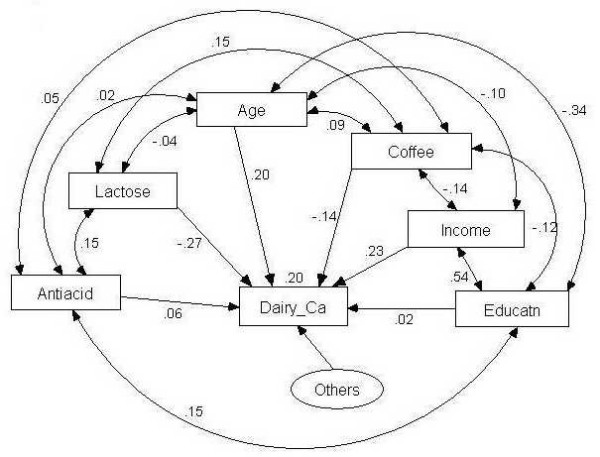
Study results indicated that better educated women had more knowledge about osteoporosis than women with a low education level, regardless of age, even though this knowledge was rather fair. Older women got more weight-bearing physical activity at home and less at place of employment than reported by the younger women; however, neither group performed sufficient high-intensity WBPA to improve bone mass. Regardless of age, the most women consumed 60% or less than the Dietary Reference Intake of calcium and depend on household income, lactose intolerance and coffee rather than milk consumption.
In summary, the majority of women in this study have modest knowledge on osteoporosis. The knowledge base is not linked to preventive health habits, including sufficient calcium intake and performance of weight-bearing physical activities. They are thus at increased risk for low bone mass.
骨质疏松症是一种全身性骨骼疾病,其特征为骨量减少、骨结构破坏、骨脆性增加以及骨折风险升高。女性患骨质疏松症的频率是男性的4倍。有证据表明,改变某些生活习惯可以预防或延缓骨质疏松症的发展。在美国和西欧,已经确认了几种骨质疏松症风险因素,但在萨尔瓦多,既没有关于这种骨骼疾病的可靠流行病学统计数据,也没有针对女性骨质疏松症风险因素的研究。本研究的目的是确定萨尔瓦多三个年龄组女性对骨质疏松症的了解程度、每日钙摄入量和负重体育活动水平,以及几种骨质疏松症风险因素对这些变量的影响。
在这项探索性横断面研究中,使用一份包括食物频率和体育活动记录部分的骨质疏松症知识评估问卷来收集数据,并通过面对面访谈进行发放。选取了一个便利样本(n = 197),由25 - 35岁、36 - 49岁和49岁以上的三组女性组成。通过双向方差分析对各组均值进行组间比较。为了确定骨质疏松症风险因素的总体影响,采用了多变量分析。
研究结果表明,无论年龄大小,受教育程度较高的女性比受教育程度较低的女性对骨质疏松症有更多的了解,尽管这种了解程度一般。老年女性在家中进行的负重体育活动比年轻女性多,而在工作场所进行的负重体育活动比年轻女性少;然而,两组进行的高强度负重体育活动都不足以改善骨量。无论年龄大小,大多数女性的钙摄入量为膳食参考摄入量的60%或更少,并且钙摄入量取决于家庭收入、乳糖不耐受和咖啡摄入量,而非牛奶消费量。
总之,本研究中的大多数女性对骨质疏松症的了解有限。知识基础与预防性健康习惯(包括充足的钙摄入量和进行负重体育活动)无关。因此,她们骨量低的风险增加。