
使有丝分裂纺锤体不对称定位的力在纺锤体组装完成之前一直处于束缚状态。
The forces that position a mitotic spindle asymmetrically are tethered until after the time of spindle assembly.
作者信息
Labbé Jean-Claude, McCarthy Erin K, Goldstein Bob
机构信息
Department of Biology, The University of North Carolina at Chapel Hill, Chapel Hill, NC 27599, USA.
出版信息
J Cell Biol. 2004 Oct 25;167(2):245-56. doi: 10.1083/jcb.200406008. Epub 2004 Oct 18.
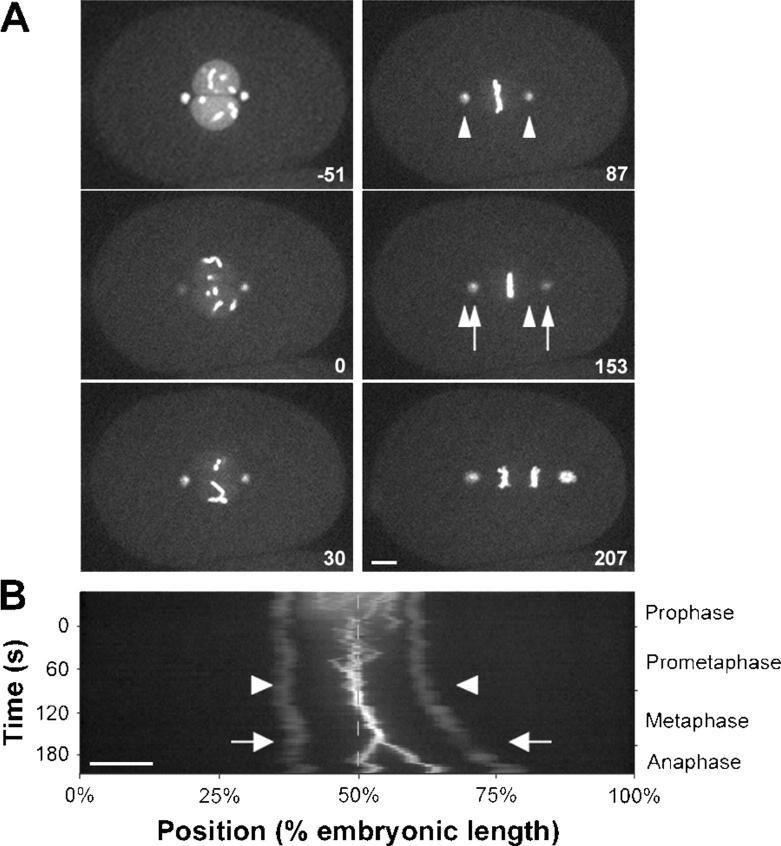
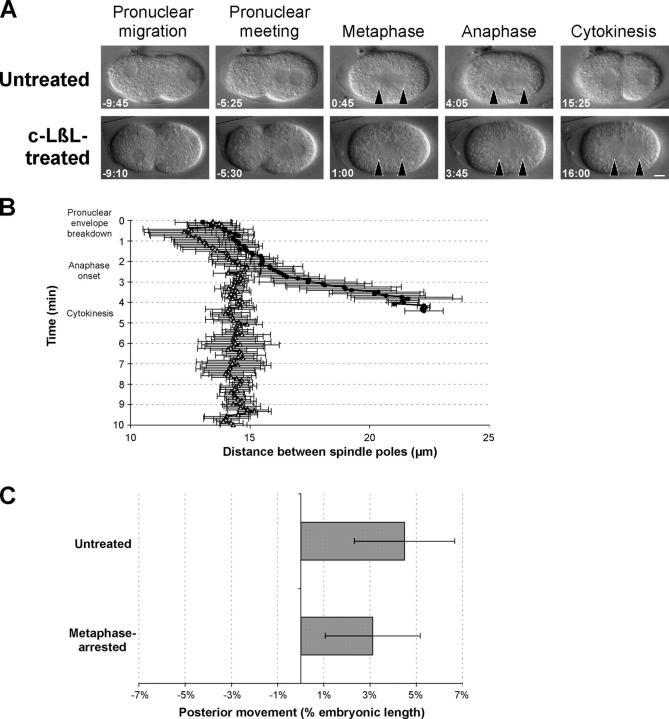
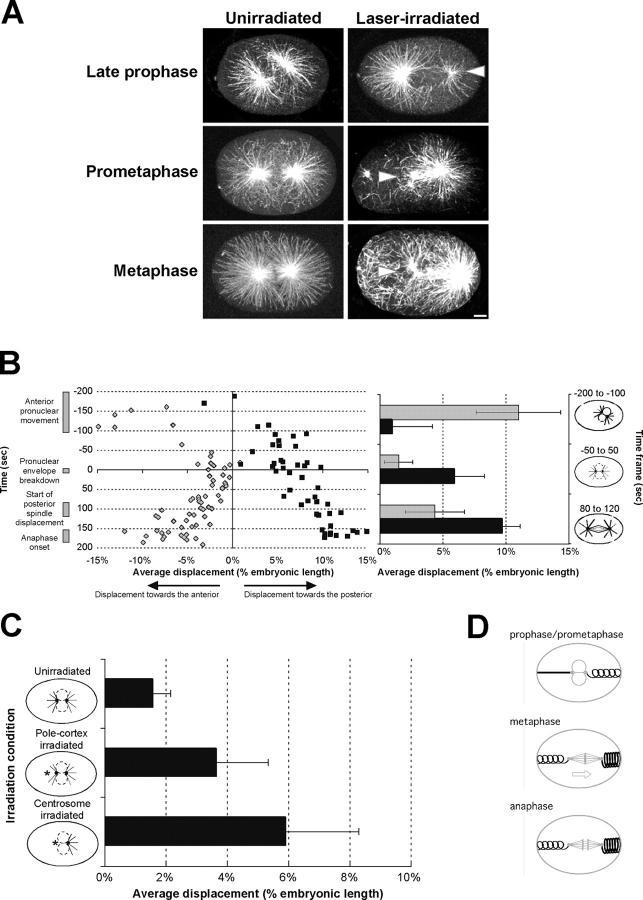
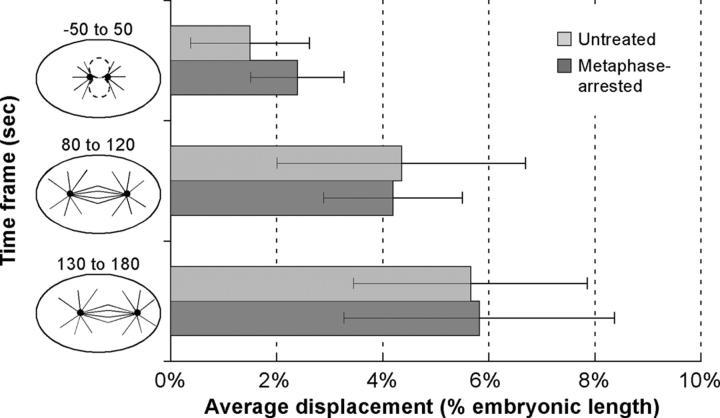
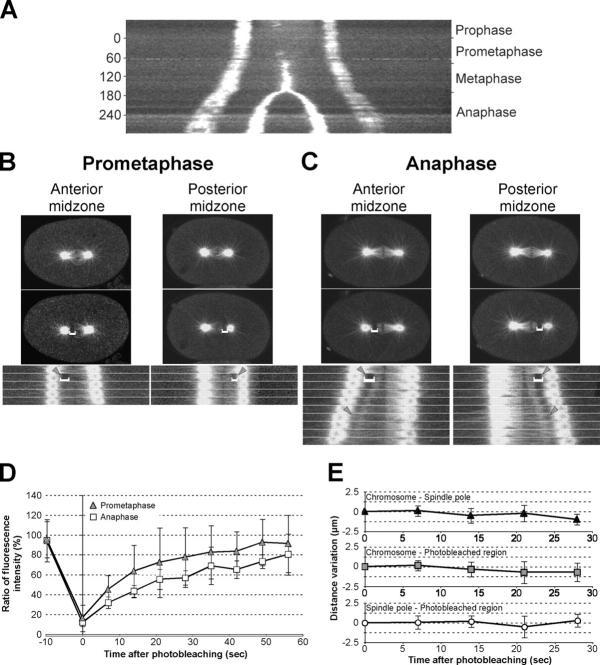
Regulation of the mitotic spindle's position is important for cells to divide asymmetrically. Here, we use Caenorhabditis elegans embryos to provide the first analysis of the temporal regulation of forces that asymmetrically position a mitotic spindle. We find that asymmetric pulling forces, regulated by cortical PAR proteins, begin to act as early as prophase and prometaphase, even before the spindle forms and shifts to a posterior position. The spindle does not shift asymmetrically during these early phases due to a tethering force, mediated by astral microtubules that reach the anterior cell cortex. We show that this tether is normally released after spindle assembly and independently of anaphase entry. Monitoring microtubule dynamics by photobleaching segments of microtubules during anaphase revealed that spindle microtubules do not undergo significant poleward flux in C. elegans. Together with the known absence of anaphase A, these data suggest that the major forces contributing to chromosome separation during anaphase originate outside the spindle. We propose that the forces positioning the mitotic spindle asymmetrically are tethered until after the time of spindle assembly and that these same forces are used later to drive chromosome segregation at anaphase.
有丝分裂纺锤体位置的调控对于细胞不对称分裂至关重要。在此,我们利用秀丽隐杆线虫胚胎首次分析了不对称定位有丝分裂纺锤体的力的时间调控。我们发现,由皮层PAR蛋白调控的不对称拉力早在前期和前中期就开始起作用,甚至在纺锤体形成并移向后部位置之前。在这些早期阶段,纺锤体不会不对称移动,这是由于星体微管到达前体细胞皮层所介导的系留力。我们表明,这种系留通常在纺锤体组装后释放,且与后期开始无关。在后期通过光漂白微管片段监测微管动态发现,秀丽隐杆线虫中的纺锤体微管不会发生显著的向极流动。结合已知的后期A缺失情况,这些数据表明,后期染色体分离的主要力量源自纺锤体之外。我们提出,不对称定位有丝分裂纺锤体的力在纺锤体组装之前一直被系留,而这些相同的力随后在后期用于驱动染色体分离。


 Zotero 插件